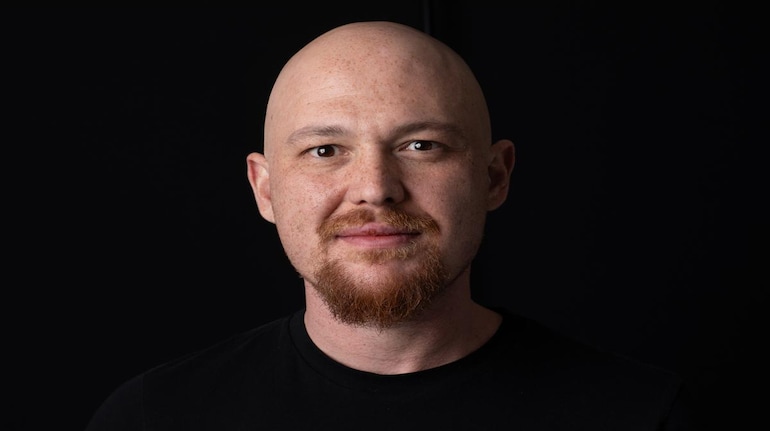

The AI coding wars are heating up. As tech giant and AI upstarts race to redefine how software is built, moving from traditional coding to natural language prompts, barriers are collapsing, and investors are pouring billions into platforms that democratise programming.
San Francisco-based Replit has been one of the biggest beneficiaries of this shift. Started in 2016, the AI unicorn has seen its valuation triple to $3 billion, with annual revenue surging from $2.8 million to $150 million.
With over 40 million users, Replit lets anyone build, deploy, and now monetise applications without traditional coding.
India has emerged as Replit’s second-largest market by active users. To deepen its footprint, the company has partnered with Razorpay to localise payments, enabling Indian users to pay in local currency via UPI and cards, while allowing developers to embed payment infrastructure directly into AI-built applications.
"Two kids in India can build and compete with Salesforce. It wasn’t possible even a year ago," co-founder Amjad Masad told Moneycontrol in an exclusive interview.
With the US becoming more restrictive on immigration, the country is also the top choice for Replit's international expansion, he said.
In an interview with Moneycontrol, Masad speaks about the AI coding race, fears of software job displacement, whether a funding bubble is forming in vibe coding, how value is being redistributed rather than destroyed, and why India could potentially become Replit’s top market.
Edited excerpts:
Can you walk us through the Razorpay partnership? Does this allow founders to build and monetise within the app?
There are a few aspects to this partnership. First, it’s about developers and creators. The definition of a developer is expanding, anyone with an idea is now a developer. We are integrating Razorpay into the agentic development process at Replit.
When someone builds an app, whether a SaaS or e-commerce app, and wants to monetise it, Razorpay will be integrated directly. They won’t need to understand the API. Everything will be handled seamlessly. They’ll be able to launch in India and start collecting payments quickly.
Second, this is about Replit’s presence in India. India is already our second-largest market by active users and subscribers. It’s a very important market for us. Unfortunately, many users cannot pay for the service today. Razorpay will help us collect payments and also support us with marketing and building presence in the region. Razorpay is also an early adopter of Replit internally, so there’s a B2B enterprise angle as well.
This partnership helps us access the India market in a way that is native to India.
What’s exciting about Razorpay is how forward-looking they are with AI. They already have a product around agentic payments. Developers are increasingly building conversational AI, and they should be able to integrate payments in a much more seamless way. Payments are going to be deeply integrated into the agentic AI layer.
How central is India to Replit’s growth? What growth drivers are you seeing?
A lot of our growth in India has been organic and viral. Indian users get excited about products, go on YouTube, talk about them, and share them on social media. There has been strong word-of-mouth and organic influencer adoption over the years.
Replit constantly pushes the state of the art in agentic AI. We were the first to launch fully natural language-based agentic software creation in September 2024. Since then, we’ve launched Agent 2 and Agent 3, which is highly autonomous and can build end-to-end applications without you being at your computer.
Now we are launching Agent 4 in mid-March. It will focus on creativity and collaboration. It will include more design tools, faster performance, multi-agent systems, and organisational tools that allow humans and agents to collaborate seamlessly.
I expect that to create more awareness in India. People there are excited about technology, speak English, and are plugged into the global community.
So far, growth has largely been viral. With partnership like we just had with Razorpay, we can grow more intentionally. India could potentially become our top market.
AI has triggered a major sell-off in Indian software services stocks recently, driven by concerns that it could disrupt or even displace traditional software engineering roles. What is your perspective on this, and do you believe these fears are justified?
There’s a glass-half-full and glass-half-empty view. Big SaaS companies are facing headwinds because businesses are building internal tools instead of buying software. And, competition has increased. Now, two kids in India can build and compete with Salesforce, that’s totally possible. It wasn’t possible even a year ago. This is the way to look at it positively. One way is that it is creating opportunities that weren’t there before.
But value is not being erased, it is being distributed. Instead of one CRM for everyone, we may see industry-specific CRMs like private equity CRMs or even agriculture CRMs and we will see more startups coming up. That increases productivity. Infrastructure, cloud, and developer tool companies are benefiting. A lot of infrastructure companies are benefiting at the same time, while large SaaS companies are facing pressure and taking a hit, that’s for sure.
There’s growing talk about AI coding wars, with multiple platforms competing to dominate agentic development. How do you see this evolving? What will define the winners? Where does Replit stand in that race?
Replit has always been about making programming more accessible. I started building the company in 2016, and from the start, we had users in India. People really enjoyed the fact that Replit simplifies the development process.
Even before AI coding, we approached it with the mindset that anyone should have access to this opportunity. The internet is a massive wealth-creation engine. I’ve always had a global view because I wasn’t born in Silicon Valley or the US, and I felt it was unfortunate that most of the wealth capture was happening there. More people should have the opportunity to participate.
Replit became the first online IDE and then the first fully natural language-based agentic creation environment. Since then, the agentic revolution has taken off. You’ve seen Claude Code and many others enter the market.
Claude Code caters to a more professional user base. When you use Claude Code, it doesn’t tell you how to build the app or what database to use. It’s a very good tool and generates a lot of code, but it can leave you vulnerable. We’ve seen cases where someone built an app and later discovered that the database they provisioned was insecure.
Replit is full-stack. The database is built into the stack, permissions are handled, and we create a sandboxed development environment and a secure enclave for production. Because people make a living on Replit — and even more so with the integration of Razorpay — we care deeply about security, reliability, and safety.
For users getting into agentic coding, it’s important to choose a platform that has done that foundational work. That said, it will be a huge market with many players. Our focus has always been on increasing opportunity for people.
We have users in India who started coding on their Android phones. There are very affordable smartphones available, and with some data, people can start building things. That’s amazing. It gives opportunities to people who otherwise wouldn’t have had access to coding or software creation.
It’s a very exciting time. India’s economic and educational growth positions it well to capture this AI moment. But the technology must be accessible to everyone, not just those who are already well off.
How do you compete with big labs and other coding tools?
Big labs are building excellent tools, but not full platforms. Replit provides development, deployment, security, and payment integration. If you use other tools, they may not integrate payments like Razorpay as seamlessly out of the box. Replit focuses on removing barriers so users can focus on creativity and entrepreneurship.
What differences do you see between the US and India developer ecosystems?
In the US, many developers are already plugged into the latest developments. That’s also true for many developers in India. But this partnership is about reaching those who may not have traditional credit cards and rely on UPI. Many of them are not paying for coding tools today. It’s about accessibility and reach.
I think when you have a diverse set of users coming from different walks of life, you get a lot of great ideas. What’s happening in Silicon Valley is exciting, but there can also be a lot of groupthink. Everyone tends to move from one trend to another. Right now, it’s all about Claude bots and OpenClaw.
When we take a more global approach, people from different backgrounds, including farming and working-class communities, bring ideas that directly benefit their own communities. Many of these individuals might not otherwise have been building or creating things. That’s what really excites me.
It is important to continue to develop and nurture the startup ecosystem in India. You know, I think India still depends on a lot of offshore development. My feeling is that a lot of that will go away.
So it's important economically and societally that there's more local businesses in India that are hiring. So I think agentic coding can really help with that. It can be a detriment in a way, but it can also be an advantage. So it's important to move fast
What about vibe coding? How strong is adoption in India, especially with many startups emerging and raising funds? How do you see this market evolving, and can you share any numbers on your India user base?
Like I said, it’s going to be a huge market. Globally, we have around 40 million users. In India, our users are definitely in the millions. We’ve been around since before “vibe coding” was even a term. Many users learned to code on Replit, and a lot of today’s developers actually started their coding journey on the platform.
Sometimes Replit is the right long-term tool for someone. Other times, it’s a great starting point before they move on to other tools. For us, what really matters is accessibility and enabling more people to participate in the digital economy.
We see many non-developers and non-traditional developers discovering Replit through friends, family, or online content. They start by building something personal, maybe a small app or even games with their kids, and then take those skills into their workplace.
Their roles may not be traditional software development roles, but every business today is a software business. They begin innovating, improving efficiency, and creating automations within their companies.
Vibe coding is a general-purpose tool that enables almost anyone to build software. But I would say we’re still in the early innings. If you talk to your family or friends, most of them haven’t even heard of vibe coding yet. So the market is still huge.
Are junior developers still needed in the industry with coding advancements today? What skills are important going forward?
We’re more excited than ever about hiring new graduates. They are creative and very good with these tools.
It’s not about fewer developers. It’s about new skills. Engineers need broader skills, user empathy and communication. They need to be more generative and experiment more. Internally, we encourage people to run multiple parallel agents and try many ideas. Interpersonal skills are also important. As agents handle more coding, humans focus more on design, architecture, and collaboration.
We’re seeing a surge in funding for coding and vibe-coding startups, with companies like Emergent and Lovable raising capital. Do you see signs of a bubble forming in this segment, either in India or globally? How do you assess the sustainability of these valuations?
The short answer is that with any major shift, VCs are right in believing it’s going to be big. The real question is whether funding the nth entrant in the market will actually make a meaningful difference.
I do think some vibe-coding startups will specialise in specific niches. For example, Replit makes really good games, but there are other platforms that are positioning themselves as being the best at building games. I can see that working.
So yes, it’s going to be a large market. At the same time, investors will likely burn a lot of capital by funding companies that eventually get consolidated. But that’s a natural cycle in any emerging technology wave.
What are your India expansion plans?
The first step is enabling building and monetisation. Second is expanding B2B. We already have large customers in India, and we may open a sales office. In the future, India could also be a a general purpose, R&D hub as well. As you know, with the US becoming more restrictive on immigration, we will have to expand our footprint elsewhere. India would definitely be a top choice.
There are no explicit plans right now for an R&D centre or office, but it’s something we are actively discussing and thinking about. We’re still a relatively small team, around 150 people, so expansion decisions need to be timed carefully.
What are your favourite AI tools apart from Replit?
I love Perplexity, it saves me a lot of time on research. I have been playing a lot with Replit building games along with my kids, but we also like to make videos and images, I also like to build their creative muscle. Grok Imagine is very fast for generating images, especially when I’m building things with my kids.


Discover the latest Business News, Sensex, and Nifty updates. Obtain Personal Finance insights, tax queries, and expert opinions on Moneycontrol or download the Moneycontrol App to stay updated!
Find the best of Al News in one place, specially curated for you every weekend.
Stay on top of the latest tech trends and biggest startup news.