






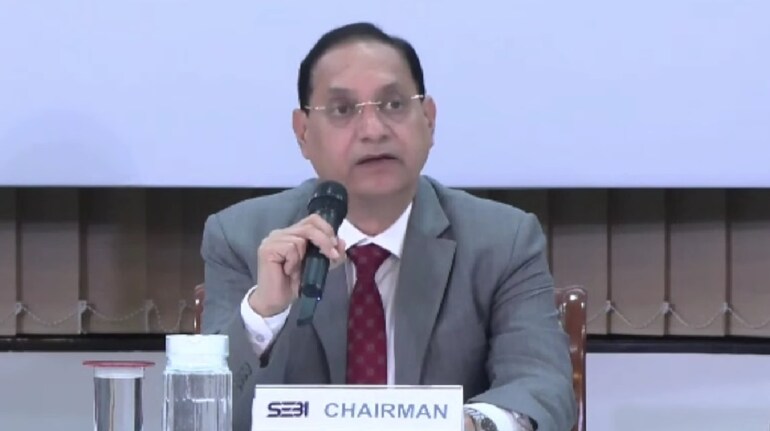

Capital markets regulator Securities and Exchange Board of India (SEBI) has announced a one-year special window to facilitate the transfer and dematerialisation of physical securities that were bought or sold prior to April 1, 2019, in a move aimed at easing investor hardship and securing ownership rights.
The special window will remain open from February 5, 2026 to February 4, 2027, according to a circular issued on Friday. The facility will be available to investors holding original share certificates and valid transfer deeds executed before the April 2019 cut-off.
The decision follows SEBI’s July 2, 2025 circular, under which a temporary window was provided for re-lodgement of transfer deeds of physical securities.
SEBI said the move is part of its broader effort to enhance ease of doing investment and protect investor interests, especially for legacy physical shareholding cases that remain unresolved due to regulatory changes over the years. SEBI circular issued on Friday stated, “In order to further facilitate the investors to get rightful access to their securities, the Board has decided to open another special window for transfer and dematerialisation (“demat”) of physical securities which were sold/purchased prior to April 01, 2019”.
Also read: NSE gets key approval for its IPO, settlement to follow in due course
Scheme Covers rejected and unattended cases
SEBI said the new window will also apply to transfer requests that were earlier rejected, returned or not processed by registrars or companies due to deficiencies in documentation, procedural gaps or other reasons. However, the regulator clarified that eligibility is strictly limited to cases where the original security certificates are available. Applications without original certificates will not be entertained.
Mandatory demat and one-year lock-in
All securities transferred under this special dispensation will be credited only in dematerialised form to the transferee’s demat account. Further, such securities will be subject to a mandatory one-year lock-in from the date of registration of transfer. During the lock-in period, the securities cannot be transferred, pledged, lien-marked or otherwise encumbered, SEBI said.
Documentation requirements
Investors seeking to avail the window will be required to submit, original security certificates, transfer deed executed prior to April 1, 2019, proof of purchase, wherever available, KYC documents as per applicable norms, latest Client Master List (CML), not older than two months, duly attested by the Depository Participant and an undertaking-cum-indemnity in the prescribed format. Registrars and transfer agents (RTAs), exchanges and all listed companies have been directed to ensure smooth implementation of the process.
Cases which will not be considered
However SEBI has clarified in its circular that, cases involving disputes between transferor and transferee will not be considered in this window and may be settled by transferor and transferee through court or the NCLT process. Also, securities which have been transferred to Investor Education and Protection Fund (IEPF) will also not be considered under this window for processing.
SEBI scraps LOC, enables direct demat credit
In a separate circular issued the same day, SEBI announced that it has done away with the requirement of issuing a Letter of Confirmation (LOC) for credit of securities arising from various investor service requests, including issuance of duplicate share certificates, transmission, transposition, claims from unclaimed suspense accounts and corporate actions. The move is aimed at reducing timelines and simplifying dematerialisation.
SEBI circular issued on Friday stated, “In order to simplify the process for credit of securities pursuant to investor service requests by reducing the timelines, risk of loss and pilferage, it has been decided to do away with the requirement of issuance of LOC”.
Under the new framework, Registrar and Transfer Agents (RTAs) and listed companies will directly credit securities to the investor’s demat account, after carrying out due diligence, without issuing an LOC. Depositories have been directed to put in place the necessary systems to enable direct credit. Investors will be required to submit a latest CML, not older than two months, duly attested by the depository participant, along with the relevant service request.
Effective date and transition
The LOC-related changes will come into force from April 2, 2026. Any LOC issued prior to that date can still be used for dematerialisation, provided it is submitted within 120 days from the date of issuance.
Also read: New chapter of value creation, says NSE chairman on SEBI nod for IPO
Discover the latest Business News, Sensex, and Nifty updates. Obtain Personal Finance insights, tax queries, and expert opinions on Moneycontrol or download the Moneycontrol App to stay updated!
Find the best of Al News in one place, specially curated for you every weekend.
Stay on top of the latest tech trends and biggest startup news.





