






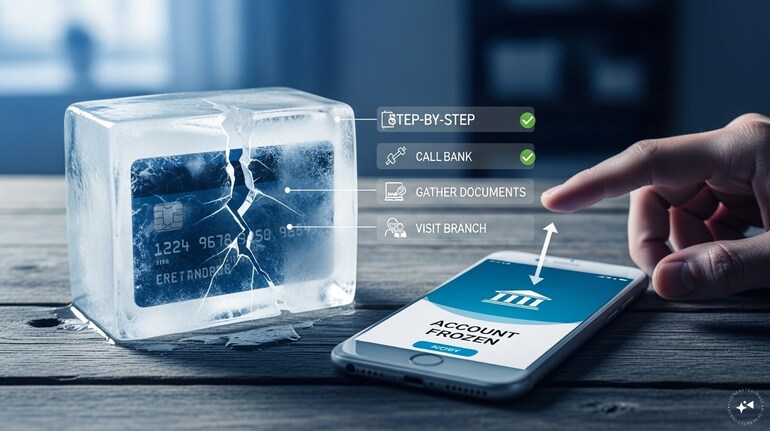

A frozen account is not one thing. It could be a KYC lock, a transaction alert, or a legal instruction. Each has a different fix, and guessing wastes time.
Check your bank app first. Many freezes show up as a short line like “debit blocked” or “restricted due to compliance.” If the app is unclear, call customer care or visit the branch and ask one specific question: what triggered the freeze, and is it partial or full?
Do not accept vague answers like “system issue.” Ask for the category. Banks know it. You need it.
KYC freezes are boring, but common
A large share of freezes in India come down to KYC. Address changed, Aadhaar re-verified, PAN not linked correctly, or a selfie update that never got completed.
Even accounts you have used for years can get blocked if rules change or documents expire.
If it is a KYC issue, ask exactly what is missing. Upload or submit only what is asked for, not a bundle of random documents. Once submitted, ask for a realistic unfreeze timeline. In most banks, this is two to five working days.
If the branch says “it will update automatically,” ask them to note your request in writing.
Transaction alerts need explanations, not arguments
If your account was flagged for unusual activity, the bank is looking for clarity, not confession.
This usually happens after sudden large credits, repeated high-value transfers, or money that does not match your usual pattern. Freelancers, small business owners, and people receiving one-time inflows hit this often.
Reply quickly and plainly. Say where the money came from and why. Salary arrears, sale of property, family transfers, refunds, or business receipts are all routine, but the bank needs them stated.
If you have documents, share them upfront. Silence or vague replies stretch the freeze longer than necessary.
Legal or tax freezes are slower, but precise
If the freeze is due to an income tax notice, court order, or other legal instruction, the bank cannot lift it on its own.
Ask whether the freeze applies to a specific amount or the entire balance. In many cases, only the amount under dispute is blocked.
You will need to resolve the issue with the issuing authority. Once that is done, provide the bank with the release order or confirmation. Banks move quickly once paperwork is clear.
Protect your cash flow while it’s frozen
If your main account is blocked, everyday payments can grind to a halt.
If you already have a second account, use it for essentials. If you receive salary or regular income, ask whether it can be redirected temporarily.
In many KYC-related freezes, opening or using another account is allowed. Do not assume it is not. Ask.
Escalate when timelines slip, not immediately
If the bank gave you a timeline and missed it, escalate within the bank first. Use the grievance email or nodal officer channel, not repeated branch visits.
Only after that should you approach the banking ombudsman. Most freezes resolve before it gets that far.
What usually makes things worse
Moving money around aggressively from other accounts, ignoring bank queries, or assuming the freeze is “punishment” all slow things down.
A frozen account is usually a compliance pause, not a judgment. Treat it like a checklist problem. Get the reason, give the answer, follow up once, and it almost always unlocks faster than expected.
Discover the latest Business News, Sensex, and Nifty updates. Obtain Personal Finance insights, tax queries, and expert opinions on Moneycontrol or download the Moneycontrol App to stay updated!
Find the best of Al News in one place, specially curated for you every weekend.
Stay on top of the latest tech trends and biggest startup news.





