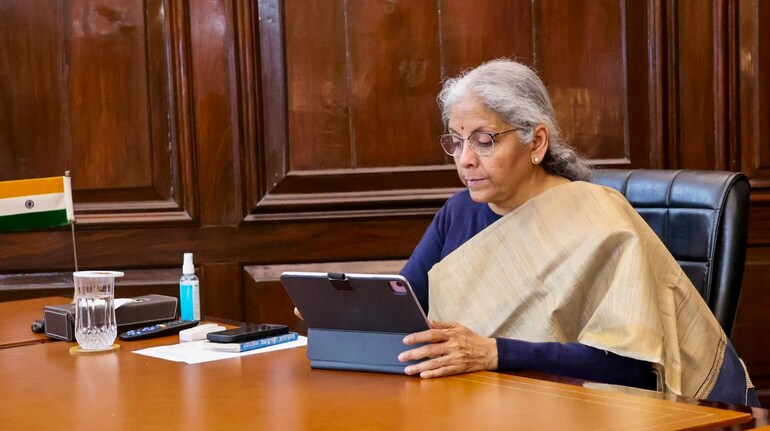
Prime Minister Narendra Modi’s statement on seeking Goddess Lakshmi’s blessings for the poor and the middle class has triggered hopes of Budget 2025 reducing individual taxpayers’ income tax burden on February 1.
“I pray to Goddess Lakshmi to shower the poor, middle class with blessings. It is a matter of great pride that India completed 75 years as a democratic nation,” PM Modi said while addressing the media outside Parliament on January 31.
The clamour for liberalising tax slabs, reducing tax rates and hiking standard deduction, among other measures, is growing and remains to be seen if Finance Minister Sitharaman’s Bahikhata unveils tax sops for the middle-class taxpayers.
Increase basic exemption limit to Rs 5-10 lakh
Some reports have suggested that the government could consider increasing the basic exemption limit under the new tax regime from Rs 3 lakh to Rs 10 lakh.
Speculations are also rife that the government could introduce a new 25 percent tax slab for those with incomes between Rs 15 lakh and Rs 20 lakh. At present, those with incomes of over Rs 15 lakh have to pay tax at the slab rate of 30 percent. If Budget 2025 indeed introduces a new slab, the tax rate of 30 percent will be applicable to incomes of over Rs 20 lakh.
Tax experts feel a hike in the basic exemption limit ought to be considered at least up to Rs 5 lakh, if not Rs 10 lakh. Unlike a tax rebate, an enhancement in basic exemption limit slashes the tax outgo across income tax brackets.
The need for a hike in standard deduction
The unanimous view of taxpayers and income tax consultants is that rising inflation and growing household expenses call for an increase in standard deduction. At present, the standard deduction under the new tax regime is Rs 75,000. There is a demand to increase this to at least Rs 1 lakh, if not more. The finance minister had left the standard deduction under the old regime unchanged at Rs 50,000 and it is unlikely that she will revise it on February 1.
Will the old tax regime be phased out?
Unlikely at this stage, say experts. This is because many taxpayers who claim multiple tax benefits, particularly house rent allowance (HRA) or deduction on home loan interest, still favour the old regime. “Indian citizens will make their own choices. It is one thing to say that we are bringing in a better system that is the least complicated and at rates that are reasonable for all levels. It is attractive for compliance and rates. But there is another system going on where so many exemptions have been given that incentivised saving through insurance covers, medical cover, savings for interest earnings and so on. I do not want people to think that I have denied them (these benefits),” Nirmala Sitharaman had said in an interview to Network18 in February 2024.
Additional deduction for NPS in the new regime
Budget 2024 made the National Pension System (NPS) more attractive for individuals by hiking the tax deduction on employers’ contributions to employees’ NPS from 10 percent of basic pay to 14 percent under the new regime. However, this tax break, offered under section 80CCD(2) is available only to salaried taxpayers.
However, since this benefit cannot be extended to self-employed individuals under the new regime, industry-watchers have called for the separate deduction limit of Rs 50,000 [section 80CCD(1B)] to be incorporated in the new tax structure as well.
For employers, their contribution qualifies as a business expense and allowed as a deduction from their profit and loss accounts.

Discover the latest Business News, Sensex, and Nifty updates. Obtain Personal Finance insights, tax queries, and expert opinions on Moneycontrol or download the Moneycontrol App to stay updated!
Find the best of Al News in one place, specially curated for you every weekend.
Stay on top of the latest tech trends and biggest startup news.