
The insurance sector has undergone significant changes in 2025, from GST exemption to the move towards 100 percent foreign direct investment.
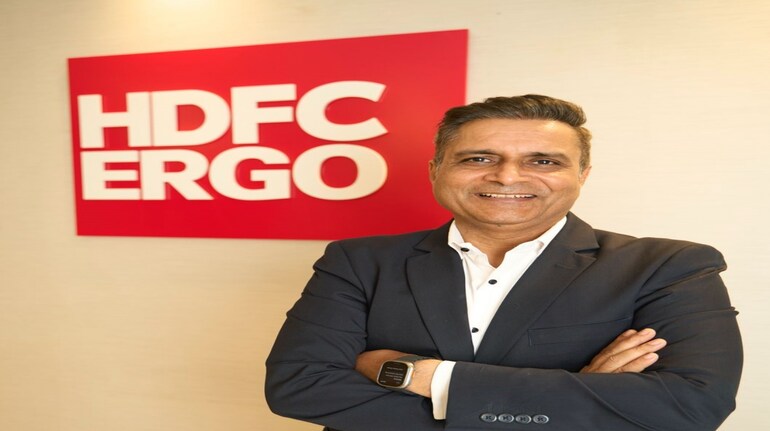
In a wide-ranging conversation, Anuj Tyagi, MD and CEO of HDFC ERGO, explains how the GST reduction has emerged as a demand catalyst for health insurance, driving higher enquiries and stronger retail conversions across the industry. He says insurers have passed on the full GST benefit to customers despite the input tax credit (ITC) disadvantage.
Tyagi also cautions customers against relying solely on claim ratios, arguing that settlement, payout and rejection metrics offer a more accurate picture. From a policy standpoint, his budget wishlist includes resolving the ITC anomaly, standardising hospital treatment protocols, and accelerating the shift towards near-100 percent cashless healthcare.
GST has been in the news, especially after the exemption on health insurance. How has the transition been for the industry and for HDFC ERGO?
GST has been a clear positive for the industry. I would call it an “ease of life” moment because the sector has not seen this kind of growth in a long time. The benefit is not limited to health insurance alone as motor insurance has also gained, especially after a period of subdued growth.
Post October, we have seen health insurance move to a different level altogether. Retail demand has picked up meaningfully. We are seeing higher enquiries, better conversions and improved agency productivity. The industry has passed on the full benefit of GST reduction to customers, and that is visible on the ground.
If you look at October–November, closures in retail health proposals have clearly increased. For the full year, I expect health insurance industry growth to be around 13–14 percent.
Till September, growth was around 7.3%. Once we factor in October–November, it crosses 8%. On an individual retail basis, growth in those months would be closer to 9.5–10%.
Different insurers have taken different approaches to Input Tax Credit (ITC). How has HDFC ERGO handled the ITC impact?
Let me first say this on behalf of the industry, we have respected the larger rationale of GST exemption. The customer was meant to benefit, and the industry has passed on the benefit in full, despite the ITC disadvantage.
A large part of ITC disallowance relates to commissions. We don’t collect GST on commissions, but we pay GST on them. Most insurers have therefore absorbed the impact by adjusting commissions to distribution channels. That is the most logical route.
I am not aware of any insurer that has increased premiums specifically to offset ITC. Even if premiums are revised, it is more to do with inherent pricing needs as medical inflation of 10–12% is still a reality.
Some insurers have raised renewal premiums. Is that linked to GST?
Not necessarily. Many insurers had filed revised pricing with the regulator even before GST came into effect. That clearly shows that pricing revisions are driven by underlying cost pressures, not GST. Premium revisions are part of normal business. Medical inflation exists and needs to be addressed. Pricing has to be sustainable.
At HDFC ERGO, we focus heavily on fraud control, misuse prevention and operational efficiencies. But beyond a point, inflation has to be priced in. Otherwise, service quality suffers.
We have among the lowest claim rejection rates in retail health. Our grievance levels are also among the lowest, and turnaround times are among the best. That kind of service requires sustainable pricing. You cannot cut corners and still deliver quality.
Claim ratios across the industry have been rising. How has HDFC ERGO performed?
Our incurred claim ratio has consistently been in the late 70s to early 80s. We believe that is where a portfolio delivers real value to customers while remaining sustainable.
We have never chased being the cheapest insurer. Our policies may be priced slightly higher than some peers, but that allows us to honour claims without unjust deductions. Over time, we have invested heavily in AI-driven fraud detection, which helps us control abuse without inconveniencing genuine customers.
Moreover, claim ratio alone does not give the full picture. A high claim ratio could simply mean the insurer did not price the product correctly.
Customers should focus on three things:1. Settlement ratio – how many claims are settled
2. Payout ratio – how much of the claimed amount is paid
3. Rejection ratio – how many claims are denied
These metrics reflect the insurer’s intent and service quality far better than loss ratio alone. A very high loss ratio should actually concern customers. It may not be sustainable and could lead to sharp premium hikes later.
The lack of transparent, comparable data makes it hard for customers. Will this improve?
Yes. The industry council is actively working on standardising definitions for settlement ratio, payout ratio and rejection ratio so that insurers can be compared on the same basis.
Settlement ratios must be calculated using a standard formula- claims paid divided by opening claims plus new claims reported. Without standardisation, comparisons become misleading. That is exactly why the industry is now working on a unified reporting framework.
IRDAI has also asked the council to move in this direction. Very soon, this data should be publicly available in a simplified, transparent manner, ideally on a central platform and on insurers’ websites.
At HDFC ERGO, we already publish this data prominently on our website.
What are your expectations from policymakers for Budget 2026?
My biggest concern is the unresolved ITC anomaly. The industry continues to bear a significant burden. Either ITC should be allowed, or the ecosystem will eventually have to absorb higher costs.
Separately, we also need standardised treatment protocols across hospitals. Medical inflation is real, but there is no consistency in treatment practices. CGHS protocols already exist and should be uniformly adopted.
Finally, we must move towards near-100 percent cashless treatment. Reimbursements burden customers unnecessarily and increase leakages. Cashless should be the norm, not the exception.
Discover the latest Business News, Sensex, and Nifty updates. Obtain Personal Finance insights, tax queries, and expert opinions on Moneycontrol or download the Moneycontrol App to stay updated!
Find the best of Al News in one place, specially curated for you every weekend.
Stay on top of the latest tech trends and biggest startup news.