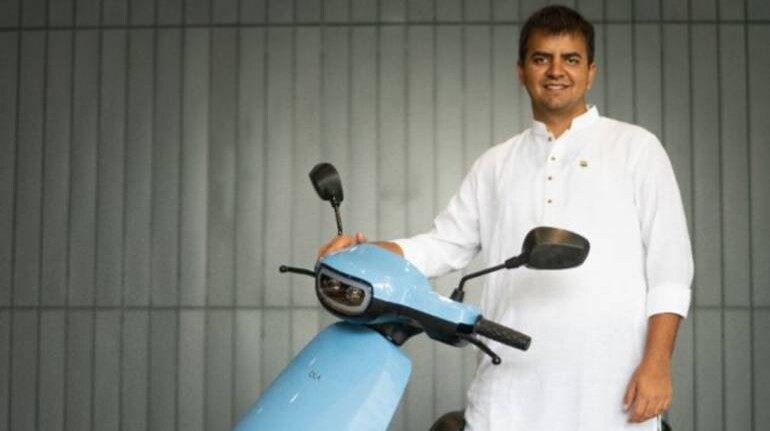
Ola plans to open up its digital retail platform to other original equipment manufacturers (OEMs) for digital distribution, CEO Bhavish Aggarwal said on Thursday while outlining his vision for the future of mobility.
"We have already built a powerful digital retail platform that bypasses physical infrastructure and hosted the largest automotive launch in history with the Ola S1. It will bring consumers wide multi-brand choice online, at home test rides, personalised financing, insurance and more. The existing ecosystem of dealers will play an important role in this future but in a new paradigm," Aggarwal said.
Last week, Ola chief executive had said that they had sold scooters worth over Rs 1,100 crore in a two-day sale of its first range of electric scooters. It now plans to reopen the sales window on November 1 in time for Diwali.
"Ola’s advanced telematics platform (some of which is already built into our S1 EVs) will provide real time analysis of usage and vehicle and road condition data to provide better driving experience, predictive maintenance, better insurance and financing," he added.
Aggarwal said this move will create a "more trustworthy ecommerce marketplace" for used vehicles with real time pricing and digital access.
Earlier this month, the ride-hailing major had launched a used cars marketplace called Ola Cars which will not only allow buying and selling of cars but manage the end-to-end ownership experience of used and new vehicles. Ola now plans to scale up this marketplace from the existing 30 cities to 100 cities by next year.
In the blogpost, Aggarwal said both shared and personal mobility will grow significantly in India through a combination of purpose built electric vehicles lowering costs, digital retail driving convenience and the cloud enabling personalisation.
"Ola is building this New Mobility ecosystem with the consumer at the core. The 3 pillars of this new ecosystem are: New Mobility Services, New Energy Vehicles and New Auto Retail. These three pillars amplify and enhance the impact of each other as part of an integrated Ola New Mobility Platform," he said.
This diversification comes as the Bengaluru-based firm gears up for its public market debut and its core ride-hailing business recovers from the impact of the ongoing COVID-19 pandemic.
Earlier this month, Aggarwal had said that Ola's gross merchandise value (GMV) had crossed the pre-pandemic levels for the week leading up to August 31, with the recovery from the second COVID-19 wave being three times faster than the first wave.
"10 million people used Ola for the first time ever in FY21. As people move, they want to feel safe so they’re switching to personal or shared mobility instead of public transport. Many are moving to Autos taking our Auto business to almost 150% of pre-covid levels," Aggarwal said on Twitter.
On Thursday, Aggarwal said they provide multi-modal mobility access to 100 million people through taxis, auto rickshaws, 2Ws, day hires, and outstation rides, however, it accounts for only 7% of the country's population.
In order to expand this to a larger audience, the company aims to make it more affordable and accessible by using electric vehicles customised for the diverse shared mobility needs. The firm plans to expand its range of electric vehicles with more scooters, bikes and cars in the coming quarters, he said.
"They will serve diverse needs through a variety of form factors including kick scooters, e-bikes and yes even drones and flying cars while costing 80% less to run compared to IC engines," he added.
As people use the service more frequently, Ola will also create a unique mobility persona in their cloud and personalise the user's experience across shared and personal vehicles. This will also enable new usage models like vehicle subscriptions, Aggarwal said.
Ola Electric, which was spun out of the ride-hailing major Ola, is setting up a 500-acre factory in Tamil Nadu's Krishnagiri with the aim of making 10 million vehicles a year at full capacity, making it the world's largest two-wheeler factory. In July, it had secured $100 million in long term debt from the Bank of Baroda to close the first phase of development of its factory.
On September 13, Aggarwal also announced that Ola Future Factory would be run entirely by women, 10,000 of whom will be employed when the plant reaches full production capacity, making it the world’s largest women-only factory and the only all-women automotive manufacturing facility across the world.

Discover the latest Business News, Sensex, and Nifty updates. Obtain Personal Finance insights, tax queries, and expert opinions on Moneycontrol or download the Moneycontrol App to stay updated!

Find the best of Al News in one place, specially curated for you every weekend.
Stay on top of the latest tech trends and biggest startup news.