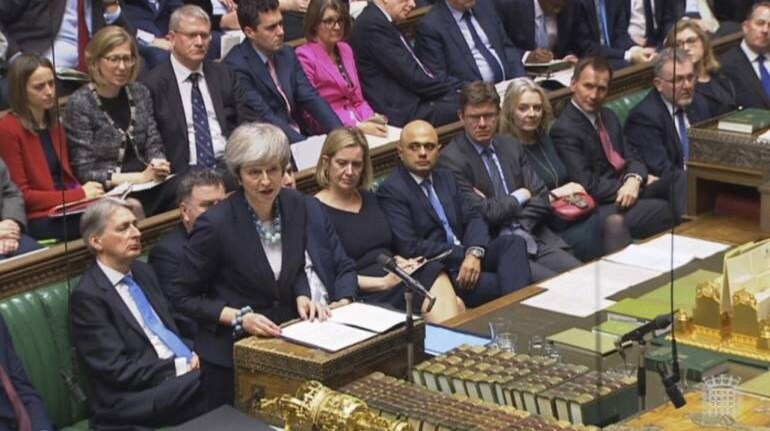
Highlights: - UK House of Commons rejected a motion on a no-deal Brexit - Parliament has to vote today on extension of the Brexit deadline - Duration of extension may not be beyond two months - EU response to extension and alternative critical - Investors and exporters advised to hedge sterling exposure -------------------------------------------------
As the original deadline (March 29) for Brexit draws to a close, UK finds itself at a crossroad. After the defeat of Theresa May’s revised Brexit deal proposal, UK is inching towards a set of alternative scenario. As of now, it is trying to rule out the option, which is perceived as the worst: a no-deal Brexit.
No-deal Brexit On March 13, UK House of Commons rejected a no-deal Brexit motion under any circumstances. Interestingly, this doesn’t completely rule out a no-deal Brexit as it is not legally binding.
Read: Increased Brexit uncertainty keeps UK asset classes edgy
What next? Now, Parliament has to vote on Article 50, i.e. whether to extend the current March 29 deadline. Voting is scheduled on March 14. If the Parliament votes positively, then May’s government would have to place a formal request to the European Union for an extension of Article 50.
If we go by the financial market reaction, this seems to be the likely expectation. The pound-dollar has an appreciation bias. However, how does EU (European Union) respond to it and options thereof remains a key uncertainty.
Duration of extension EU’s formal reaction to the current situation would be available during the next European council (March 21-22) meet. Both parties may not like UK to participate in European parliament election on May end as the Brexit process is on. Hence, little short of two month extension is what one could be anticipating.
EU’s stand Key determinant to present situation is EU’s flexibility. So far, the best amendment they had to offer was the legal assurances on the controversial Irish backstop.
Here it is important to point out that EU's chief Brexit negotiator Michel Barnier has called out that “The EU has done everything it can to help get the Withdrawal Agreement over the line” and its 'no-deal' preparations were now “more important than ever before". This highlights heightened uncertainty in the coming days.
What if a no-deal Brexit still happens? If the political logjam persists – both intra UK and between UK and the EU, a no-deal Brexit is still a possibility. If it happens, it means a disorderly exit.
UK and EU would not have a stipulated 21-month transition period to iron out their mutual trade deals. Instead, UK would have to negotiate with EU under the aegis of World Trade Organisation (WTO), as it would anyways do it with other countries. In the short term, this means a high disruption to business transaction across the border and lengthy custom checks after the deadline. And this can possibly take a toll on economic growth in the near term.
Votaries of a no-deal Brexit pitch that a clean break from EU would help in working out a more rationale deal with EU later on. However, this scenario doesn’t calm any concern on how the border between Northern Ireland and Ireland would be managed.
Takeaways We think political uncertainty in the UK is not expected to die down soon and uncertainty to remain for business investment and trade in the medium term. For Indian investors and exporters, we continue to advise keeping their pound exposure hedged.
Follow @anubhavsaysFor more research articles, visit our Moneycontrol Research pageDiscover the latest Business News, Sensex, and Nifty updates. Obtain Personal Finance insights, tax queries, and expert opinions on Moneycontrol or download the Moneycontrol App to stay updated!
Find the best of Al News in one place, specially curated for you every weekend.
Stay on top of the latest tech trends and biggest startup news.