






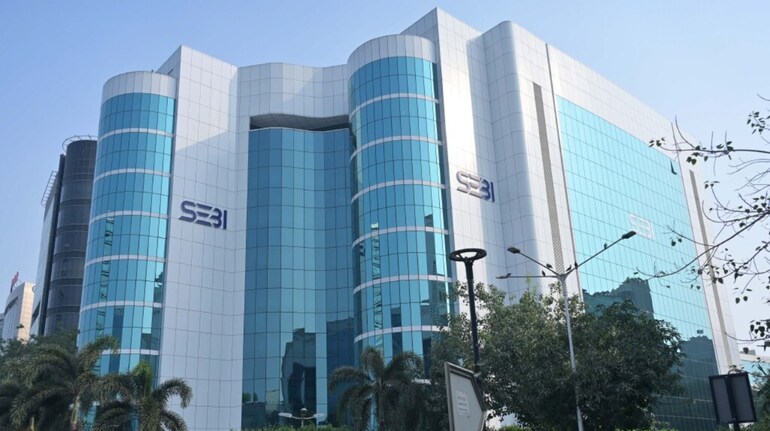
In its December 17 board meeting, the Securities and Exchange Board of India (SEBI) announced sweeping changes to how mutual fund expense ratios are structured and disclosed. The overhaul goes to the heart of how investors pay for fund management — and how that money is split between asset management companies (AMCs), distributors and the government.
Moneycontrol explains what the Total Expense Ratio (TER) really includes, how direct and regular plans differ, what SEBI has changed, and who is likely to feel the biggest impact.
1) What is TER, really?
The Total Expense Ratio (TER) is the annual cost of running a mutual fund, expressed as a percentage of the scheme’s assets under management (AUM).
When you invest in a mutual fund, the fund house charges a fee to manage your money. Since these costs are ultimately borne by investors, SEBI caps the maximum expense ratio that a scheme can charge.
Importantly, this cap is linked to the size of the fund. Larger schemes have to charge lower expense ratios because fund management costs do not rise proportionately with AUM. A fund manager who can manage Rs 1,000 crore can usually manage Rs 10,000 crore without incurring ten times the cost.
The TER is not billed separately. Instead, it is deducted daily from the scheme’s NAV. This daily deduction ensures that the NAV always reflects the true value of the fund, especially since investors enter and exit schemes every day. Charging expenses annually in one shot would cause sudden NAV distortions — something regulators want to avoid.
2) Now, what costs does TER include?
Traditionally, TER has bundled together multiple cost heads, including:
a) Investment management costs -- Fund manager fees, analyst and research expenses, portfolio analytics and dealing desk costs.
b) Operational and administrative expenses -- Fund accounting, investor servicing, technology platforms, record-keeping, statements and call centres.
c) Regulatory, governance and audit costs -- Trustee fees, compliance, audits, legal expenses, risk management and regulatory reporting.
d) Market infrastructure costs -- Custody charges, registrar and transfer agent (RTA) fees and settlement-related expenses. Brokerage on transactions affects NAV but is disclosed separately.
e) Distributor commission (regular plans only) - Trail commissions paid to distributors, banks and platforms for selling and servicing schemes.
f) Taxes and statutory levies -- These include GST on fund management and other services, along with transaction-related statutory charges such as STT, CTT and stamp duty.
All of this was historically reflected — directly or indirectly — in the TER number investors saw.
3) What has SEBI changed now?
SEBI has restructured the framework by introducing a new concept — the Base Expense Ratio (BER).
Under the revised rules:
Statutory levies that are pass-through in nature will sit outside the BER. The BER will have a hard regulatory cap. Taxes will be charged over and above the BER and disclosed separately.
The rationale is simple: tax rates can change due to government policy, and SEBI does not want to keep revising expense caps every time that happens. What investors ultimately pay remains broadly similar, but the headline expense ratio becomes cleaner and more comparable across schemes.
Because taxes are now excluded from the defined expense ratio, the expense thresholds themselves have been lowered.
4) What is BER and what does it include?
What expenses does the Base Expense Ratio (BER) include? Fund management fees, AMC operational expenses, distributor commissions (for regular plans), RTA and custody charges
What’s chargeable outside (over and above the BER): GST, Stamp duty, Securities Transaction Tax (STT), Commodity Transaction Tax (CTT), Other statutory levies
These will continue to impact NAV, but will be disclosed separately, not embedded in the base ratio.
5) What about brokerage costs?
SEBI had also proposed capping brokerage charges paid by AMCs. Earlier, brokerage paid by the funds while buying and selling shares for the schemes was capped at 12 paise for cash market trades and 2 paise for arbitrage trades. The consultation paper suggested reducing brokerage to 2 basis points, arguing that execution-only trades should not be expensive and that AMCs should invest in their own research rather than pass these costs to schemes – they anyway make loads of money charging asset management fees. Great intent, but the real world is less than perfect. Both the mutual fund and broking industries argued that brokers provide essential services such as aggregating large blocks and supplying research that benefits the broader market ecosystem. SEBI eventually settled on a brokerage cap of 6 basis points plus taxes.
6) What are the new expense ratio caps?
Following consultations, SEBI has rationalised expense limits, leading to an effective reduction of around 10 basis points across most AUM slabs.
At the lowest range (AUM below Rs 500 crore), equity schemes: cap reduced from 2.25% to 2.10%
At the lowest range (AUM below Rs 500 crore), equity schemes: cap reduced from 2.00% to 1.85%
At the highest range (AUM above Rs 50,000 crore), equity schemes: cap reduced from 1.05% to 0.95%
At the highest range (AUM above Rs 50,000 crore), debt schemes: cap reduced from 0.80% to 0.70%
But remember, now on top of the newly prescribed BER which is lower than the earlier TER, fund will pay statutory levies, the biggest of which is the GST of 18%. This works out to roughly 6–7 paisa per Rs 100 invested in direct plans, and 12–16 paisa per Rs 100 in regular plans, depending on the size and nature of the scheme. So if you include the tax levies too, there is a marginal reduction in expense ratio based on prevailing tax rates.
7) Does this impact investors, AMCs or distributors more?
Investors will benefit to the extent of this reduction in expenses.
A simple back of the envelope calculation will show that a 10-basis-point reduction in expenses may look trivial, but over a decade it can add Rs 40,000 on a Rs 10 lakh investment, and over longer holding periods the impact compounds — without changing the fund, strategy or risk.
Who takes the hit? It could be the mutual fund companies. But since several of them are listed companies which are keenly focussed on profits, they may transfer the hit to distributors by axing their commissions. A distributor managing Rs 100 crore in assets would see income fall by ₹10 lakh annually for every 10-basis-point cut in commissions. AMCs have not yet clarified how much of the cost reduction will be absorbed internally and how much will be passed on to distributors — a key concern for the distribution community.
7) When will the new structure take effect?
SEBI has said the revised expense ratio and BER framework will be implemented from April 2026.
Discover the latest Business News, Sensex, and Nifty updates. Obtain Personal Finance insights, tax queries, and expert opinions on Moneycontrol or download the Moneycontrol App to stay updated!
Find the best of Al News in one place, specially curated for you every weekend.
Stay on top of the latest tech trends and biggest startup news.




