ITI AMC is launching its first offering under the Specialised Investment Fund (SIF) framework, choosing an equity long-short fund at a time when most fund houses are preparing hybrid or income-oriented SIFs.
The AMC said the move in alignment with market conditions as well as its long-developed expertise in long-short investing. The fund is being launched under the Diviniti SIF umbrella.
Currently, three mutual funds have launched SIF products, with ITI being the fourth. ITI AMC’s believes its confidence in the category stems from "in-house skill" and the track record of its long-short AIF, which the same team has managed for 7-1/2 years.
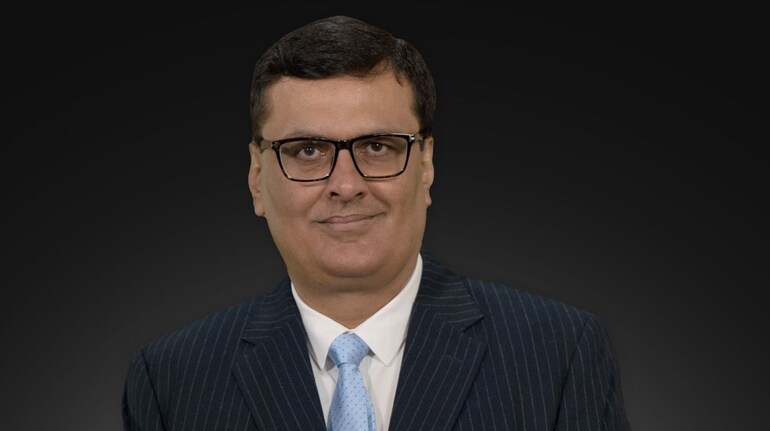
ITI AMC’s CIO Rajesh Bhatia told Moneycontrol during a conversation that the performance through multiple cycles will demonstrate how the strategy behaves in both rising and falling markets. For example, from January 2023 to September 2024, when the market rose about 42 percent, ITI’s long-short portfolio clocked a similar gain of 44 percent, but when the market subsequently declined 14 percent, the fund lost only 3 percent. Over the entire period, the market delivered 22 percent, while the strategy returned 40 percent, generating 18 percentage points of alpha. The CIO also pointed at the behaviour of the fund in extreme conditions, when, during the 2020 crash, when the market fell 38 percent from peak-to-trough, ITI AMC’s long-short strategy “was the only India equity fund that finished that period in positive territory”. Rajesh Bhatia pointed out that the strategy has “never failed to protect capital” during market declines.
Read More: Industry leaders decode SEBI’s SIF Revolution at Moneycontrol Mutual Fund Summit 2025
ITI AMC’s CIO called the Diviniti Equity Long-Short SIF fund a capital appreciation product. “If a long–short product gives the same risk and return as pure equity then it has no purpose,” he added. The strategy allows net equity exposure to move significantly depending on market conditions, with up to 95 percent when the team is constructive, and as low as -25 percent, or a net short position, when risk levels rise.
The SIF Format and Taxation EdgeRajesh Bhatia said the SIF structure is particularly suitable for long-short strategies as it offers equity taxation while still allowing most elements of AIF framework to be replicated. “We already have one of the lowest tax structures in the long-short AIF space, around 17-18 percent, and in the SIF structure you also get equity taxation, which is even more efficient,” he added. According to him, the format is well-timed for present times where investors want equities but also seek a hedge. “People feel they’ll only make 11-12 percent even if everything goes right, and what if things go wrong? That’s why the need for long-short has gone up sharply - people want to participate, but they also want protection,” he said.
Under normal market conditions, the fund’s indicative allocation comprises 80-100 percent in equity or equity-equivalent instruments, 0-35 percent in debt or money-market instruments for liquidity and tactical needs, and up to 25 percent in REITs or InvITs within regulatory limits. This strategy also uses derivatives (up to 100 percent of net assets) primarily for hedging and efficient rebalancing. The portfolio will be structured through a mix of strategic long positions (up to 100 percent of AUM), tactical longs in equities and derivatives (0-35 percent), and futures-based hedges (up to 25 percent).
Short exposures are adjusted actively to balance the book, and net equity is calculated as total longs minus the hedges and short positions. This design aims to participate in up-markets while containing drawdowns through selective shorts and diversification. Over the long term, the strategy seeks a steady 14-15 percent return profile, with smoother compounding and controlled volatility relative to traditional equity.
Bhatia highlighted the scale and opportunity of long-short investing globally, calling it a “$1.5 trillion business” where some of the world’s most-renowned managers have built their reputations. With the SIF framework now in place, ITI CIO said India is opening this door within the mutual fund structure.
Bhatia said the fund suits a wider audience than it appears - from HNIs and family offices to certain retirees - so long as their objective is capital appreciation with lower volatility. For such investors, he said, the product offers equity-like participation with more consistent downside protection.
ITI AMC said early conversations with distributors, RIAs and wealth channels already certified for SIFs have been strong. They have been working with distributors providing training and support to tackle and challenges of education.
Bhatia reiterated that the firm will not expand indiscriminately, and will only launch products in categories where it has the capability, for now in the Equity Long-Short. The NFO is open from November 10 to November 24, with Laukik Bagwe named as the CIO of Diviniti SIF and Vasav Sehgal as the fund manager.
Disclaimer: The views and investment tips expressed by investment experts on Moneycontrol.com are their own and not those of the website or its management. Moneycontrol.com advises users to check with certified experts before taking any investment decisions.Discover the latest Business News, Sensex, and Nifty updates. Obtain Personal Finance insights, tax queries, and expert opinions on Moneycontrol or download the Moneycontrol App to stay updated!
Find the best of Al News in one place, specially curated for you every weekend.
Stay on top of the latest tech trends and biggest startup news.