






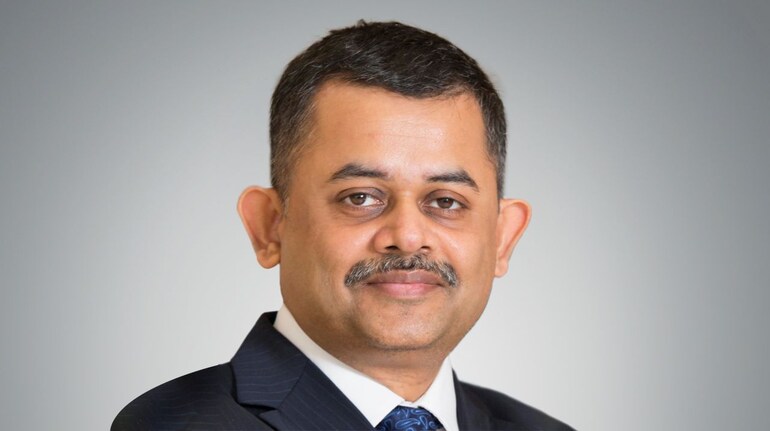

As markets debate whether India’s investment cycle is losing momentum, Neelkanth Mishra, Chief Economist at Axis Bank and Head of Global Research at Axis Capital, argues the prevailing narrative may be misleading. “Everyone is saying capex is not happening. It is fashionable to say capex is not happening,” Mishra said at CNBC TV-18’s The Alpha Generators of 2026 conclave, pushing back against concerns of a stalling private investment cycle.
Mishra pointed out that unlike government spending, private capital expenditure does not show up cleanly in headline data, often leading to misinterpretation. “No one really gives us private investment data,” he said, adding that balance-sheet indicators tell a different story. Tracking investing cash flows of the BSE 200 companies, Mishra noted that “investing cash flow has been growing faster than nominal GDP for quite a while now,” signalling that corporates have already begun deploying capital.
Sector-level indicators reinforce this view. Mishra highlighted that telecom capex, excluding the completed 5G rollout, is growing at around 15%, while cement production in the September quarter showed 8–9% growth. “Cement is not something you can build inventory on,” he said, arguing that higher cement volumes imply broader industrial activity, including steel consumption, labour demand and commercial vehicle movement. Early signals from FASTag usage and freight movement also point to rising activity, he added.
Crucially, Mishra stressed that the current investment cycle looks far more disciplined than past booms. “It is scary when your industry capacity is 45 million tonnes and you have 80 million tonnes under construction… this is much more sane and much more sustainable,” he said, referring to metals and power capacity additions. Order books of industrial companies, he added, “are all looking pretty good,” helping explain the strong performance of several capital goods stocks over the past few years.
While private capex is emerging in pockets, Sajjid Chinoy, Chief India Economist at JPMorgan, cautioned that the broader cycle will hinge on whether the current consumption recovery proves durable. Chinoy noted that government capex and real estate — the primary post-pandemic growth drivers — have slowed from peak levels, even as consumption has begun to take over. “Everyone expected this quarter to be strong because it’s a double-barrelled approach,” he said, pointing to tax cuts, rate easing and policy support. The real test, Chinoy argued, is whether consumption strength sustains “three quarters from now” and broadens beyond autos, providing enough visibility for corporate investment to expand meaningfully.
Chinoy also flagged global uncertainty as a restraint on animal spirits. With geopolitical risks, trade shocks and Chinese excess capacity still in play, he said utilisation thresholds may need to rise further before companies commit to large-scale investments. “This is a sugar rush… we need to see this rotation and growth drivers continue to three quarters to then cloud in private investment,” he said.
From a macro-financial perspective, Gautam Chhaochharia, Head of India Research at UBS, said the next leg of growth will be closely tied to the credit cycle. “One of the key things we are watching closely is credit cycle picking up,” he said, noting that India’s banking system is among the best capitalised it has ever been. Chhaochharia pointed to a sharp acceleration in loan disbursements in late December, signalling that monetary easing is finally transmitting to the real economy. “When people borrow, they will spend… what was an inefficient cycle is now starting to become a virtuous cycle,” he said.
Chhaochharia expects growth in FY27 to feel more broad-based, driven by easing fiscal headwinds and supportive monetary conditions. He added that financials remain one of the few sectors offering attractive risk-reward, while power and utilities could see multi-year demand growth that is not yet fully priced in.
Together, the panel argued that while headline capex data may appear subdued, the underlying private investment cycle is slowly turning, supported by improving consumption, accelerating credit and healthier balance sheets. The challenge for markets, they said, is to distinguish between the end of an outsized post-pandemic impulse and the early stages of a more sustainable, private-led growth phase as India moves deeper into 2026.
Disclaimer: The views and investment tips expressed by experts on Moneycontrol.com are their own and not those of the website or its management. Moneycontrol.com advises users to check with certified experts before taking any investment decisions.Discover the latest Business News, Sensex, and Nifty updates. Obtain Personal Finance insights, tax queries, and expert opinions on Moneycontrol or download the Moneycontrol App to stay updated!
Find the best of Al News in one place, specially curated for you every weekend.
Stay on top of the latest tech trends and biggest startup news.





