






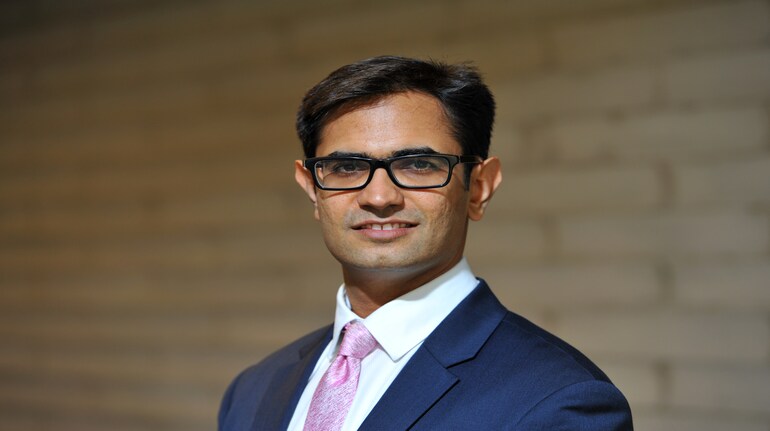
“Volatility is the price that you pay for compounding,” according to Sandeep Jethwani, co-founder of Dezerv, noting that investors rarely envisage market swings when they invest. Speaking at the Moneycontrol Dezerv Wealth Summit, Jethwani explained that “bad decisions happen at periods of extreme volatility,” whether during market euphoria or downturns, and that the recent phase of flat returns has begun to test investor patience. He cautioned that overdiversification and reliance on past performance can weaken portfolios, adding that “staying invested is important” as investors “don’t know which day markets will be up.” Jethwani emphasised that disciplined asset allocation and long-term thinking remain central to wealth creation across market cycles.
Edited excerpts:
What is your perception of how people think about volatility? What are some of the things that you, as an investor thought about and how have you used that in laying the foundation for how Dezerv goes out and tells the story of compounding?
While investing, nobody really envisages volatility. And in some sense, volatility is the price that you pay for compounding. When you think about the compounding formula, it's the amount that you invest, the return that you get and the time that you invest for. Out of these, what's essentially is somewhat in our control is the time that you invest for.
When you think about the extent of time, where do bad decisions happen? It's at periods of extreme volatility. It's either when markets are doing exceptionally well, then we get carried away and over invest, or when things are down is when we tend to exit the markets prematurely. India is now in the last few years, or at least for the last year and a half or so, seen another version of volatility, which is no return for an extended period of time.
It's gone through a time correction. And these are times when people's patience is being tested right now. We see a lot of clients, or even when people are reviewing their own portfolios, think about the fact that last one year markets have given lesser return than fixed deposits.
That's colloquially how people refer to the fact that their opportunity cost of investing has been high and that they've not been rewarded for it. I think in this period of time there's really no solution other than wealth managers hand-holding clients and talking and reminding clients about the longevity of the time for which they're investing. And how the fact that if you miss a certain number of days in the market, you actually miss most of the returns in the market.
Because like you said, you don't know which day markets will be up, which day you will have that 5% rally. But staying invested is important. That said, it's not to say that equities is the only asset class that we need to make money out of.
Fixed income has done reasonably well in India. Short-term rates are reasonably decent. Gold and silver also merit a reasonable allocation in the portfolio.
We think up to 10% of the portfolio should be allocated there. And then there is international assets which merit some allocation. So it's that creating that overall portfolio that becomes really important.
A lot of our time and attention is focused on the number which moves every day on the screen, which is the price of the Nifty or the price of gold. And sometimes those numbers going up and down draw too much attention, much more than we should give it.
You said that clients are already asking you why should I invest in equities because in the last one year you had flat returns, does it tell you something? Is everything that we've been talking about, is it going in vain?
The more things change, the more they stay the same. And I think it's relevant that people get worried about their portfolio not giving great returns. If you see the last 14-15 months, and especially folks investing in individual stocks have seen a situation where while the index might seem flat, the median stock is down much more. If you think about the median Nifty 500 stock, that's something that potentially worries a lot of people. Most of the portfolios were built in a time when markets were reasonably up. If you look and go back to 2020 and the troughs of 2020 and since then is when most people at home started investing, I think they saw that bit of a rally and then a little bit of stagnation and some down if you especially had direct stock portfolios. I think that right now it's not in that frame where people are exiting equity markets just yet. But certainly the sense of impatience is beginning to kick in and that's again really where the role of the wealth manager or advisor comes in.
What do you tell people who are asking you this question?
Our job as somebody who's trying to educate people about the markets is to de-link the orientation towards past performance. The assumption that the great returns of last year will get replicated or the negative returns of last year will get replicated into time in the future. I think just walking everyone through that concept that what has happened in the last one year is definitely not a reflection of what is going to happen in the next year or the couple of years after. In fact, almost certainly you'll get it wrong because if the market is given 10% return in the last year, it will not give 10%.
It will either give 12-15% or 7-8% or negative. It will certainly not give exactly the same return. So you're sure to be wrong if you assume that that's the same return you're going to get.
The second is, to some extent, if you think about what kind of post-tax returns different asset classes are giving and walk everyone through that. While fixed deposits might be giving 7-8% or 6-7%, the post-tax returns on them are significantly lower than the anything else that these clients will do over a long period of time. And then reorienting back to the fact that this is money for a certain period, that this is not capital that they might need in the near future.
Those are conversations that need to be had, which is why this entire process is more consultative rather than instructive and telling people that this is what you should do, but it's more like what do you collectively think together, both as a wealth manager and as the owner of the wealth.
There is some appreciation of the fact that there are different asset classes and the question is on how much to allocate to which asset class. Today, when we look across portfolios, we do find over diversification, but at the same time we are not seeing portfolios getting hyper concentrated towards small and midcaps.
So, the average portfolio, like individual stocks have fallen that much, may not have suffered that much. While I think here is downside, it's not as bad as what we might assume in 18-20%. Is that a kind of downside? Absolutely not.
But I think clients are willing to engage. And if you think about the fact that these are not people investing for the very first time. The fact that in the last four five years they've experienced some bit of volatility.
Sure they've made money, but there is openness on most clients part. I think that's something that we hope that more people will exhibit, which is the fact that be willing to look at data, be willing to engage with data over a little bit of a longer period of time and when you look at those numbers it's not as bad as what looks in the short term.
Can you take us through some of the most common pitfalls in investor portfolios?
The first common problem that we see is reliance on past performance where we are making investments into selecting mutual funds, stocks or even other asset classes on the assumption that the last one year return is great and therefore these assets will continue to do as well in the future. The second part is over a period of time as more people talk to you about investments and you hear about more stocks and individual mutual funds, you tend to get over diversified. And the third is the tendency to churn or act on the portfolio more often than you should.
There is also F&O which has been a big part of allocations for a lot of people who are spending time on the trading screen and I think that has led to enough losses and Sebi has also written about it. So I think those are three large areas.
Are these also the same mistakes that, you know, very rich people, family, offices, businessmen also make?
We believe wealth solves a lot of problems but wealth also comes with a set of problems, which is the problem of choice. The moment you have, let's say, Rs 50 crore, Rs 100 crore plus, you have a situation where pretty much every asset class is within reach and at that point there is a tendency of evaluating things for the sake of novelty, right. We've seen this happen that some of the simpler investments, including mutual funds, potentially the most tax-efficient, best governed, the allocation that such investments should have to large portfolios tends to go down and there's an increasing allocation that happens to alternatives, in some cases individual investments.
Now, when you think about individual investments, there is a concept of adverse selection, which is that when an idea comes to me and I'm a family office running, let's say, a Rs 100 crore portfolio, one of the questions at least should be asked is why is this idea coming to me and why have institutional investors not gobbled it up? Because if you think about from a promoter's standpoint or from a founder's standpoint, they would want large single institutions in the cap table for most part, right. So I think that's, those are the questions and the problems that family offices face that because of choice, the allocation to exotics and alternatives becomes much higher, whereas sometimes the real opportunity is in plain sight, which is mutual funds and simple investments.
Despite the long-standing warning that past performance shouldn’t guide decisions, investor behavior hasn’t changed. As media, rating agencies, and the industry continue to highlight one-, three-, six-month and one-year returns, should this practice be reconsidered?
The fact is that the moment you ban something, there is be greater attention to that. And I, the way I think about it is that the NAVs are in the public domain. Pretty much everyone can figure out, even if I don't put it out there what the one month, three month, five or six month return is, people will see it, right? I think it's more the education around the fact that that's not the only thing that we should rely on. There are alternative data points that probably also need to be spoken about or written about. There is the concept of rolling return and I know some industry participants have spoken about three-year rolling return as being some of the data points that we should put out.
Even that in itself is not sufficient. Because the assumption that that three year rolling return will replicate into the future is something that we shouldn't assume. And therefore, the way we think about it at Dezerv, what differentiates us is not about what investment solutions I offer, but how we run these investment solutions. Our object, our thought process is that our selection should be more data-led and the data should not only be past performance. Today, when you look at the macroeconomic situation, you can evaluate or assume that certain styles will do better or certain styles of investing will do better and within those styles which are the individual fund managers or assets that we will have is a function of the micro parameters of that particular asset.
The reason we do this is because not only are we saying that data led investing does better, in some sense we are also getting out of the way. Because as wealth managers, as investment advisors, we are also human beings. We also have our biases.
By making sure we have robust frameworks running portfolios, to a large extent we can eliminate the bias. Can we fully eliminate human insight? Absolutely not. There needs to be a layer of check at the final stage.
But the largely it should be driven by a data led processes and that's something that we strongly believe in. This informs everything that we do, whether we create mutual fund portfolios or portfolios of boutique fund managers or even other asset classes. This is something that's fundamental to us.
What is your own personal money mantra?
My personal money mantra is to make life as simple as possible. For me, most of my allocation is towards mutual funds and to the point that some of us in the industry have access to some of the most exotic investments out there. But like I said, real return is lurking in plain sight. When it comes to index versus active managers, honestly we are not in a camp. There are times when we believe active management does better, such as these. And there are times when it's easier to hold the index and keep the cost low. So, I think it's about being objective and thinking about at that point of time what is right for the portfolio. But 7 to 8 mutual funds should be good for 70 to 80 percent of the portfolio.
Disclaimer: The views and investment tips expressed by investment experts on Moneycontrol.com are their own and not those of the website or its management. Moneycontrol.com advises users to check with certified experts before taking any investment decisions.Discover the latest Business News, Sensex, and Nifty updates. Obtain Personal Finance insights, tax queries, and expert opinions on Moneycontrol or download the Moneycontrol App to stay updated!
Find the best of Al News in one place, specially curated for you every weekend.
Stay on top of the latest tech trends and biggest startup news.




