






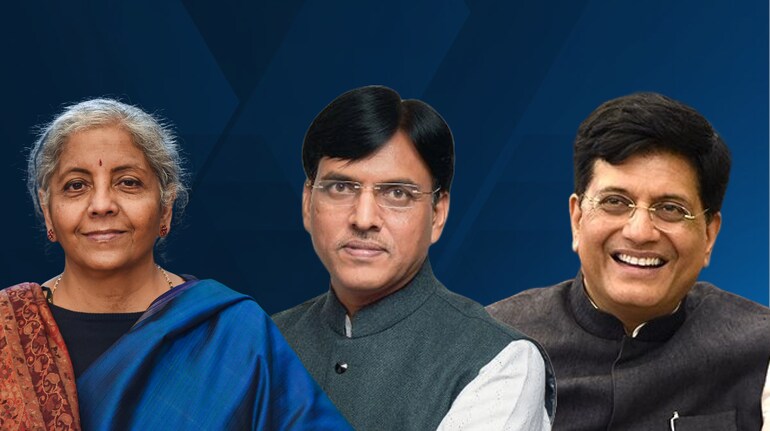

The year 2025 witnessed a profound structural transformation, driven by a trifecta of reforms in taxation, global trade, and labour welfare. Finance Minister Nirmala Sitharaman spearheaded a "fiscal reset" through GST 2.0 and the landmark Income-Tax Act, prioritizing institutional trust and boosting household disposable income.
Commerce Minister Piyush Goyal accelerated India’s global integration through high-value trade pacts like the UK-CETA and EFTA, positioning the nation as a resilient manufacturing alternative. And complementing these shifts, the implementation of the four new Labour Codes dismantled archaic regulations to create an inclusive and digitally empowered workforce, securing India’s path toward a modernized, manufacturing and export-led economy.
Finance Minister Nirmala Sitharaman
Nirmala Sitharaman, India’s Finance Minister, was one of the most influential voices shaping the country’s economic reform trajectory, steering a policy shift anchored in tax simplification and institutional trust in 2025. The year’s economic narrative under her watch has been built around stability, credibility, and a restructuring of the tax ecosystem — both for businesses operating within the GST framework and for households, particularly at relatively lower incomes, who saw a significant tax cut.
Sitharaman during the year also ensured public capital expenditure push – by both Centre and states -- continues to stimulate economic growth in the country, while maintaining fiscal prudence.
Three key accomplishments in 2025
Why it matters?
Together, GST 2.0 and personal tax relief have reframed the reform debate around predictability, investment confidence, and household spending resilience. A more efficient GST ecosystem has the potential to lower the cost of doing business, reduce compliance ambiguity and strengthen supply-chain transparency — particularly for exporters, MSMEs and manufacturing sectors seeking scale.
Commerce and Industry Minister Piyush Goyal
2025 has been a crucial year for India, as the country’s global economic partnerships, spearheaded by Commerce and Industry Minister Piyush Goyal, have gained significant momentum through a series of recent trade agreements, which are reshaping its export landscape.
The landmark India–UK Comprehensive Economic and Trade Agreement (CETA) grants duty-free access to 99 percent of Indian exports, setting the stage for bilateral trade to reach US$ 100 billion by 2030. India also concluded two crucial trade pacts with Oman and New Zealand while the trade pact with the European Free Trade Association (EFTA) became operational.
The US-India Bilateral Trade Agreement (BTA) has not been finalized, but Goyal says that both the countries are in “advanced stages" of negotiations for the agreement.
Three key achievements of 2025
Why it matters?
In 2025, these reforms acted as an engine for growth. By securing duty-free access to key markets via the UK-CETA and EFTA, India is insulating its exporters from global trade wars. The EPM and the withdrawal of QCOs on raw materials empower MSMEs by slashing input costs and compliance hurdles, ensuring exports remains competitive and resilient despite high-tariff environments.
Labour Minister Mansukh Mandaviya
The much-awaited labour reforms were finally implemented in 2025, aimed at strengthening India’s workforce and boosting economic growth going forward. Labour Minister Mansukh Mandaviya has called these laws "not just ordinary changes, but a major step taken by Prime Minister Narendra Modi for the welfare of the workforce".
The four labour laws, which have replaced 29 existing laws, are the following: Code on Wages, 2019; Industrial Relations Code, 2020; Code on Social Security, 2020; and the Occupational Safety, Health, and Working Conditions Code, 2020.
These laws bring in uniformity of definitions, web-based Inspection system to ensure transparency and accountability in enforcement, and eliminates inspector raj, instead replacing inspection with facilitation.
The three key other themes
Why it matters?
In 2025, these reforms represent a historic shift from a restrictive, colonial-era labor regime to a modern, worker-centric ecosystem. By consolidating 29 laws into four streamlined codes, India has effectively dismantled the "Inspector Raj," replacing harassment with transparency and trust-based compliance. Additionally, by removing gender-based barriers--- such as scrapping various rules preventing women from working at night--- and simplifying EPFO withdrawals, these measures create a dignified, flexible, and inclusive workforce, positioning India as a global benchmark for balancing industrial growth with robust social security.

Discover the latest Business News, Sensex, and Nifty updates. Obtain Personal Finance insights, tax queries, and expert opinions on Moneycontrol or download the Moneycontrol App to stay updated!
Find the best of Al News in one place, specially curated for you every weekend.
Stay on top of the latest tech trends and biggest startup news.





