






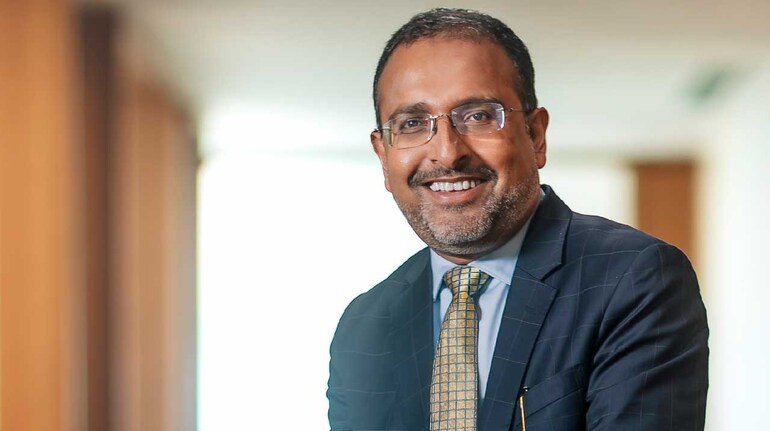

L&T Finance's multi-year shift away from wholesale lending towards a predominantly retail portfolio is beginning to show clear financial gains, with NIMs plus fees rising 19 basis points sequentially to 10.41 percent in the latest quarter, driven by higher microfinance and rural loan disbursements, managing director and chief executive officer, Sudipta Roy told Moneycontrol in an interview.
He added that the loan book is now 98 percent retail, helping improve yield efficiency even as interest rates soften. At the same time, credit costs declined to 2.83 percent from 2.98 percent in the previous quarter, with the company guiding towards a further moderation to 2-2.2 percent by Q4FY27, signalling improving asset quality after last year’s microfinance stress.
Edited excerpts:
Can you explain how the loan book has evolved over the last few years?
We started with a loan book of around Rs 80,000–85,000 crore, with a roughly 50:50 mix between wholesale and retail. As we initiated our Lakshya programme, we started deleveraging our assets, we consciously reduced wholesale exposure. As a result, the overall book actually shrank for almost two years, around six to seven quarters.
Growth resumed around mid-2023, driven primarily by retail. Wholesale assets are bulky and low-yielding, they offer operating efficiency but not margin efficiency. Retail, on the other hand, delivers higher NIMs but is more manpower-intensive.
As wholesale assets tapered off and retail picked up, our NIMs and fees improved meaningfully. At peak, NIMs plus fees touched around 11.15 percent. They moderated subsequently but have started moving up again as microfinance disbursements revived. This quarter, NIMs and fees improved by about 19 basis points, which is a meaningful expansion.
How has retailisation impacted margins and credit costs?
Retailisation has clearly helped margins. As higher-yielding businesses like microfinance, gold loans, two-wheelers and personal loans gained traction, NIMs and fees moved up.
On credit costs, while there was a spike last year due to microfinance stress, that has now stabilised. Credit costs this quarter stood at 2.83 percent, down from 2.98 percent in the previous quarter (on a core basis). We expect credit costs to gradually trend down to around 2–2.2 percent by Q4 FY27.
Overall, retailisation has led to higher margins, improving credit costs and better return metrics. Today, we are effectively a 98 percent retail-focused institution, and the remaining 2 percent will run down over the next couple of years.
Despite RBI rate cuts, NIMs have risen from 8.24% in Q1 FY26 to 8.58 percent now. How did you manage this?
When interest rates were rising earlier, we did not pass on rate hikes across most products, except home loans. Businesses like two-wheelers, tractors and microfinance have sufficient spreads and are not very sensitive to repo movements.
Now that rates are coming down, we benefit because we don’t need to reduce rates in most segments. Only the mortgage book, about Rs 28,000 crore out of a total Rs 1.14 lakh crore, gets impacted. Even within that, only the home loan portion (65-70 percent) is rate-sensitive.
The recent improvement in NIMs is largely due to higher microfinance and rural business loan disbursements, which are our highest-yielding products.
What is your guidance for NIMs plus fees for the year?
We have consistently guided that NIMs plus fees will remain in the 10-10.5 percent range. Depending on interest rate and cost pressures, it may move within that band, but we don’t expect it to fall below 10 percent in the medium term.
Given that we have navigated the microfinance challenges successfully, we see a good opportunity to grow this book, which should keep us closer to the upper end of the range.
Why did CRAR decline by about 1 percent quarter-on-quarter?
The decline is purely due to strong book growth, around 21 percent. We actually want leverage to increase. Debt/Equity(Average) has risen to 3.67, implying total leverage of around 4.67. As growth accelerates, capital naturally gets utilised.
Which segments drove disbursements in Q3?
Q3 was significantly stronger than Q2. Two-wheeler disbursements rose to Rs 3,217 crore, while tractor disbursements jumped to Rs 2,783 crore from Rs 1,654 crore in Q2. Rural business finance, including microfinance, also performed well, with disbursements of about Rs 6,740 crore. Festive demand and rural recovery played a key role.
What is the status of super bike loans?
This is a niche segment. We finance about 100-120 super bikes per month. These bikes are priced around Rs 20 lakh and are fully imported, so the market is limited. We don’t expect any major scale-up here, especially given rupee depreciation making imports more expensive.
Gold loan book grew 18 percent in Q3. What’s the outlook?
Gold loans should perform very well. We are opening one branch every day and expect to reach around 330 branches by Q4FY26. Around 64 new branches have already been rolled out. The impact of this expansion should start reflecting meaningfully from next quarter onwards.
While we don’t give specific growth guidance, gold loans will contribute within our overall AUM growth guidance of 20–25 percent.
How have you managed to reduce borrowing costs?
We’ve actively optimised our borrowing mix. About 26 percent of our borrowings are PSL-linked, which are 1.25-1.5 percent lower than the normal cost. We have also prepaid certain expensive bank borrowings and replaced them with market instruments like NCDs, CPs, SIDBI loans and ECBs raised when conditions were favourable.
As a result, normal bank borrowings have reduced from 28 percent last year to 23 percent now. High-cost borrowings have been systematically replaced with lower-cost funds.
How do you see borrowing trends going forward, especially with expectations of rate cuts?
Borrowing growth will track book growth. If the loan book grows at 20-22 percent, borrowings will rise in line with that. RBI’s liquidity measures have kept short-term rates soft, which helps us tap CP markets efficiently.
Our ALM allows CP exposure of up to 15 percent, though we stay well within that. Overall, we remain comfortable with our borrowing mix and cost trajectory.

Discover the latest Business News, Sensex, and Nifty updates. Obtain Personal Finance insights, tax queries, and expert opinions on Moneycontrol or download the Moneycontrol App to stay updated!
Find the best of Al News in one place, specially curated for you every weekend.
Stay on top of the latest tech trends and biggest startup news.





