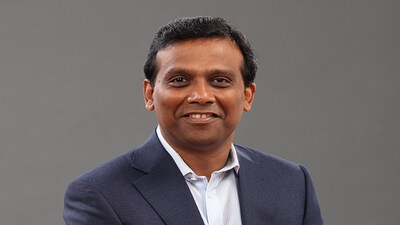
Cognizant offers reality check on Anthropic AI after Rs 2-lakh-cr IT rout, says value won’t shift magically
Addressing concerns in the post-earnings press conference, Cognizant CEO Ravi Kumar S said the assumption that new AI tools can be plugged into enterprise environments and immediately replace large parts of IT services work is misplaced.

Cognizant plans to hire about 25,000 freshers in 2026 as AI boosts productivity
Contrary to the widespread discussion on AI-led job losses, the management said higher fresher intake is being supported by rising productivity at the bottom of the pyramid, enabled by greater use of AI tools and agentic software.
Cognizant beats Q4 revenue guidance, flags cautious demand
For 2026, Cognizant guided for constant currency revenue growth of 4-6.5%.
Anthropic-led AI volatility an opportunity for IT services, says Happiest Minds’ Ashok Soota
Drawing parallels with earlier disruptions such as SaaS and cloud computing, Soota said every major technology shift has historically expanded the scope of IT services.
Indian IT selloff reflects AI-led repricing fears, not demand collapse, say analysts
Market participants pointed to renewed concerns after Palantir’s latest earnings commentary highlighted how AI-led platforms are compressing timelines for complex enterprise work, worrying expectations around traditional IT services-led revenue models.
Infosys to setup US lender Citizens’ AI-first innovation hub in Bengaluru
The collaboration comes at a time when global banks are expanding India-based GCCs to scale AI development, talent, and digital product engineering.
US-India trade deal eases outsourcing curb fears for Indian IT, GCCs
The easing of trade-related anxiety is expected to directly benefit GCCs, as US enterprises that had adopted a wait-and-watch stance on expanding or setting up centres in India amid trade friction begin to move forward with their plans.
US trade deal strengthens India’s position as a strategic technology partner, not just a low-cost delivery hub: Experts
According to Phil Fersht, CEO, HFS Research, this tariff cut will bring a strategic alignment, as a softer US-India trade posture reduces geopolitical friction at a time when enterprises are already reassessing supply chains, vendor concentration, and long-term delivery models.
Govt’s push to AI in Budget 2026 to improve productivity in sectors, says FM Sitharaman
The finance minister said that using AI will not displace labor but will create more job opportunities for people who are trained and skilled in AI.
Budget's Data Centre push wins applause, but sparks level-playing-field concerns
Industry leaders believe this move is India’s play to outcompete established hubs like Singapore, Ireland, and the Middle East for global cloud infrastructure investment.
Budget 2026 signals India doubling down on its position as global tech services leader, IT industry says
As per the new budget, the government has proposed increasing threshold of safe harbour margins for Indian information technology services sector from Rs 300 crores to Rs 2000 crores.
GCC industry cheers Budget 2026, says it ends the challenging transfer pricing uncertainty
Industry executives said the changes materially improve ease of operations and reduce audit exposure and dispute risk.
Can Budget 2026 help India’s electronics manufacturing mature?
ISM 2.0, ECMS approvals, and capex visibility can have a big impact on EMS and semiconductor-linked players
Data Centre tax holiday to benefit Indian players, GPU infra big way: Yotta CEO Gupta
Additionally, Gupta also pointed out that the use case of foreign cloud providers serving global demand from India shall increase significantly.
Budget 2026: Govt proposes safe harbour margin of 15.5% for IT sector; expands threshold from Rs 300 crore to Rs 2000 crore
Calling India a global leader in IT services, Sitharaman has clubbed software development services, contract R&D services, IT enabled services, knowledge process outsourcing under a single category of Information Technology (IT) Services.
Foreign cloud providers using local data centres to get tax holiday till 2047, FM announces in Budget
To qualify, such companies must route services for Indian customers through an Indian reseller entity, ensuring that India not only becomes a global hub for cloud infrastructure.
Budget 2026 proposes to setup high-powered committee to recommend measures on services sector
Finance Minister Nirmala Sitharaman added that this measure will make India a global leader in services with a 10% global share by 2047.
Budget 2026: Cutting-edge technologies, including AI, can serve as growth multipliers, says Finance Minister
Sitharaman said new technologies are enhancing production but at the same time, increasing demand for water and energy sharply
Trading levels for Budget Day: Nifty should stay above 25,350 to aim for 25,600, say experts; check downside target
Analysts said the Nifty needs to hold above the 25,350 level to extend its upward move towards 25,600.
IT services hiring stays weak; enterprises, GCCs pick up, says Quess CEO
Within the segment, GCC clients now account for roughly 72% of professional staffing headcount.
Leaders eat last: NR Narayana Murthy stresses fairness in executive pay, high governance standards
Murthy described legendary banker Aditya Puri as 'India’s finest entrepreneur post-Independence,' drawing a contrast between the paths taken by Infosys and HDFC Bank in building scale and influence.
Indian IT majors flag trust, data readiness as enterprises scale AI
Indian IT majors say the next phase will be less about hype and more about fundamentals, clean data, clear accountability, and systems that can explain their decisions at scale.
GCCs emerge as key lever in AI, services transition, says Economic Survey 2026
Services have increasingly carried the burden of export growth, even as global conditions have become more volatile, it says
Economic Survey moots 'AI Economic Council' to align tech adoption with jobs, skills
The survey has flagged the risk of unchecked automation in a country with a large and diverse workforce, arguing that AI deployment must be carefully seen through to avoid destabilising labour markets
Happiest Minds founder and executive chairman Ashok Soota explores stake sale, taps banker to assess options
Soota currently holds over 32% in the IT services firm directly and more than 40% through other promoter holdings. Soota’s stake in Happiest Minds Technologies is valued at approximately Rs 1,980 crore at current market prices.