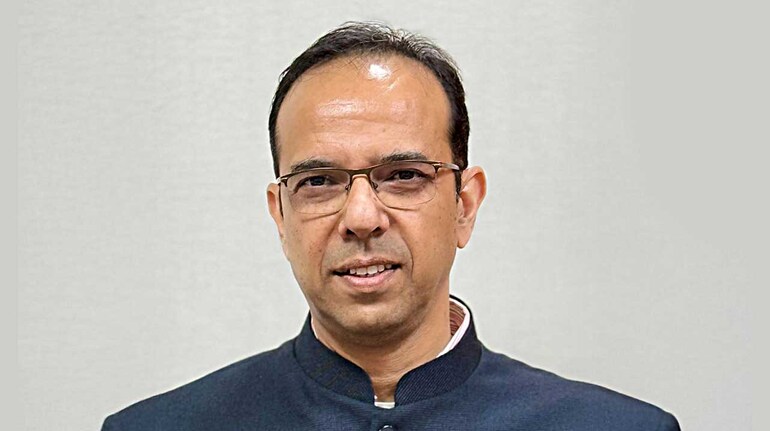
Microfinance and MSME lender Fusion Finance has resolved the concerns around covenant breach, CEO Sanjay Garyali said, adding that the company will see normal audit report remarks in FY27.
Covenants are financial conditions imposed on a borrower to ensure the company remains financially healthy and capable of repaying debt. The auditors of Fusion Finance had in Q2FY25 raised concerns about the lender's ability to remain a going concern amid operational challenges.
“That remark relates mainly to loan covenant breaches, not financial instability. The upcoming Rs 400 crore rights issue further strengthens confidence. We expect normal audit remarks from FY27 onward, and improvements are already visible,” Garyali told Moneycontrol in an interview.
Edited excerpts:
The company had significant losses last year due to write-offs. How has the situation this year?Last year’s losses were largely due to heavy write-offs. This year, the losses have come down drastically. Our GNPA has reduced to 4.5-4.6 percent, a major improvement. Collection efficiency has improved to 98.85 percent, nearly 99 percent. We expect visible profitability in H2FY26.
Our Net NPA is around 0.3 percent, which is very healthy. Anything below 0.5 percent is strong, considering our GNPA has come down sharply.
Has all the pain from the legacy book been absorbed? When do you expect a full turnaround to profitability?Yes, most of the pain has been absorbed. Two factors drive profitability - collection efficiency of the new book currently at 99.5 percent and residual pain in the old book almost eliminated.
The new book now forms 65 percent of the total portfolio. Leverage levels (borrowers with >3 lenders) have reduced from 28–30 percent earlier to 6.8 percent, showing strong credit discipline. Hence, we expect H2 FY26 to be fully profitable.
The new book refers to the microfinance portfolio created under new credit guardrails since August 2024. It now forms 65 percent of our total book and comprises lower-leveraged, better-quality customers.
What is the outlook for the new SME business and its revenue potential?The SME business, though five years old, now has strong growth potential. It’s a secured product, providing risk diversification.
Currently, we have 91 branches, with a book size of Rs 710 crore (about 10 percent of the overall portfolio) and monthly disbursements of Rs 30 crore.
We expect to scale this to Rs 70-80 crore per month within a year, without major Opex pressure, as we will expand within existing markets.
How has the cost of funds moved recently, and what’s your outlook?The overall cost of borrowing has remained largely flat, as we’ve replaced higher-cost funds with fresh borrowings. However, the incremental cost has risen slightly because funding for microfinance companies remains selective.
We expect rates to ease from Q4FY26. Despite this, NIMs have held steady due to improved asset quality and fewer reversals.
Your first rights issue has been completed. How was the fund utilised?The first tranche of Rs 400 crore was fully utilised for disbursements, not for write-offs.
The second tranche of Rs 400 crore, which was part of the total Rs 800 crore issue has been approved and will be received by mid-December 2025.
Our capital adequacy ratio (CAR) stands strong at 31 percent, which will further improve once the second tranche comes in.
Have you observed any moderation in disbursements? When will they return to FY24 levels?We’ve seen a steady rise, monthly disbursements have increased from Rs 250–300 crore in Q4 last year to Rs 450 crore now. We expect to reach Rs 550 crore per month by Q4FY26, implying around 35 percent quarter-on-quarter growth.
However, we are not targeting FY24 volumes, as those were under different risk norms. Our focus is on quality growth with 99.5 percent collection efficiency and controlled GNPA.
Any further fundraising plans in the next 18 months?We’re diversifying our funding sources. The board has approved raising Rs 1,000 crore via NCDs. We’ll reassess further equity needs after achieving a sizable book over the next 12–18 months.
Your auditors have maintained a “going concern” remark. When will that be resolved?That remark relates mainly to loan covenant breaches, not financial instability. With GNPA down to 4.5 percent, improving profitability, and waivers received from 88–89 percent of lenders, the concern is practically resolved.
The upcoming Rs 400 crore rights issue further strengthens confidence. We expect normal audit remarks from FY27 onward, and improvements are already visible.
What is the current perception among rating agencies?While I cannot comment on their internal views, all stakeholders have shown strong positive sentiment. Data supports this, GNPA at 4.5 percent, collection efficiency at 99 percent, disbursements up 35 percent, and strong leadership across business and risk functions.
Our transition post-management change has been smooth, and optimism about the company is high.
Several new people have joined the company. How has the transition been between old and new teams?The transition has been smooth and positive. Some senior roles saw changes, but many key positions are still held by long-term employees.
New leaders have brought fresh energy and process improvements without disrupting the company culture. In a recent strategic meet with 70 senior employees, feedback collected through an external consultant was overwhelmingly positive. The new and old teams are well aligned toward our growth objectives.

Discover the latest Business News, Sensex, and Nifty updates. Obtain Personal Finance insights, tax queries, and expert opinions on Moneycontrol or download the Moneycontrol App to stay updated!
Find the best of Al News in one place, specially curated for you every weekend.
Stay on top of the latest tech trends and biggest startup news.