






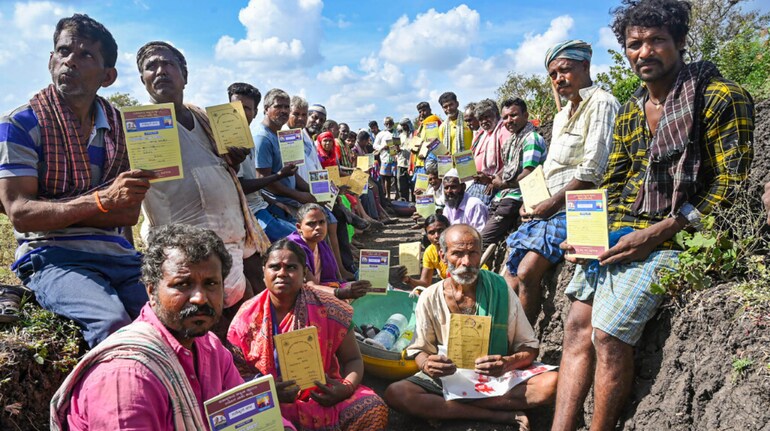
The revamped rural employment guarantee programme is set to test the fiscal resilience of several states, particularly Bihar, Chhattisgarh and Jharkhand, which may have to stretch already-constrained finances to accommodate the new cost-sharing framework.
With the Parliament approving the Viksit Bharat – Guarantee for Rozgar and Ajeevika Mission (Gramin) on December 18, the scheme marks a decisive departure from the demand-driven design of MGNREGA. While the minimum work guarantee has been raised to 125 days, under the new 60:40 Centre–state funding formula, fiscally weaker states face a disproportionately larger adjustment.
A Moneycontrol analysis suggests Bihar could be the most strained. The state would need to find about Rs 2,576 crore, equivalent to 0.23 percent of its GSDP (based on FY26 estimates), to fund its share. Analysis assumes 40 percent of the fund allocation by the centre over the last three years. This comes at a time when Bihar’s fiscal deficit stood at 9.2 percent of GSDP in FY25, well above the national average, leaving limited headroom for additional spending.
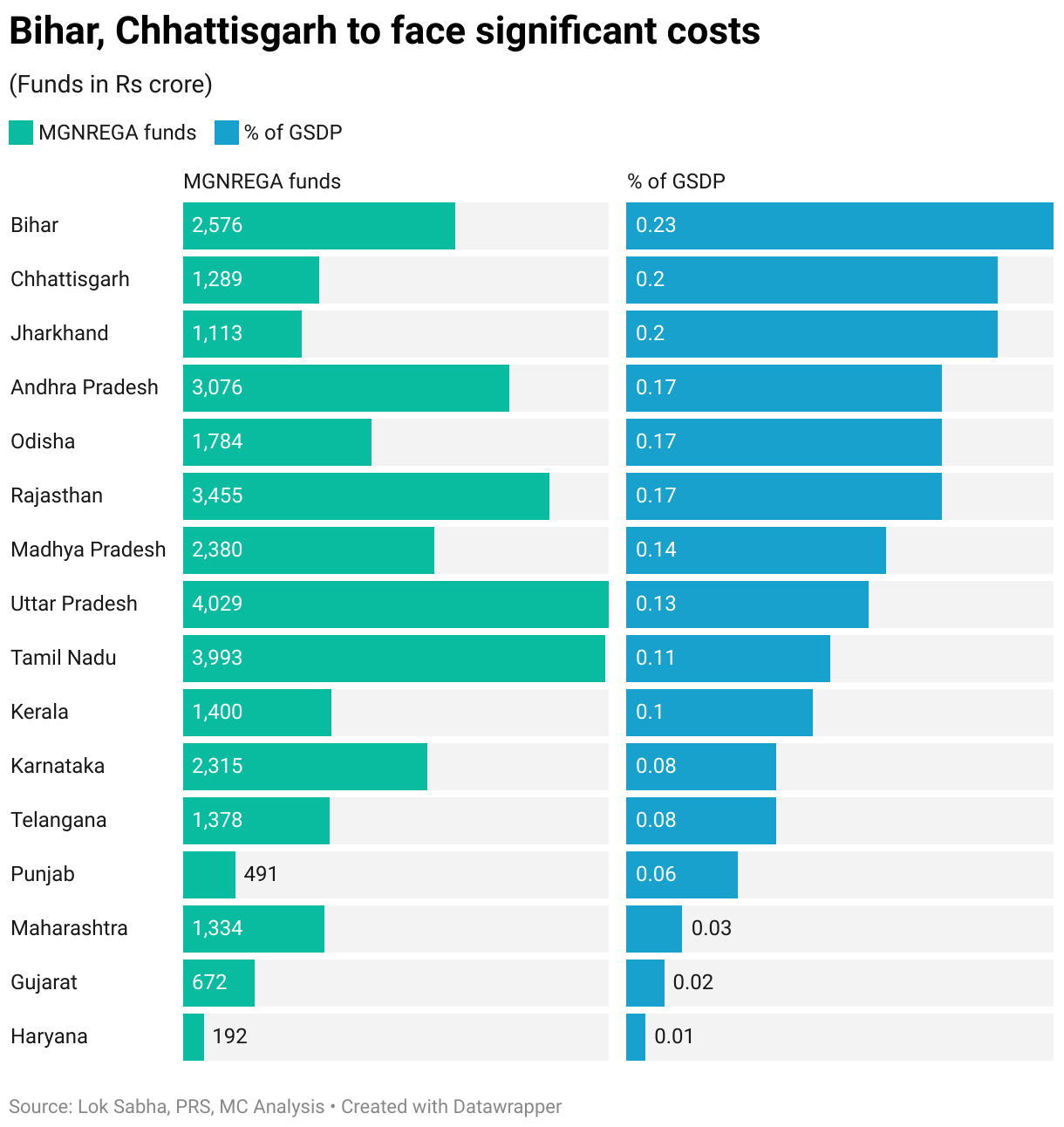
Chhattisgarh, despite a smaller absolute requirement of Rs 1,289 crore, faces a similar macro impact of around 0.2 percent of GSDP. The pressure is compounded by the state’s already elevated fiscal deficit of 5.3 percent and recent commitments such as its women’s cash transfer programme.
Jharkhand also ranks among the more vulnerable states. The additional burden amounts to 3–5 percent of its own tax revenue and roughly 0.2 percent of GSDP, underscoring the strain on states with weaker revenue bases.
By contrast, Uttar Pradesh, despite facing the largest absolute payout of over Rs 4,000 crore, appears better cushioned due to the size of its economy. The impact there is estimated at about 0.13 percent of GSDP. Wealthier states such as Gujarat, Haryana and Maharashtra face minimal macro stress, with the incremental burden largely below 0.05 percent of GSDP.
Budget priorities to change
The new cost-sharing arrangement is likely to reshape state budget priorities. Rural development allocations are expected to expand in most states as governments try to absorb the additional expenditure.
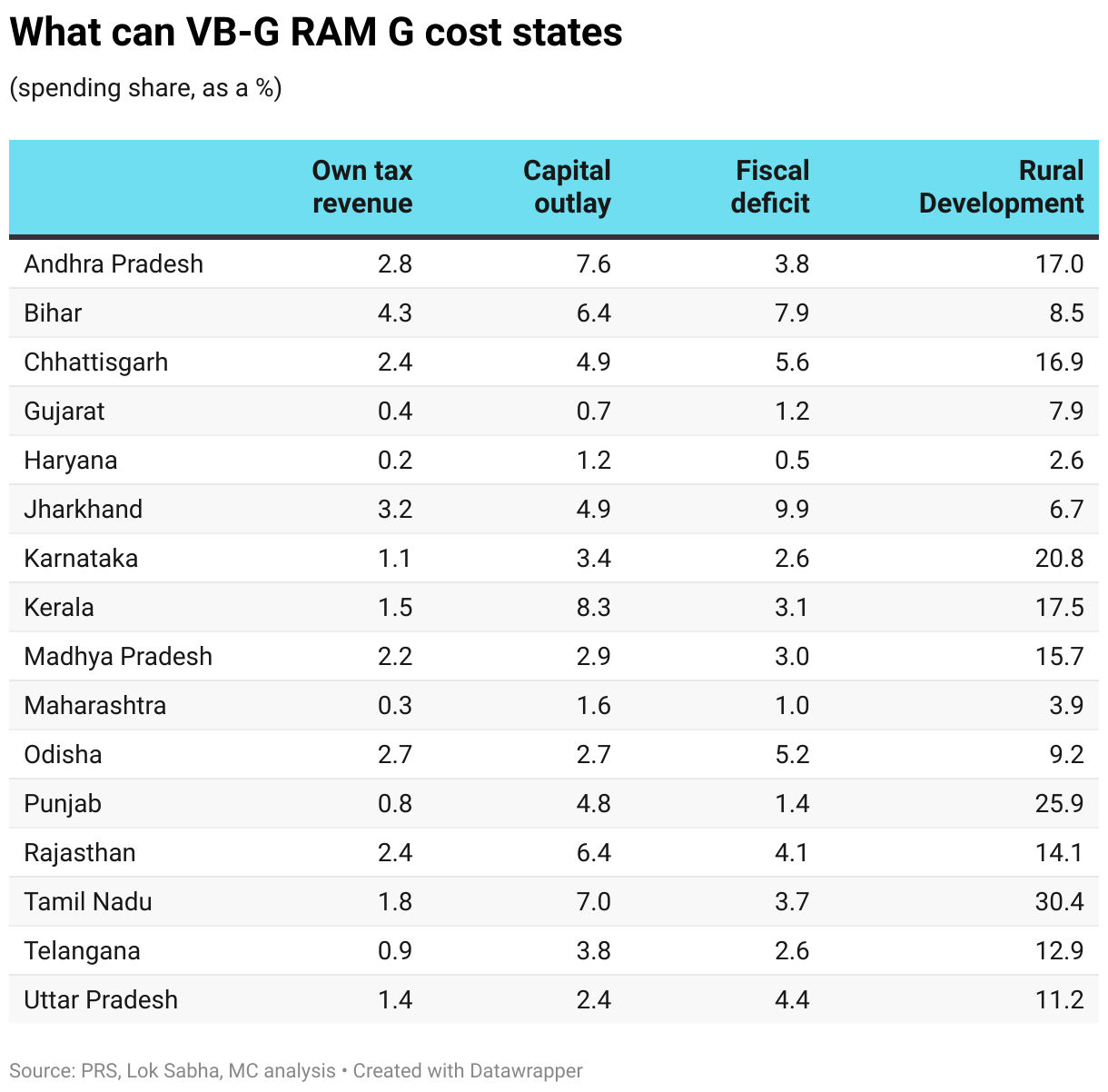
Tamil Nadu stands out as an outlier. A transfer of nearly Rs 4,000 crore under the scheme would amount to almost 30 percent of its existing rural development budget in FY26.
For Kerala and Andhra Pradesh, the added burden could crowd out capital spending if governments choose to offset the cost through expenditure cuts. In both states, the required outlay is equivalent to more than 7.5 percent of annual capital expenditure.
Equity concerns
Beyond headline fiscal metrics, the distributional impact is stark. Relative to own tax revenue, Bihar again emerges as the most exposed, with the additional obligation equal to about 4.3 percent of its tax collections, the highest among all states. Jharkhand and Rajasthan are not far behind.
The pattern suggests that states with weaker fiscal capacity and a heavier reliance on central transfers will feel the impact of the new financing framework far more acutely than their richer counterparts.
Discover the latest Business News, Sensex, and Nifty updates. Obtain Personal Finance insights, tax queries, and expert opinions on Moneycontrol or download the Moneycontrol App to stay updated!
Find the best of Al News in one place, specially curated for you every weekend.
Stay on top of the latest tech trends and biggest startup news.




