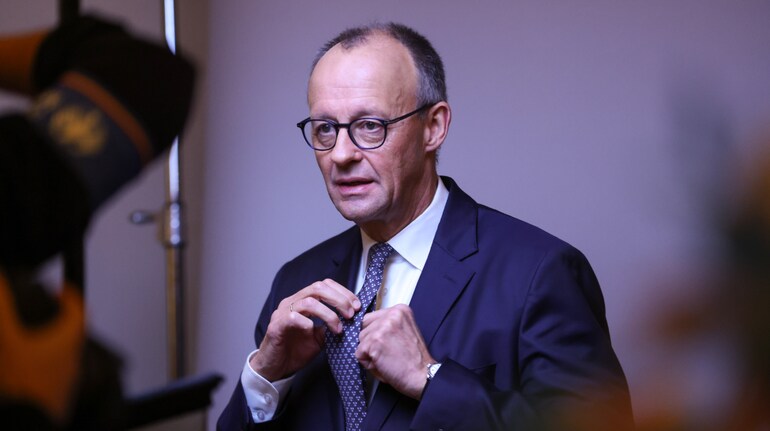

German Chancellor Friedrich Merz described “certain sectors” of his country’s economy as being in “very critical” condition and pledged that reviving growth will be his government’s top priority this year.
While Merz didn’t specify which sectors he had in mind in a letter to lawmakers in his ruling coalition, Germany’s key car sector has struggled with slumping sales in China, and its troubles have spilled into the rest of the economy.
“In 2026, we will therefore need to focus on making the right political and legal decisions to fundamentally improve the business environment,” Merz wrote in the letter, which was seen by Bloomberg. He acknowledged the government of his conservative bloc and the Social Democrats has not done enough in its first eight months in office to improve Germany’s competitiveness.
Europe’s biggest economy continues to perform poorly despite a host of reforms set in motion by Merz’s alliance, including the launch of a debt-financed infrastructure fund worth hundreds of billions of euros and a massive ramp-up in military spending.
Merz’s economic advisers recently trimmed their growth forecast for this year to below 1%, and the IMF has warned that Germany must pursue “bold” reforms if it wants to prosper.
Merz’s conservative CDU-led bloc has pushed for a broader pension reform, tax benefits for companies and cuts to social welfare — measures that the SPD, the junior party in the ruling coalition, largely opposes.
Responding to Merz’s letter, the head of the SPD’s parliamentary caucus, Matthias Miersch, underlined the importance to the center-left party of “adherence to collective bargaining agreements, stable wages, and effective social reforms.
“Those who want growth must protect jobs, promote innovation and investment, and strengthen social security,” Miersch was quoted as saying by the RND media group. “The SPD parliamentary group will set clear priorities for this in parliament, starting with our retreat this week,” he added.
Merz’s letter is part of a larger effort to reset his government after a year marked by missteps. On Monday, he fired one of his closest advisers, Chief of Staff Jacob Schrot, and announced plans to replace him with Philipp Birkenmaier, the CDU’s party manager who has strong ties to the business community.
The chancellor and the CDU leadership will hold a two-day meeting in Mainz on Friday to discuss planned social reforms, which are likely to provoke new tensions with the SPD.
With five state elections scheduled this year in Germany, the far-right AfD is expected to continue making gains and is on track to win in two former communist eastern regions in September.
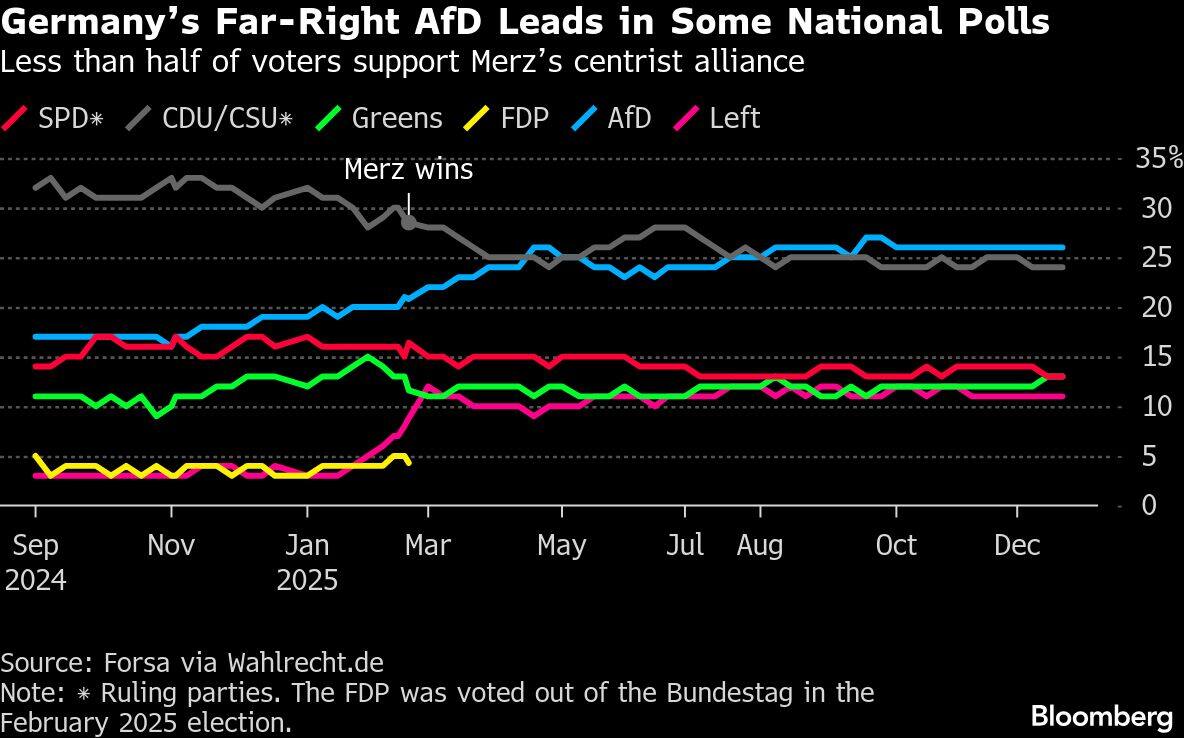 After suffering their worst result in Germany’s postwar history in last year’s election, the SPD has been struggling to regain lost ground.
The party suffered a fresh blow on Tuesday in Brandenburg, the federal state that surrounds the capital Berlin, when its coalition with the far-left BSW party collapsed. SPD Premier Dietmar Woidke told reporters he’d keep governing for the time being in a minority government while seeking to regain a majority.
The BSW — founded by former Left Party politician Sahra Wagenknecht — failed to get into the lower house of parliament in last year’s national vote and has seen its support erode amid intense infighting.
Discover the latest Business News, Sensex, and Nifty updates. Obtain Personal Finance insights, tax queries, and expert opinions on Moneycontrol or download the Moneycontrol App to stay updated!
Find the best of Al News in one place, specially curated for you every weekend.
Stay on top of the latest tech trends and biggest startup news.