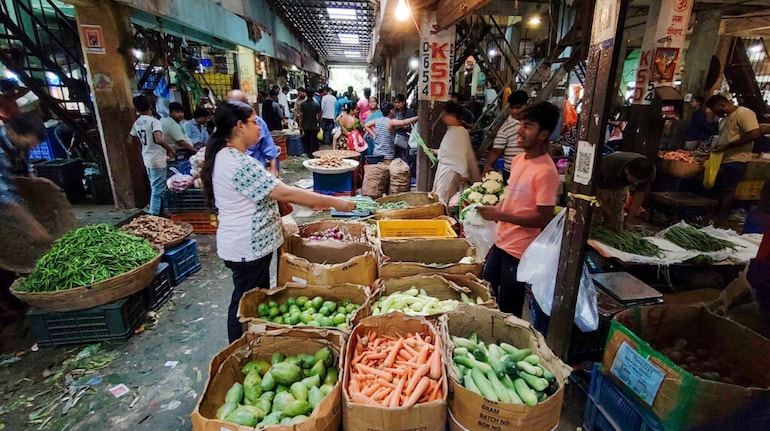

India’s retail inflation edged up to 3.2 percent in February, compared with a revised 2.74 percent in January, according to government data released on March 12, reflecting a modest pick-up in price pressures even as inflation remains well below the Reserve Bank of India’s medium-term target of 4 percent.
The latest numbers come under the new Consumer Price Index (CPI) series, which the government introduced in January after revising the base year to 2024 from 2012 and expanding the basket of items tracked to 358 from 299 earlier.
Data from the new series shows that price pressures have been gradually building in recent months. The CPI index rose to 104.57 in February, up from 104.46 in January and 104.10 in November and December, marking the fourth straight month of sequential increases in the price index.
Economists expect a continuation of these pressures with West Asia war continuing.
"ICRA expects the YoY inflation in the F&B segment to ease marginally in March 2026 from 3.4% in February 2026. However, the hike in prices of domestic (non-subsidised) and commercial LPG cylinder prices in early-March 2026 owing to global energy supply disruptions would exert upward pressure on inflation prints for the electricity, gas & other fuels, and restaurant & accommodation divisions in this month. These, along with continued hardening in average prices of precious metals such as gold would push up the headline CPI inflation to ~3.3-3.5% in March 2026," said Aditi Nayar, chief economist, ICRA.
Food’s weight has fallen to below 40 percent, compared with roughly 45 percent in the earlier series.
Food inflation, however, accelerated during the month. Price increases in the food category rose to 3.47 percent in February from 2.13 percent in January, making it one of the main contributors to the uptick in headline inflation. Even so, the overall impact of food on headline inflation is expected to be lower than in the past because of the reduced weight assigned to the category.
Tomato inflation was at 45.3 percent even as it cooled down from 64.5 percent the previous month.
Beyond food, several components recorded moderate price increases. Paan and tobacco inflation climbed to 3.64 percent from 1.96 percent, while housing-related costs such as maintenance and repairs rose to 3.26 percent from 3.2 percent. Education inflation remained elevated, with secondary education at 4.09 percent and higher education at 3.59 percent.
Transport-related costs were mixed. Inflation for transport services for goods remained high at 7.49 percent, though passenger transport services eased to 1.75 percent from 2.17 percent. Meanwhile, durable goods prices remained subdued, with vehicle prices continuing to contract by 4.65 percent, reflecting soft demand and price competition.
Some niche consumption categories recorded particularly sharp increases. Other personal effects inflation rose to 60.8 percent from 59.23 percent, with silver inflation at 160 percent, while gold prices rose 48.2 percent in February.
Garden products and pets inflation remained elevated at 8 percent.
Discover the latest Business News, Sensex, and Nifty updates. Obtain Personal Finance insights, tax queries, and expert opinions on Moneycontrol or download the Moneycontrol App to stay updated!
Find the best of Al News in one place, specially curated for you every weekend.
Stay on top of the latest tech trends and biggest startup news.