



While a majority of Indian companies (84 percent) conduct background checks for their hires, verifying information is a challenge. According to a report by global background screening firm HireRight, 65 percent of the companies said reducing time-to-hire was their most significant challenge.
About 80 percent of the respondents said background screening uncovered issues that would have otherwise gone unnoticed by their organisation. Common discrepancies include employment history, educational credentials, criminal convictions, and identity frauds.

The Employment Screening Benchmark Report 2018 said that among the discrepancies, previous employment discrepancies, educational credentials, and criminal convictions were the top three issues.
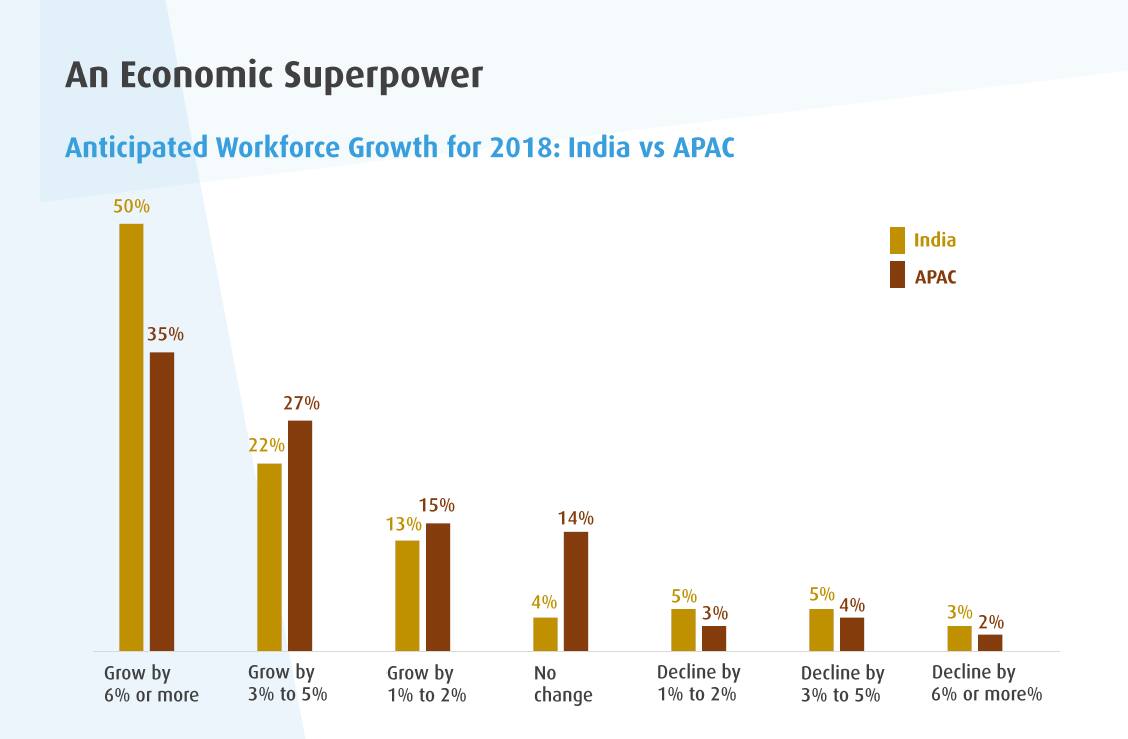
This comes at a time when there will be a jump in the workforce in the country, according to the report. About 85 percent of organisations in India were looking to bolster their teams with increased hiring – a sentiment considerably more bullish than the wider APAC region, at 77 percent.
Interestingly, the survey also revealed a significant decrease in organisational dependency on contingent workers. Compared to last year’s findings almost half (43 percent) of companies had less than 10 percent of their workforce made up of non-employees. This suggests planned recruitment drives in 2018 may focus on permanent positions.
"With aggressive growth ambitions, however, it appears that gaps are developing, exposing organisations to greater risk. These are apparent in the form of lapses in screening processes for senior-level candidates and international hires," said Steve Girdler, Managing Director of EMEA and APAC at HireRight.
Yet, despite the confident hiring expectations, improving employee retention seems to be the key theme for organisations in 2018. Almost half (47 percent) of businesses surveyed indicated they were investing in strategies to keep their staff – this is more than double (22 percent) from 2017.
However, there is some good news. Approximately, one in six (15.8 percent) background checks on candidates in India identified inaccuracies in the information supplied by them. Contrary to last year, where the rate of discrepancy was 20.1 percent.
Also read: You can't cheat your way to that job
The level of re-screening has, however, come down. The report said while India was an early adopter and champion of rescreening, the number of businesses performing post-hire rescreening has dipped from 64 percent in 2017 to 60 percent in 2018.
Rescreening is done to ensure accountability as they are promoted to a role with increased accountability or to ensure that records were up to date in areas like criminal convictions, professional licenses, and conflicting competitive interests.
The survey has also raised questions about the credibility of the way these background checks are done. About 40 percent of respondents said their organisations had different standards of screening, compared to 26 percent in 2017. Further, about 33 percent said there were fewer tests and interviews for senior candidates compared to entry-level hires.
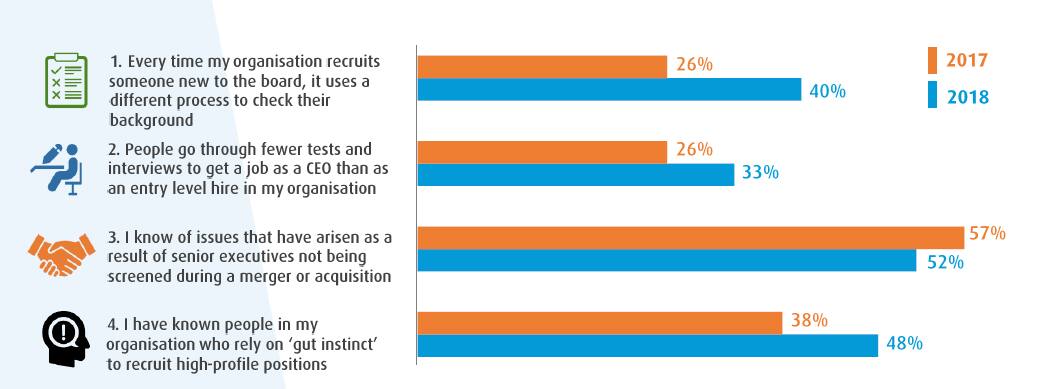
An alarming trend that was pointed out by the survey was that 48 percent knew of people in the company who hired for high-profile positions based simply on ‘gut instinct’.
The report is based on a survey of 6000 human resources, compliance and management professionals, with 478 being from APAC region.
Discover the latest Business News, Sensex, and Nifty updates. Obtain Personal Finance insights, tax queries, and expert opinions on Moneycontrol or download the Moneycontrol App to stay updated!
Find the best of Al News in one place, specially curated for you every weekend.
Stay on top of the latest tech trends and biggest startup news.