







India added 7.2 gigawatt (GW) of thermal capacity in the first nine months of this fiscal, the latest data from the Central Electricity Authority (CEA) shows, against the full-year target of 12.86 GW.
No capacity was added in December, highlighting the slowing pace of thermal rolls out in the past few years. Delays in equipment supply or land acquisition issues continue to stall projects even as demand soars.
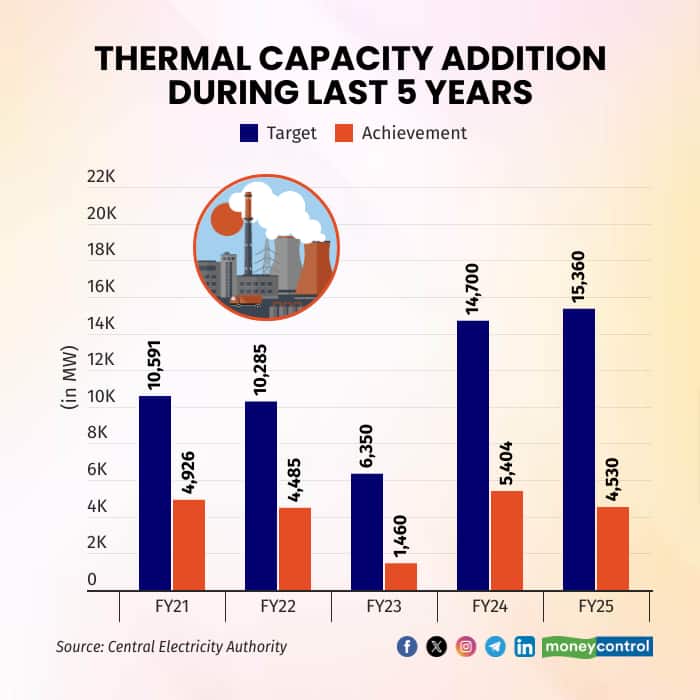
In FY25, too, only 4.53 GW of thermal capacity could be added against a target of 15.4 GW. In the current fiscal, the country might just be able to add 9.4 GW of thermal capacity, experts said.
Of the targeted 18 units, only eight were commissioner till December 31. The commissioned projects included six units in the central sector, with the remaining two units in the state sector.
The commissioned thermal units include North Karanpura STPP (660 MW), Barh STPP St-I (660 MW), Buxar TPP (660 MW), Patratu STPP (800 MW), Ghatampur TPP (660 MW), Khurja SCTPP (660 MW), Yadadri TPS (800 MW), and Obra-C STPP (660 MW).
The private sector commissioned four power units with a cumulative capacity of 1.65 GW.
As of January 20, 2026, 39.5 GW capacity, including 4.8 GW of stressed thermal power, was under construction.
Contracts for 22.9 GW have been awarded and are due for construction. Another 24 GW of coal and lignite-based candidate capacity has been identified, which is at various stages of planning, the data shows.
The bottlenecks
Delays in equipment supply or land acquisition issues are among the main reasons for the delay in commissioning plants, analysts said.
The government wants to take India’s thermal (coal and lignite) capacity to 307 GW by 2034–35. To meet the target and the rising demand, the power ministry has envisaged an additional minimum of 97 GW of coal and lignite-based thermal capacity.
Given the complexity of thermal plants, there are a lot of things that need to fall into place, including transmission lines, water pipelines, coal transportation lines and railway sidings, analysts said.
The country’s peak power demand reached 241 GW in 2025, as against CEA’s estimate of 270 GW. In 2024, the peak demand touched 250 GW in May against the government’s projection of 260 GW.
As of December 2025, the country’s total installed capacity stood at 513.7 GW, of which thermal capacity accounted for 246.9 GW.
While India has committed to achieving 500 GW of renewable energy capacity by 2030, policymakers have reiterated that renewable energy alone cannot meet the rising demand, affirming the country’s reliance on coal-based capacities.
Discover the latest Business News, Sensex, and Nifty updates. Obtain Personal Finance insights, tax queries, and expert opinions on Moneycontrol or download the Moneycontrol App to stay updated!
Find the best of Al News in one place, specially curated for you every weekend.
Stay on top of the latest tech trends and biggest startup news.





