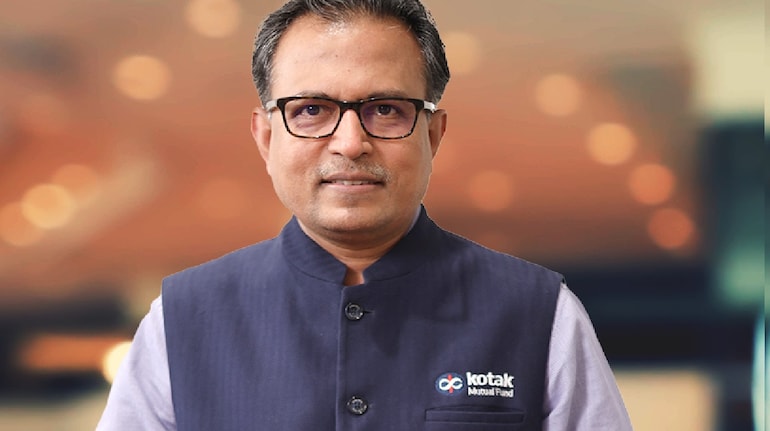

The budget will maintain the path of fiscal prudence and move forward with asset monetization and divestment, hopes Nilesh Shah, member, PM Economic Advisory Council and Managing Director of Kotak Mahindra Asset Management Company. Shah also spoke about the FII selloff, iterating that the selloff indicates ease of exit from India unlike other emerging markets, and that foreign portfolio investors are investing in Vietnam and South Korea. The selloff is also propelled by the Chinese markets. In a conversation with Shweta Punj of Moneycontrol, Shah suggests investors to temper their expectations on returns in FY27.
2025 has seen some very significant reforms, whether it's on the income tax front, GST, labour reforms, simplification of processes and so on. What steps should the government take to sustain this momentum going forward in 2026?
The biggest difference is the mindset of the government. There was a time when we started with a bang on reforms. Then there was a pause. And now again, there is a push towards the reform. They tried some reforms which succeeded, like deepening of capital markets. They tried something which did not succeed, like the farm reforms. But now the government is back on pushing the pedal on the reforms agenda. And these are now mainly demand-driven. They are putting money in the pockets of consumers so that demand could go up. And overall, with the infrastructure creating supply and money put in the pockets of consumers creating demand, we could be on a virtuous cycle of growth. Hopefully, our growth trajectory, which was 5–6–7, could move with these reforms to 6–7–8.
Any specific reforms that you think the budget should address this time around?
So, the wish list for the budget is to maintain the path of fiscal prudence. We have given commitment in terms of declining debt-to-GDP ratio from 56% to 50%. We must show a glide path in this budget. Second, we all know that private sector investment is still subdued. The budget will have to carry the government capex on its shoulder. Third, government has taken many steps outside of budget to provide impetus to the consumption on the demand side by putting money in the pockets of consumers.
Now, probably government should think about asset monetization, divestment. In some sense, in very simple words, we have to divest coal mines so that we can buy into lithium mines. We have to divest hotels so that we can invest into artificial intelligence and quantum computing. So, how do we create a scenario where government remains on the path of fiscal prudence, yet carries the burden of capex, and yet invests for the future?
Despite sound macroeconomic indicators, why is it that domestic institutional investors and retail investors are buying in, but FIIs have been net sellers?
The FPIs are booking their profit. They have made tons of money in India and they are taking some profit out. Partly it is driven by valuation concern. When they started selling, our valuations were at a significant premium to other peer groups. Second, it is also moving from India to markets like South Korea and Taiwan and Japan, which have done far better than us. Third, it could also be related to the fact that in India there is exit. In other emerging markets, there is no exit. In India, you can get out by selling. So, put together all these three things—better performance, valuation concern, and exit available—is resulting in FPIs taking money out.
But if we divide this into four parts, one is passive FPIs. They were sellers because there was redemption in emerging markets across. CY25 emerging markets outperformed developed markets. I believe in CY26, there should be more money coming into passive funds and hence passive FPI selling could come to a stop. The second one is active FPIs. They have been selling in secondary market but buying in primary market. They have been, in some sense, selling old economy sectors like banking and financial services, consumer staples, and buying into new age economy.
My feeling is that as they have become underweight India, their selling intensity will keep on coming down. And if primary market buying intensity remains, in CY26 instead of negative 1.62 lakh crore, they could be marginally positive.
The third thing is foreign direct investment. A lot of companies have listed their subsidiaries in India and taken money out. My feeling is that this trend is likely to continue. So, we will see FDI outflow from listed companies, promoters taking their money out. And the final category is the HFTs. These are the high-frequency traders which are taking advantage of our market depth and using their algorithm and connectivity and data capability, taking money out.
Now, we have seen SEBI penalising some. Hopefully, those activities will come under control and their ability to take money out of India will get significantly restrained in CY26 over CY25.
So, you do not see it as a cause of concern? You do not see it as a question on the India development trajectory?
Well, they have still kept 800 billion dollar investment in India and they have taken out about 16 or 17 billion dollars. Anybody will be able to judge whether that is a cause of concern or not.
But do we see a reversal in the sentiment in FY27?
We need to be lucky apart from being fundamentally sound. So, our earnings growth and governance has to be superior to peers. But we need a little bit of luck. One, we have seen whenever dollar depreciates, investors take money out of America. Last year, dollar depreciated by about 12 percent and yet investors poured money into America. Will history repeat itself? If money comes out of America, some portion will come towards India.
The second thing is Chinese market. Over the last two years, Chinese markets have outperformed Indian market. People have taken money out of India to invest in China. Now, Chinese markets are today trading at the same level where it was 17 years before. In these 17 years, Chinese markets have gone up and down five times. Will they be lucky the sixth time? If they go up, more money will go there. If they stabilise or come down, some flows will come towards India.
So, from an Indian standpoint, apart from our growth and governance, we need a little bit of luck in terms of investors taking money out of America and Chinese markets correcting which diverts those flows to India.
How are you reading into the performance of the Chinese markets? Do you see that trend continuing?
In MSCI Emerging Market, a lot of fund managers will underweight China. China pursued a path of growth at the cost of profitability. Between 2015 to 2025, their earnings growth was just about 10%. Whatever money they made, they invested into research and development. They invested into building scale. Profitability was less of a concern for them. In India’s case, we focused on return on equity and profitability. Our earnings growth in rupee terms over last decade was almost 170%. Now, these investments done by China over the last decade or more have given them competitive advantage in manufacturing. That is why they are making trillion-dollar trade surplus.
Now, will Chinese companies pivot from investing for future to focus on profitability? If that happens, there is no doubt in my mind that Chinese markets will soar much higher and there will be more flows going towards that. But if China continues to invest for future by ignoring profitability, there may be some disappointment to the investors. Those flows can then withdraw and come towards India. So, we need to maintain our fundamentals in terms of double-digit earnings growth and governance, and we also need a little bit of luck.
I want to get a sense from you on what's happened on the private capex front because that has remained somewhat subdued despite high corporate margins and deleveraged balance sheets. What is preventing a significant pickup in private investment?
This is like five blind men trying to identify an elephant. One, in many businesses, the second generation is not interested in pursuing their parent’s business. They want to be a financial investor, angel investor, venture capitalist rather than running a physical factory. Second, there is also technological disruption coming. Many companies are waiting for the technological curve to mature before they can decide to invest. Third, many companies are becoming fairly productive. They are going for debottlenecking, brownfield expansion over greenfield expansion, and capacities are going up without making sufficient investment.
In the past, many of the projects were gold-plated. Bankers were willing to provide more than the project cost through loans, and now that gold plating has stopped, which has resulted in capex coming down. In the past, spending on software was capitalised. Now it is written off as most of the software is bought on an operating lease basis. So, there are multiple things which have come into play to lower private capital expenditure.
The second challenge is also that bigger groups are becoming bigger and bigger and they are taking the lead on investment. Many of the smaller companies are not able to invest for a variety of reasons. So, when your private investment is driven only by larger groups and not supported by smaller groups, undoubtedly there will be an overall impact on private capex.
And finally, the third jigsaw puzzle over here is ease of doing business. Undoubtedly, we have taken many steps to improve ease of doing business, but we still have a long way to go. So, put all these things together, probably you will be able to identify what an elephant is.
Taking that ease of doing business thought forward, how about ease of living? We saw a very high-profile resignation of a CEO of a company in Delhi citing air quality. All our metro cities are choking and struggling. Do you see this really weighing down on the India story?
Undoubtedly, yes. The urban infrastructure requires huge improvement in India. And our answer has been to ghettoise everything rather than improve on the ground. Water is not available, we will put a water purifier in our house. Air is bad, we will put an air purifier in our house. There is uncleanliness all over, we will create a ghettoisation of colony and hire private cleaners and sweepers.
So, essentially, as a society, as a government, we have not been able to solve the situation on the ground. The local bodies require talent that is missing. They require governance that is missing. So, it is not just a question of money, it is also a question of execution. And this will have material impact. Forget NRIs who may want to come back to India, but also on the residents. Our own talent would like to migrate abroad so that they can provide cleaner air and better environment to their kids. As a nation, undoubtedly, we have to put all our efforts in improving ease of living.
Now, many times people think it is the job of the government, but it is the job of people as well. The government and the citizens both have to come together. In the past, we have overcome such kind of challenges. For example, in the 50s, 60s, 70s, we were dependent upon imported grain. Then the Green Revolution came. With the support of farmers and governments, we were able to achieve that. So, similar kind of cooperation is needed at the citizen level and at the government level so that this dark chapter in our current situation can be left behind.
For an average investor who is navigating this volatility with what is happening in geopolitics and overall, there is a sense of uncertainty. What is your key advice on asset allocation and managing return expectations for 2026?
So, one, we believe, please follow your dharma of asset allocation. Our outlook on precious metals remains positive because of central bank buying and industrial demand. But we do not expect parabolic moves of last year to continue this year. There will be volatility as both gold and silver are commodities, there will be ups and downs, but they deserve a place in your portfolio.
On equity, we believe mid-caps and large-caps should outperform small-caps because of valuation and earnings growth. All three will deliver positive returns in 2026 or FY27. And the gap between them will be narrower compared to CY25. On fixed income, we believe this is the time to invest for carry. There will be range-bound movement in yields and hence focus on carry with some amount of credit risk will be appropriate. But most importantly, you will have to moderate your return expectations. Be it precious metals, be it equity, be it fixed income, returns will moderate significantly over CY26.
And real estate?
Real estate is all location-specific. Some locations will do well, some locations will do badly. And we have now started seeing that affordability is becoming an issue. Prices are stagnating and hence real estate will be a game of location to location. Maybe a place can offer cleaner air or greener haryali, they will do well.
Very quickly, will the gold run continue in 2026?
Our outlook remains positive, but every month you have to watch out whether central banks are buying or not. You are essentially front-running central banks in gold. So, as long as they are buying and the price up to which they are buying gold prices, your outlook can remain positive.

Discover the latest Business News, Sensex, and Nifty updates. Obtain Personal Finance insights, tax queries, and expert opinions on Moneycontrol or download the Moneycontrol App to stay updated!
Find the best of Al News in one place, specially curated for you every weekend.
Stay on top of the latest tech trends and biggest startup news.