






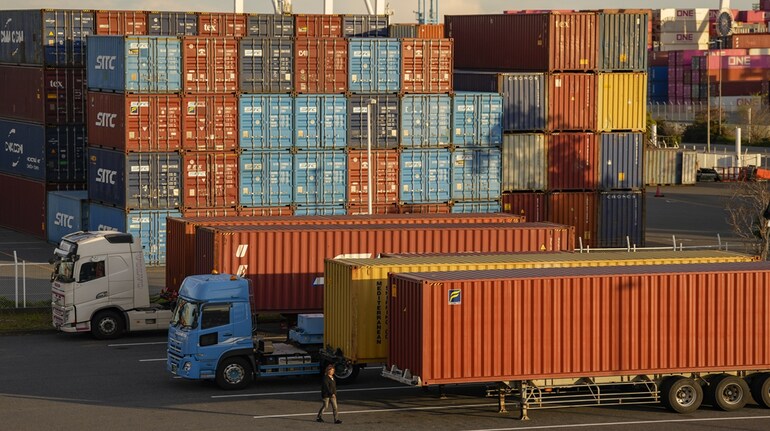

As Budget 2026–27 approaches, exporters from India’s tariff-hit sectors are seeking measures to remain competitive in overseas markets.
Over the past year, global trade has been shaped by heightened tariffs, export controls, and increased use of trade‑remedy instruments, particularly by the United States, European Union, and China.
Several import-dependent sectors in advanced economies are looking to diversify, most visibly in electronics, auto components, engineering goods, and select chemicals, opening new opportunities for Indian manufacturers and suppliers that can meet scale, quality, and compliance requirements, Gautam Khattar, Principal, Price Waterhouse & Co LLP, pointed out.
Indian businesses are facing cost pressures across their value chains due to tariff changes, both domestically and in export markets. Higher customs duties on imported inputs, intermediates, and capital goods are raising landed costs and squeezing margins, particularly in electronics, automobiles, pharmaceuticals, speciality chemicals, machinery, and renewable energy.
Exporters are also hit by higher US tariffs, which in some sectors have doubled from 25 percent to 50 percent, eroding price competitiveness for textiles, apparel, gems and jewellery, leather, chemicals, auto components, and other manufactured goods, Khattar added.
Those across gems and jewellery, textiles, and engineering goods are therefore emphasising the need for duty rationalisation, lower input costs, and simpler trade procedures in the Budget for 2026–27.
They are seeking lower import duties on raw materials, continued support for Micro, Small and Medium Enterprises (MSME)-led exports, and measures that ease cash-flow pressures. Support for clean energy adoption and technology upgrades is also seen as important to meet global market requirements.
Khattar said, “Continued, targeted production-linked incentive‑style incentives for tariff‑exposed sectors, along with simplified customs, digitisation, and stronger single‑window processes, can help firms scale, invest in technology, and manage higher input costs more efficiently.”
To be sure, India has already taken certain steps to protect tariff‑hit exporters with the Export Promotion Mission (EPM), backed by an outlay of Rs 25,060 crore, which includes a new interest subvention scheme to improve access to affordable credit for MSME exporters.
Engineering exports
Pankaj Chadha, Chairman of EEPC India, says export support schemes must clearly include MSMEs, which make up the vast majority of engineering exporters.
He pointed out that the recently unveiled interest subvention scheme for exporters must explicitly cover all MSMEs, including those in the steel sector under Chapter 72, as they constitute the majority in the sector.
“The omission of Chapter 72 from the current coverage should be rectified, since it has a significant adverse impact on a large number of downstream engineering exporters who are predominantly MSMEs,” Chadha said.
He also stressed the need for measures to help MSMEs invest in clean energy.
EEPC India has asked for an enhancement in the weighted reduction incentive for rooftop solar installations for MSMEs. At present, normal depreciation on such assets is capped at 25 percent, which is insufficient to encourage adoption.
He proposed that 100 percent depreciation be allowed for rooftop solar installations for MSMEs. This measure would significantly improve cash flows, accelerate renewable energy adoption among small exporters, and enable MSMEs to lower their carbon footprint. Such support would also help Indian engineering exporters achieve a better CBAM (Carbon Border Adjustment Mechanism) value, thereby enhancing their competitiveness in markets such as the European Union, Chadha added.
Most steel and aluminium products and their derivatives used in engineering goods are facing approximately 25 percent to 50 percent tariffs since mid-2025 from their largest trading partner, the United States.
Chadha, however, believes that Indian engineering exports will continue to grow by 4-5 percent to around $120 billion in 2025–26, despite tariffs, driven by diversification into new markets.
Textiles
The US is the single-largest market for India’s textile and apparel exports, accounting for nearly 28 percent of total revenue in FY 2024–25, with exports totalling nearly $11 billion.
While exporters have been trying to retain their US customers by sharing part of the costs and diversifying into newer markets, Ashwin Chandran, Chairman of the Confederation of Indian Textile Industry (CITI), said the sector looks to the upcoming Union Budget to provide policy and regulatory support to achieve India’s ambition of a $350 billion textile and apparel industry by 2030.
“Measures that spur manufacturing, improve the availability of raw materials at internationally competitive prices, support MSMEs in transitioning to clean energy, and encourage innovation will be critical for the sector,” he said.
CITI has proposed the removal of import duties on all varieties of cotton fibre, a revision of the MSP formula for cotton to align with international benchmark prices, and the launch of a Cotton Price Stabilisation Fund. The industry also seeks the introduction of a Green Technology Scheme to help MSMEs adopt clean energy, a new scheme to replace the Technology Upgradation Fund Scheme, promotion of indigenous textile machinery manufacturing, measures to address high power costs, and the establishment of a National Textile Fund.
Suketu Shah, CEO of Vishal Fabrics Ltd., said last year’s Budget laid a strong foundation for the textile sector through improved exports, GST rationalisation, expansion of the PLI scheme, and faster execution of PM MITRA Parks.
Looking ahead to Budget 2027, Shah stressed the need for support for modern machinery and technology to improve efficiency and scale. “Higher funding for R&D, a stronger focus on cotton productivity and quality, controlled garment imports, simpler export processes through BharatTradeNet, better access to export credit, and progressive labour policies can help India maintain its leadership in the global textile industry,” he added.
On trade facilitation, CITI called for the extension of RBI trade relief measures across the textile value chain, an increase in Basic Customs Duty on all types of knitted fabric to curb imports at unviable prices, reintroduction of the Merchandise Exports from India Scheme (MEIS), and the extension of duty-free import facilities for Made-ups exporters.
Gems & jewellery
The US accounts for nearly one-third of the country’s total gem and jewellery exports. In 2024–25, shipments to the US were valued at approximately $9.23 billion, highlighting the strategic importance of the market. US tariffs of 50 per cent from mid-2025 have raised jewellery prices for consumers, dampening demand and affecting the sector’s growth.
During April–November 2025, India’s gem and jewellery exports to the US declined by nearly 44 per cent. The effect was even sharper in cut and polished diamonds, where exports fell by almost 59 per cent year-on-year.
“Higher prices at the consumer level have led to more cautious buying and delayed purchases by US retailers, which has directly affected export volumes from India,” Sabyasachi Ray, Executive Director of GJEPC, told Moneycontrol.
The gems and jewellery industry said recent policy moves, priority-sector recognition under the Export Promotion Mission, the Credit Guarantee Scheme for Exporters, RBI trade-relief steps and smoother bullion imports via the IIBX—have eased credit access and compliance, especially for MSMEs.
In the Budget for 2026–27, the sector is seeking targeted duty rationalisation and procedural simplification, including rationalising import duties on diamonds and coloured gemstones, improving the duty drawback mechanism for gold and silver, extending support for lab-grown diamonds, and implementing practical SEZ reforms to improve operational flexibility.
Ray also pointed out that the sector is actively diversifying into new markets, and this has become one of the most important structural shifts in recent years.
“Free Trade Agreements with the UAE, Australia, EFTA countries, the UK, and more recently Oman and New Zealand, are already improving competitiveness by reducing duties and easing trade barriers. With the Government of India currently negotiating 14 FTAs, we are confident that upcoming agreements will open new opportunities and strengthen India’s global export footprint,” Ray added.
Discover the latest Business News, Sensex, and Nifty updates. Obtain Personal Finance insights, tax queries, and expert opinions on Moneycontrol or download the Moneycontrol App to stay updated!
Find the best of Al News in one place, specially curated for you every weekend.
Stay on top of the latest tech trends and biggest startup news.





