






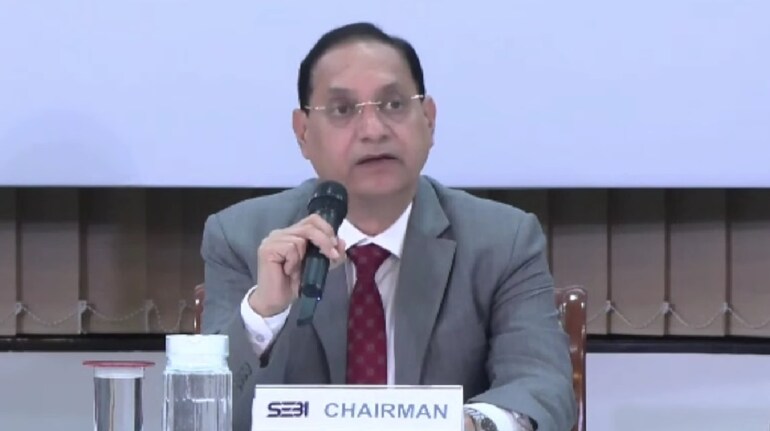

Brokers, key officials of brokers and other intermediaries may not automatically disqualify on the basis of filing of First Information Report (FIR) or filing of charge-sheet by police, CBI, ED, SFIO or MCA or any other law enforcement agency. Capital market regulator Securities and Exchange Board of India (SEBI) has proposed to omit the part of the Intermediary Regulation which triggers such disqualification. Moneycontrol had exclusively reported on January 23, that SEBI will soon float a consultation paper on easing of 'Fit and Proper' criteria.
No disqualification on basis of FIR, Charge sheet
The regulator noted that filing of a FIR or charge sheet is only a preliminary step to set criminal law in motion and that automatic disqualification at this stage is contrary to the settled principle that a person is innocent until proven guilty. SEBI also said such rule-based triggers could lead to unintended and irreversible consequences, particularly where proceedings eventually end in acquittal or discharge. In a consultation paper issued on Wednesday, SEBI has proposed to shift from rigid rule-based triggers to principle-based assessment.
SEBI may assess a person’s integrity, honesty, reputation and conduct, and consider any serious or incriminating factors on a case-by-case basis, keeping in view potential risks to investors. The regulator may also issue guidelines to identify instances where the pendency of grave criminal proceedings is severe enough to warrant disqualification.
Disqualification only after conviction
SEBI has now proposed that trigger for disqualification will be only in case of conviction for economic offences and securities law violations, in addition to moral turpitude. This change would bring the Intermediaries Regulations 2008 in line with the Securities Contracts (Regulation) (Stock Exchanges and Clearing Corporations) Regulations and the Depositories and Participants Regulations, where disqualification is triggered only upon conviction.
SEBI consultation paper noted the concerns raised by the industry, “Concerns have also been expressed in respect of issues arising from divestment in terms of the second proviso to Clause 6 of Schedule II stating that the same leads to irreparable damage and cannot be reversed if the person is later acquitted or not found guilty in the proceedings pursuant to which the disqualification was incurred”.
No forced divestment, only voting rights to be restricted
Addressing concerns over irreversible financial loss, SEBI has proposed removing the requirement for mandatory divestment of shareholding by persons in control declared unfit. Instead, only voting rights would be restricted, allowing economic ownership to be retained. SEBI paper stated, “given the concerns, the financial loss stated to be arising out of the mandated divestment can be possibly mitigated by distinguishing between the economic right and the voting right of the holding. Accordingly, it is proposed that upon being declared as not ‘fit and proper person’, only the voting rights of the Person in Control will be restricted and such person shall not be required to divest such holdings”.
Disqualification only on Winding Up Orders
SEBI has also proposed raising threshold for disqualification of legal entities undergoing insolvency. Under the proposed amendment, disqualification would be attracted only if a winding-up order is passed, and not merely upon initiation of insolvency proceedings. This will align the SEBI Intermediary Regulations with IBC, SECC and DP Regulations.
Right to Hearing to be coded in regulation
To remove procedural ambiguity, SEBI has proposed inserting new Clauses 3A and 3B to expressly mandate a reasonable opportunity of being heard before declaring any person as not ‘fit and proper’. Intermediaries will also be required to disclose to SEBI the occurrence of any disqualifying event involving their KMPs or persons in control. SEBI has also proposed to insert a new clause which requires intermediaries or applicants to inform SEBI within seven days if any disqualifying event occurs, and clarify that a person can be declared 'Not Fit and Proper' only after being given a reasonable opportunity of hearing.
Time-bar penalty to be rationalised
SEBI has further proposed removing the default five-year prohibition on fresh registration that applies when no duration is specified in an order declaring a person unfit. Going forward, prohibition would apply only if SEBI expressly specifies the time period in its order.
Reduced cooling off period
In addition, the cooling-off period triggered by the issuance of a show-cause notice has been proposed to be reduced from one year to six months. The restriction would also apply only to proceedings that may result in regulatory directions under Section 11B of the SEBI Act, and not to cases involving only monetary penalties.
Section 11B of the SEBI Act gives broad powers to issue directions for investor protection and market integrity, including prohibiting certain dealings, suspending trading, and ordering disgorgement of wrongful gains from illegal activities, aiming to prevent fraud and ensure orderly market development, not for punitive purposes.
No automatic group entity disqualification
SEBI has also proposed changes to Clause 6 relating to associates, group entities, and persons in control. The amendments clarify that disqualifications of group entities will affect an intermediary only if SEBI formally declares such persons as not 'Fit and Proper'. SEBI has invited public comments on the proposals until February 25.
The previous amendments in ‘Fit and Proper’ provisions were brought in 2021 after the NSEL scam so that brokers who are not in compliance can be deterred from the market. But, based on the experiences in last 4-5 years and request from broking industry SEBI has proposed to tweak the regulations.
Discover the latest Business News, Sensex, and Nifty updates. Obtain Personal Finance insights, tax queries, and expert opinions on Moneycontrol or download the Moneycontrol App to stay updated!
Find the best of Al News in one place, specially curated for you every weekend.
Stay on top of the latest tech trends and biggest startup news.





