






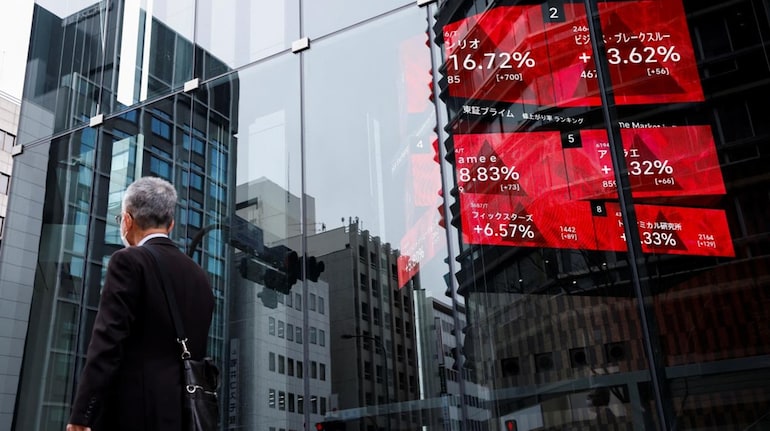

Stock markets in Japan and South Korea tumbled sharply in early trade on Monday after oil prices surged above $100 per barrel for the first time in nearly four years, rattling global markets amid escalating Middle East tensions.
Japan’s benchmark Nikkei 225 dropped about 5.8 percent, after sliding more than six percent earlier in the session. South Korea’s Kospi fell 6.7 percent in morning trade.
Oil prices spiked sharply as concerns grew over supply disruptions. West Texas Intermediate (WTI), the main US oil benchmark, rose 17.4 percent to $106.80 per barrel, while Brent Crude gained 15.65 percent to $107.20 per barrel. Both benchmarks climbed to levels last seen during the early months of Russia's 2022 invasion of Ukraine.
US President Donald Trump downplayed the surge in oil prices, calling it a necessary cost in the effort to neutralise Iran’s nuclear threat.
“Short term oil prices, which will drop rapidly when the destruction of the Iran nuclear threat is over, is a very small price to pay for U.S.A., and World, Safety and Peace,” Trump wrote on social media on Sunday evening, Washington time, adding that “ONLY FOOLS WOULD THINK DIFFERENTLY!”
The surge in crude prices comes as maritime traffic through the Strait of Hormuz, a critical chokepoint through which about 20 percent of the world’s crude oil and gas supplies pass, has nearly ground to a halt since the conflict began on February 28.
Japan, the world’s fourth-largest economy, is also the fifth-largest crude importer. About 95 percent of its oil imports come from the Middle East, and roughly 70 percent normally transit through the Strait of Hormuz.
Japanese Prime Minister Sanae Takaichi said on March 2 that the country holds emergency oil reserves equivalent to 254 days of domestic consumption. According to Kyodo News, the government is also considering releasing part of its strategic reserves to stabilise supplies.
South Korea, meanwhile, is the world’s fourth-largest importer of crude oil, while the largest importer globally is China.
(With inputs from agencies)Discover the latest Business News, Sensex, and Nifty updates. Obtain Personal Finance insights, tax queries, and expert opinions on Moneycontrol or download the Moneycontrol App to stay updated!
Find the best of Al News in one place, specially curated for you every weekend.
Stay on top of the latest tech trends and biggest startup news.





