






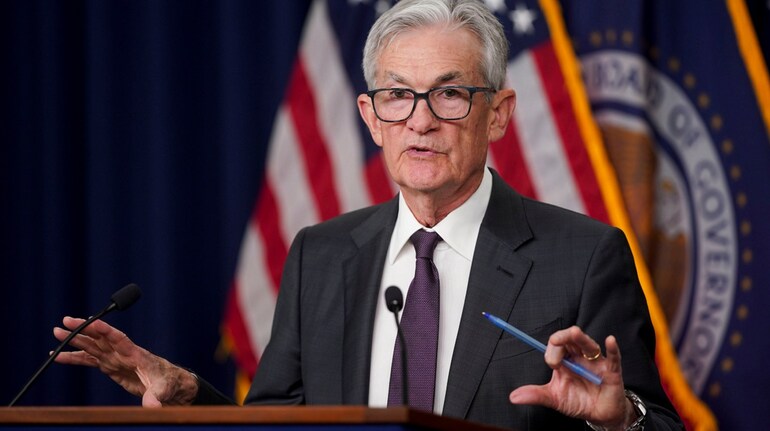

Transcripts of the Federal Reserve’s 2020 policy meetings, made public Friday, revealed new details about how Chair Jerome Powell pushed for a change he would later regret.
The record of the Fed’s September 2020 gathering — during the depth of the Covid-19 pandemic — shows Powell made a forceful case for strong and specific guidance on the conditions required before the Fed would lift interest rates away from zero, where they had landed in March of that year. And he won the debate despite pushback from several of his colleagues.
The session occurred six months into the pandemic. Powell argued the time had come for a decisive statement of how long they expected to keep rates near zero in order to foster what he expected would be a long economic recovery in the years ahead. Several present objected, though they refrained from expressing their misgivings publicly afterward.
The US central bank releases edited minutes of their policy meetings three weeks after each gathering. The full transcripts are published only after five years.
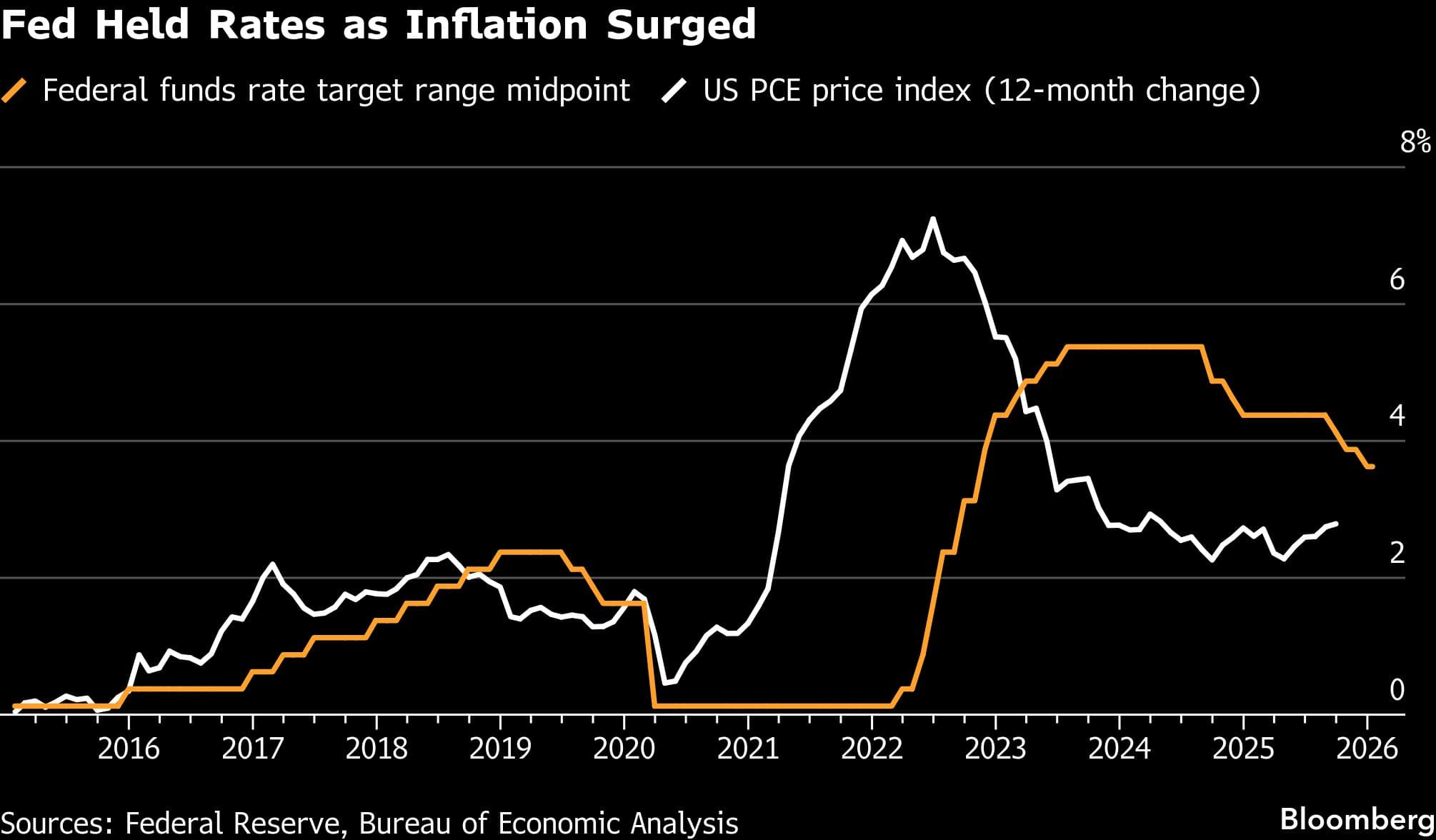
The new set illuminate the pivotal role Powell played amid the historic upheavals brought about by the pandemic. Many critics view the strong commitment on rates that he championed at the time as a factor that caused the Fed to respond too slowly when inflation surged over the ensuing two years.
The statement the Fed published after its September 2020 meeting said it expected to hold rates near zero “until labor market conditions have reached levels consistent with the committee’s assessments of maximum employment and inflation has risen to 2% and is on track to moderately exceed 2% for some time.”
At the time, the Fed’s preferred measure of inflation was 1.3%, and the median projection among policymakers was that it would not reach 2% until 2023. Instead, it shot higher the following year, peaking at 7.2% in mid-2022. But many Fed officials, including Powell, viewed that inflation spike as “transitory” and delayed their response.
In the September 2020 meeting, two policymakers — then-Dallas Fed President Rob Kaplan and Minneapolis Fed President Neel Kashkari — dissented against the decision. Kaplan didn’t want to make such a strong commitment to near-zero rates, while Kashkari advocated an even stronger one.
The transcripts show, however, that several other policymakers — many of whom did not hold votes on decisions at the time — shared at least some of Kaplan’s misgivings. That camp included then-Boston Fed President Eric Rosengren, Richmond Fed President Tom Barkin and Atlanta Fed President Raphael Bostic. Then-Philadelphia Fed President Patrick Harker and then-Cleveland Fed President Loretta Mester, each of whom held a vote, also shared concerns but ultimately went along with the decision.
Mester viewed “the changes to the liftoff criteria as being very significant ones.” She “would have preferred to wait to make such a change until the committee had had the opportunity to fully discuss the implications of this commitment,” she said at the meeting.
Powell, in contrast, pushed to include the language without delay.
“With the expansion well under way, now is the time to focus our policies and communications on supporting the economy as it travels the long road to a full recovery. I see no need to wait further,” Powell said. “I am glad that we stood pat for six months. I think we were wise to do that. But we are a very long way from our goals, and further delays would risk undermining the credibility that we’ve built.”
The debate over rate guidance at the September 2020 meeting also came a month after the Fed announced a historic overhaul of its monetary policy strategy framework, an effort it had launched prior to the onset of the pandemic.
That overhaul saw officials effectively curb a decades-long practice of raising rates to preempt the possible buildup of price pressures when unemployment was deemed too low. The move seemed sensible after a decade when falling unemployment failed to produce any meaningful inflation.
But the transcript showed Powell was worried that outside the central bank, observers didn’t see the Fed following through on the change.
“It’s so easy to slide back into a place where people say, ‘There’s no story here.’ In fact, it’s already happening. People are talking about it now. So I think it’s important,” the Fed chair told his colleagues.
“A substantially weaker form of guidance going forward, to me, would sound an awful lot like the same reaction function we’ve been using for the past eight years,” he added.
Powell later admitted regrets about the September 2020 guidance at a Brookings Institution event in November 2022, after the Fed had begun raising rates.
“It didn’t have much to do with all this inflation we’re experiencing, but the one piece of guidance that we gave that I probably wouldn’t do again is, we said we wouldn’t lift off unless, until we saw both maximum employment and price stability,” Powell said. “And I don’t think I would do that again.”
Early Warning
The 2020 transcripts are kinder to Powell in showing how he recognized early the emerging threat of Covid-19. At an unscheduled meeting of Fed officials on March 2, before the virus had struck the US in full force and at a time when some policymakers were still downplaying the risk, Powell was clear.
“I picked up growing concern at the G-20 meeting in Riyadh that weekend that the coronavirus was likely to now spread widely around the world,” he said, referring to a gathering of global finance officials in Saudi Arabia in late February.
“Markets and the general public need a clear signal that the Federal Reserve and other policymakers around the world understand the significance of what’s going on and will move decisively to counter a tightening of financial conditions and support the economy,” Powell said.
Fed officials that day lowered their benchmark rate by a half percentage point.
Discover the latest Business News, Sensex, and Nifty updates. Obtain Personal Finance insights, tax queries, and expert opinions on Moneycontrol or download the Moneycontrol App to stay updated!
Find the best of Al News in one place, specially curated for you every weekend.
Stay on top of the latest tech trends and biggest startup news.





