






Bengaluru: Capital in India’s venture ecosystem is abundant—but it is far from innocent. While founders often focus on valuations and cheque sizes, the true cost of capital is rarely visible upfront. It hides in the fine print of term sheets and emerges painfully during moments of stress.
Anti-dilution clauses that appear reasonable at signing can turn predatory during a down round. “Standard” liquidation preferences, assumed to be harmless, can wipe out a founder’s equity if growth stalls. Many founders realise too late that the real cost of capital is not measured in equity percentages alone, but in lost control, reduced optionality, and long-term constraints.
This reality has created a new demand within India’s startup ecosystem. Founders are no longer just looking for capital—they are seeking advisory partners who can structure financing in a way that preserves control and future flexibility.
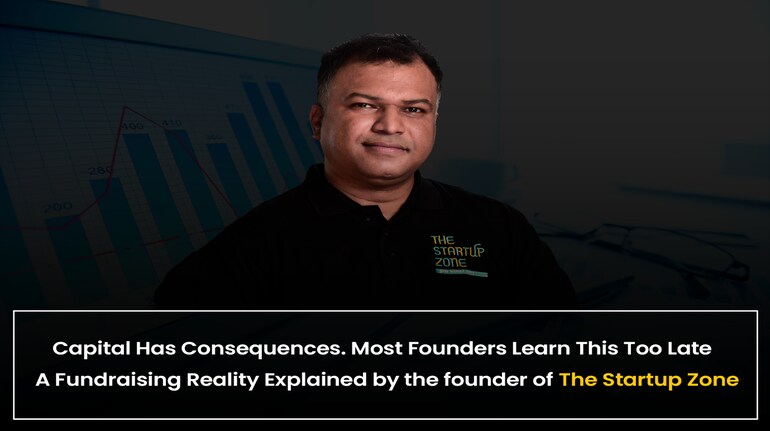
Sharath Shyamasunder has seen this pattern repeat itself over and over. In 2015, he launched The Startup Zone, an investment advisory firm that specialises in assisting startups with equity and debt fundraising. However, its role extends far beyond connecting startups to investors. The firm focuses on building the financial and legal infrastructure that makes startups genuinely investment-ready.
“As founders ourselves, we understand how much passion and energy it takes to build a business,” Sharath explains. “But registrations, legal compliance, and structuring can easily distract founders from innovation. That’s exactly why The Startup Zone was created.”
This sentiment is echoed by the founder of Headless Hippies, who recalls that the lack of direction during their early years was the company’s biggest challenge. “Without understanding compliance subtleties, we faced deception and misuse. After three difficult years, we approached The Startup Zone. Their integrity, efficiency, and ethical leadership completely changed how we operate. Today, they handle all our compliances seamlessly.”
One question that founders often avoid—but which The Startup Zone forces them to confront—is fundamental:
What capital structure actually makes sense for your business?
Instead of defaulting to equity rounds, the firm designs blended financing strategies that may include venture debt, revenue-based financing, grants, or a mix of instruments. Each option is modelled across multiple scenarios to reveal its true cost. Founders are trained to understand liquidation preferences, anti-dilution provisions, and investor rights—before signing away their future.
Sharath points out that many founders incorporate private limited companies without understanding why. “They assume it’s the only option,” he says. “But entity structure directly impacts dilution, fundraising eligibility, and investor appetite. The wrong structure can shut doors before fundraising even begins.”
At this stage, compliance stops being bureaucratic and becomes a strategic advantage. Clean documentation, proper contracts, and correct structuring reduce legal risk and signal seriousness to investors. Over 30 percent of Indian startups have faced legal disputes due to poor documentation—disputes that drain runway faster than business failures.
“Clean records are now a competitive edge in fundraising,” Sharath notes. “During due diligence, investors look for strong fundamentals. That’s what separates you from everyone chasing the same capital.”
Many founders underestimate compliance elements that can derail deals at the last minute—GST filings, tax records, labour approvals, and statutory registrations. While founders obsess over pitch decks, investors are asking tougher questions: Are revenues reconciled with GST filings? Are tax records clean? Are labour laws complied with?
When startups prepare investor-grade data rooms from day one, fundraising timelines shrink significantly. Clean cap tables, IP registrations, customer contracts, tax histories, and industry-specific licences—such as FSSAI for food businesses or RBI approvals for fintech—must be planned well in advance, not rushed under pressure.
The Director of Anveya, which collaborated with The Startup Zone for registrations and licensing, describes the experience as seamless and highly professional. “Their clarity on tasks, timelines, and real-time updates is invaluable, especially for startups,” the director shares.
India is now home to over 70 unicorns valued at $185 billion, yet fundraising remains challenging. Too many first-time founders raise capital on unfavourable terms simply because they do not understand how investors evaluate risk.
”The Startup Zone's aims to bridge this gap. Having worked with more than 5,000 businesses since 2015, the firm focuses on educating founders not just on raising money, but on understanding what that money costs—in control, economics, and future flexibility.
“Capital always has consequences,” Sharath concludes. “Those consequences matter more than the size of the cheque.”
In 2025, capital is flowing—but investor expectations are higher than ever. Winning founders are not just those who can raise funds, but those who can raise on terms that allow them to keep building without compromising their future.
“Raising capital can feel overwhelming,” Sharath says. “That’s where The Startup Zone steps in—to make the process smooth, fast, and founder-friendly.”
.Moneycontrol Journalists are not involved in creation of this article
Discover the latest Business News, Sensex, and Nifty updates. Obtain Personal Finance insights, tax queries, and expert opinions on Moneycontrol or download the Moneycontrol App to stay updated!
Find the best of Al News in one place, specially curated for you every weekend.
Stay on top of the latest tech trends and biggest startup news.




