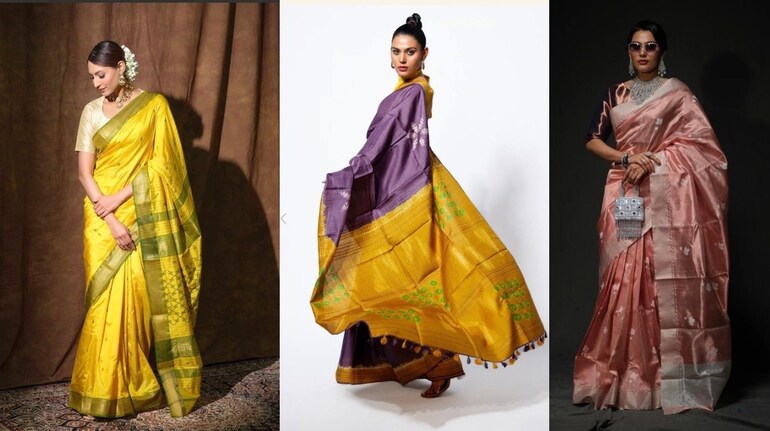
Winter fashion, for many, may mean rummaging through cupboards in search of the thickest shawl, while some wrap themselves in elegant silk sarees that never seem to betray the chill. There’s something enchanting about silk in winter, warmth without weight, romance without fuss.
Despite changing trends, silk has remained timeless, partly because of its beauty, but also because of its remarkable functionality. Says Shriya Nagi, Co-founder, Mrida, "Silk is nature’s most graceful insulator. It warms you without adding bulk and amps up winter dressing like nothing else.”
Unlike synthetic fabrics that feel icy against the skin, or wool that can sometimes overwhelm, silk finds an elegant middle ground. “It drapes softly, traps warmth in its fibres, and adds a festive sheen to even the greyest winter morning,” she adds.
Also read | 10 most expensive sarees in the world: From the Guinness World Record to heritage weaves
Whether you’re attending winter weddings, festive dinners, or simply wish to stay snug without bulky layers, silk sarees deserve a place in your winter wardrobe. “Some sarees have a unique weave, texture or technique that makes it especially suited for cold months. Choosing the right silk is like choosing the right winter armour, every weave has its own strength,” she says.
Nagi suggests 7 gorgeous silk sarees you can wear in winters
The beauty of Pattu lies in its dense 3-ply mulberry yarn, which forms a naturally wind-resistant layer, perfect for cold breezes. The classic broad borders add weight, helping the pallu stay in place even on gusty evenings. According to Nagi, this is why Kanchipuram remains a winter favourite: “A Pattu saree holds its drape like a warm embrace,” she says.
Also read | Nayanthara sets a new benchmark in style with her green silk saree: PICS
Banarasi sarees, especially Katan silk, shine during winter weddings. Their twisted-thread construction creates a dense, structured fabric. The zari threads subtly reflect body heat, making Banarasi one of the warmest silks you can wear outdoors. As Nagi shares, “When temperatures dip, Banarasi is your most regal, dependable companion.”
Often described as silk’s rustic cousin, Tussar has a textured surface formed by its wild-silk origin. These tiny irregularities create heat-holding air pockets, providing a natural wool-like warmth without the heaviness. Its earthy glow makes it perfect for daytime winter events.
Also read | Must-have sarees in your winter wardrobe, from mulmul to tissue and more
Raw silk avoids the chilly “first-touch shock” that shiny silks can sometimes give. Its secret lies in sericin—the natural silk gum—which stays intact, giving the fabric its signature nubby texture. This creates a cosy, instantly warm layer. Nagi says, “Raw silk has a comforting honesty, warm, tactile and beautifully grounded.”
Patola’s strength is its meticulous double-ikat weave. The yarns are dyed and aligned with such precision that the fabric becomes almost airtight. This double-locked structure acts as a natural cold-air shield, making Patola both rare and winter-worthy.
Known for its storytelling pallus, Baluchari uses an extra-weft technique that adds an additional layer of silk to the pallu area. It feels like wearing a built-in light shawl, warm, elegant and perfect when you’re outdoors but still want something delicate.
Nothing beats Muga when winter mornings turn foggy. This golden Assamese silk is naturally hydrophobic, resisting moisture and preventing that unpleasant limpness that damp weather brings. Its crisp, dry feel remains intact all day. Nagi calls it “winter’s most loyal silk, steady even in mist.”
Discover the latest Business News, Sensex, and Nifty updates. Obtain Personal Finance insights, tax queries, and expert opinions on Moneycontrol or download the Moneycontrol App to stay updated!
Find the best of Al News in one place, specially curated for you every weekend.
Stay on top of the latest tech trends and biggest startup news.