Get App Open
In App
News on WhatsApp
News on WhatsApp
Open App

Exhibition at Delhi's Bikaner House unpacks how British Raj photographed the people of India, urges new readings

Chanpreet Khurana | February 15, 2026 / 10:33 IST
1/12
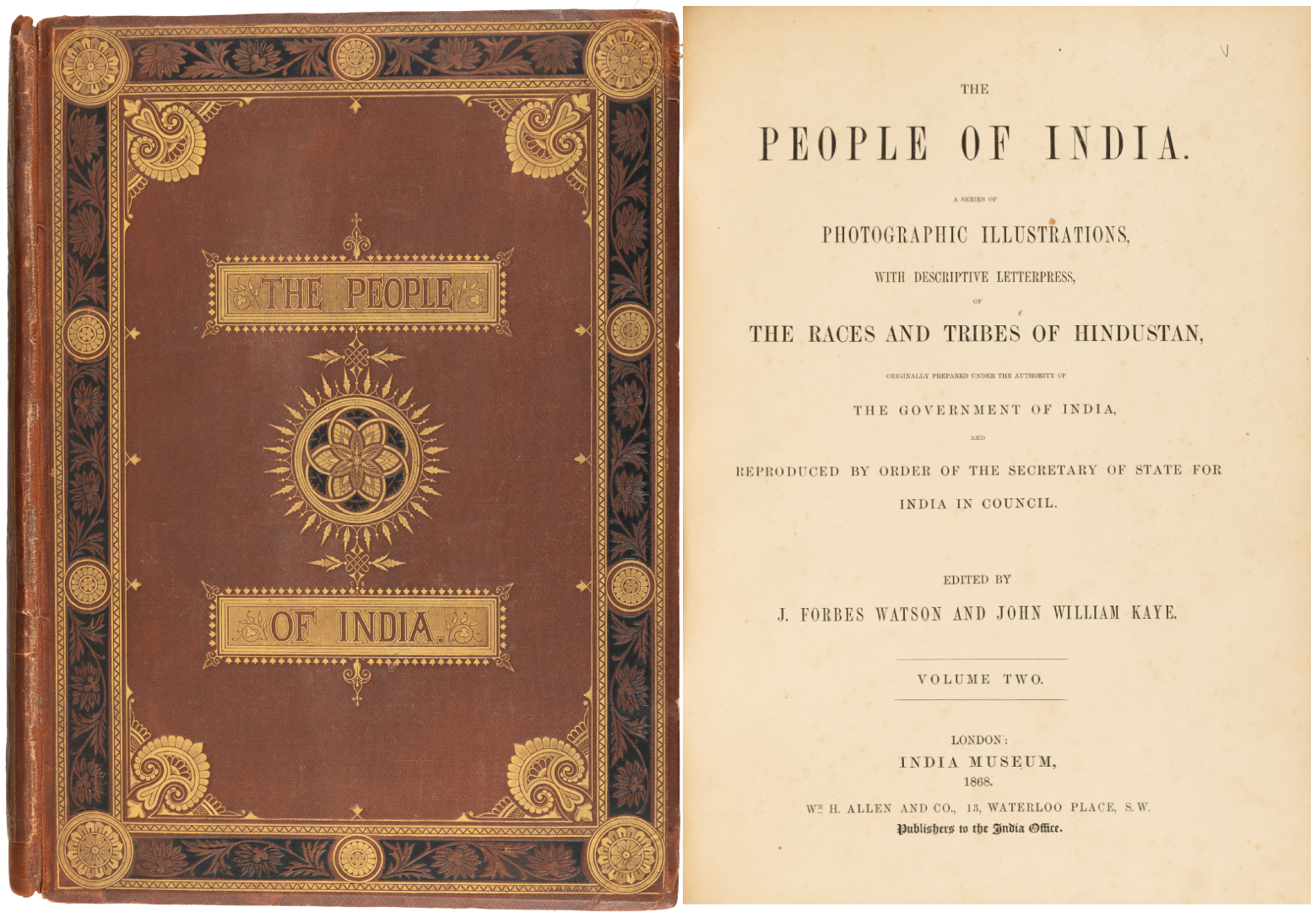
Soon after the 1857 uprising, British colonizers embarked on an ambitious programme to document the people of India. Among the projects launched by this provocation was ‘The People of India: A Series of Photographic Illustrations, with Descriptive Letterpress, of the Races and Tribes of Hindustan’ (1868 – 75), volumes of annotated photo illustrations that were supposed to give the colonizers a better sense of who their subjects were. The silver albumin prints have, of course, outlasted the Raj. And historians, anthropologists and other researchers have since unpacked, unravelled and re-subjected the images and annotations to critical enquiry. (Image courtesy DAG)
Soon after the 1857 uprising, British colonizers embarked on an ambitious programme to document the people of India. Among the projects launched by this provocation was ‘The People of India: A Series of Photographic Illustrations, with Descriptive Letterpress, of the Races and Tribes of Hindustan’ (1868 – 75) volumes of annotated photo illustrations that were supposed to give the colonizers a better sense of who their subjects were. (Image courtesy DAG)
2/12
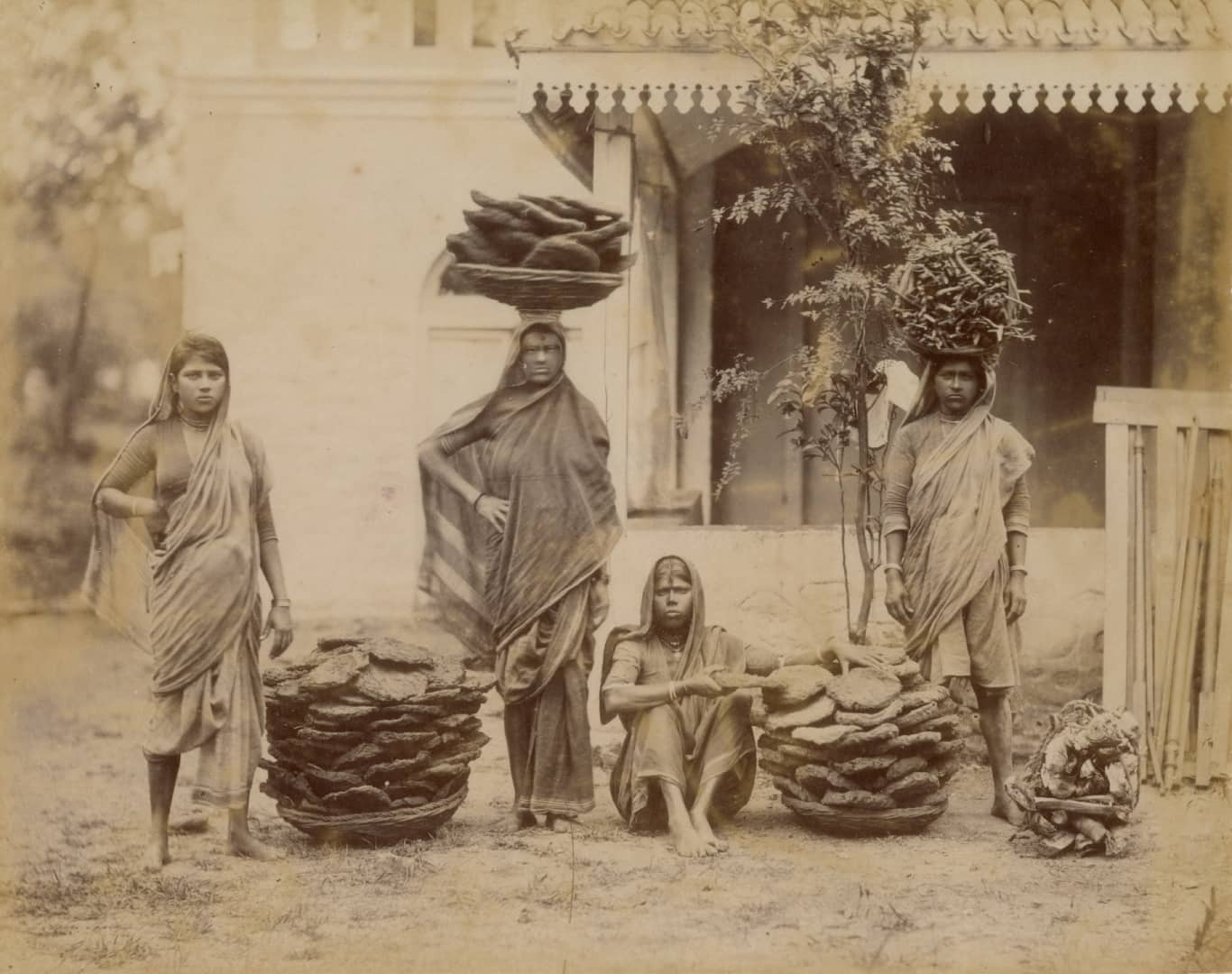
The silver albumin prints have, of course, outlasted the Raj. And historians, anthropologists and other researchers have since unpacked, unravelled and re-subjected the images and annotations to critical enquiry. (Image courtesy DAG)
The silver albumin prints have, of course, outlasted the Raj. And historians, anthropologists and other researchers have since unpacked, unravelled and re-subjected the images and annotations to critical enquiry. (Image: Manure dryers, Bombay; silver albumin print mounted on card, c. 1890; photo attributed to Edward Taurines, courtesy DAG)
3/12
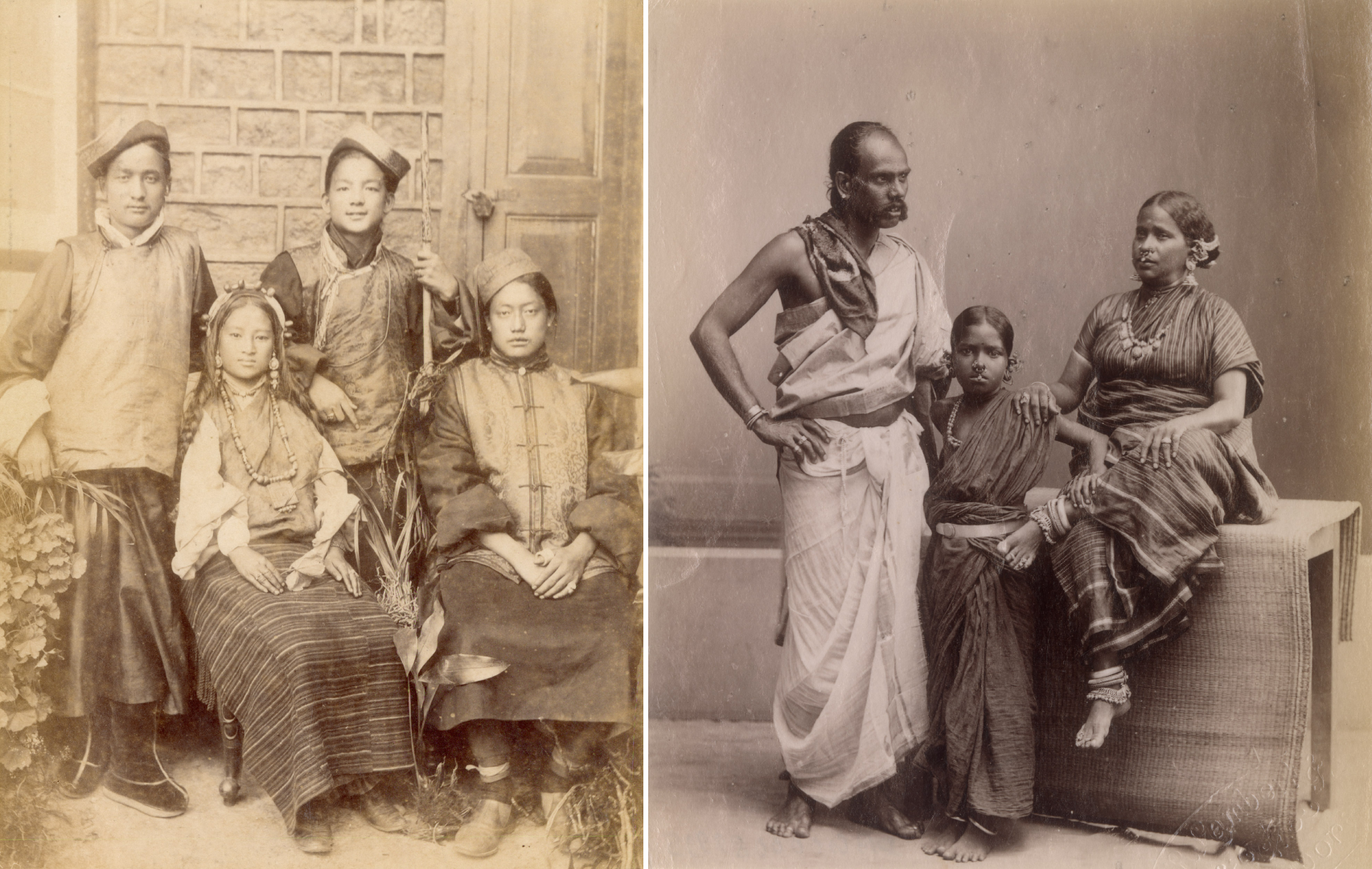
An exhibition of photographs from the period — ‘Typecasting: Photographing the Peoples of India 1855 –1920’, drawn from the collection of Delhi art gallery DAG, on at Bikaner House in Delhi till February 15 — offers perspectives and arguments to re-examine these images, both as a lookback at the colonial project that occasioned them and as an alternative reading for what the images and their subjects themselves might reveal to us a century-and-a-half later. (Pictured here on the left: Group of Young Bhutias (Laden La, standing right); silver albumin on card, c. 1890; photo attributed to Fred Ahrle; images courtesy DAG)
An exhibition of photographs from the period, ‘Typecasting: Photographing the Peoples of India 1855 –1920’, drawn from the collection of Delhi art gallery DAG, is on at Bikaner House in Delhi till February 15. (Pictured here on the left: Group of Young Bhutias (Laden La, standing right); silver albumin on card, c. 1890; photo attributed to Fred Ahrle; images courtesy DAG)
4/12
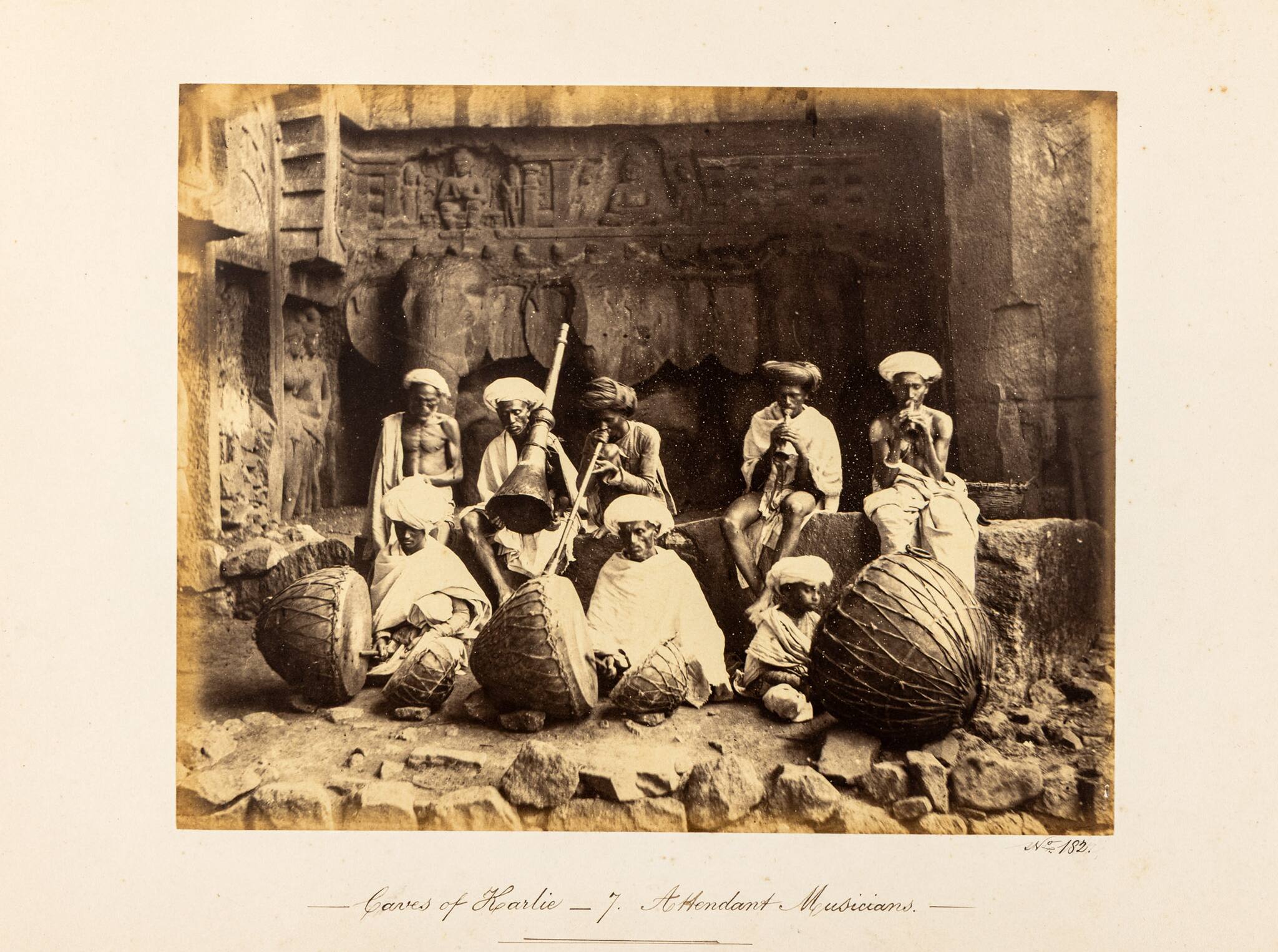
‘Typecasting’ offers perspectives and arguments to re-examine these images, both as a lookback at the colonial project that occasioned them and as an alternative reading for what the images and their subjects themselves might reveal to us a century-and-a-half later. (Images courtesy DAG)
5/12
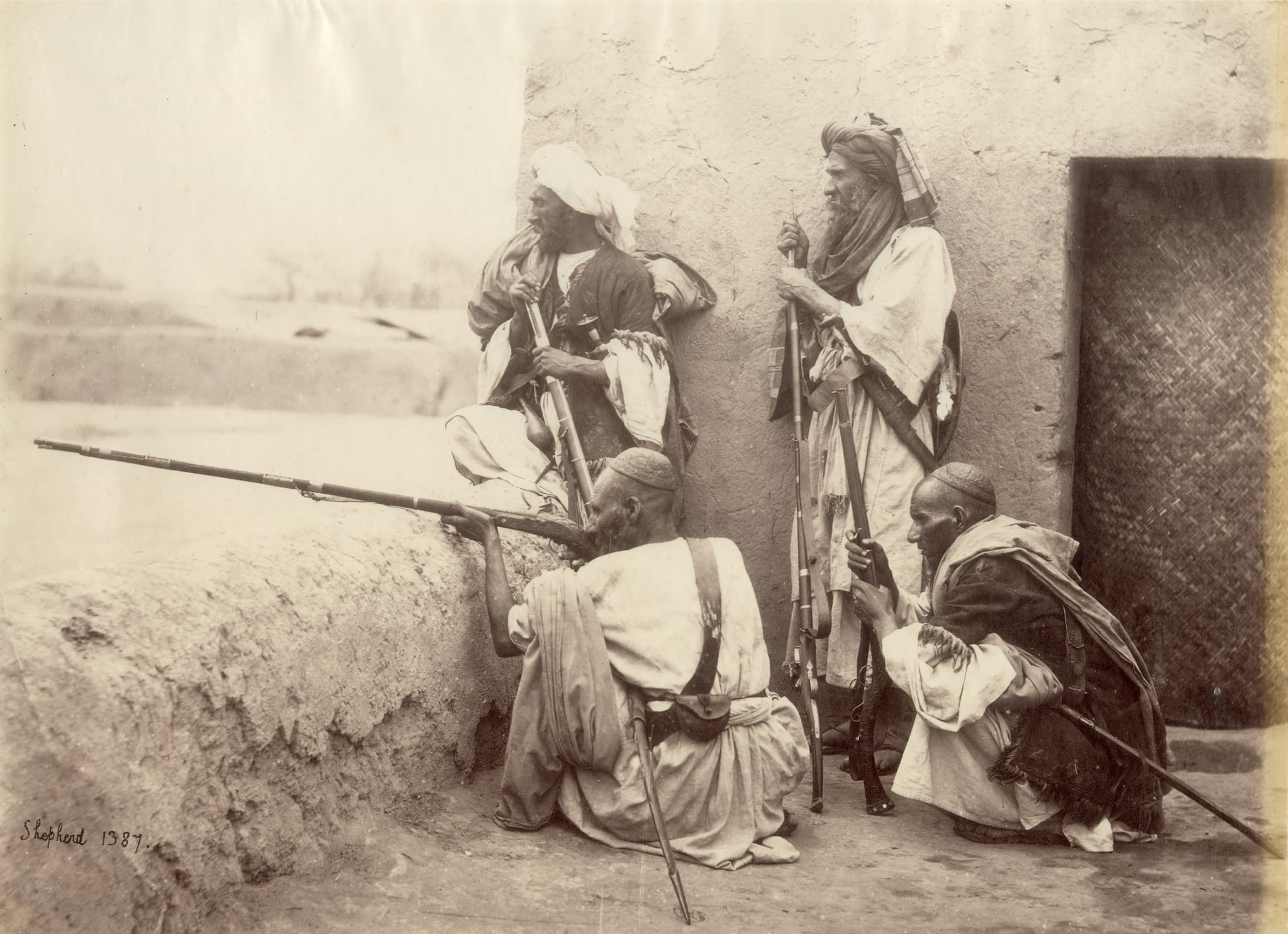
In an accompanying essay-cum-catalogue book, Ahmedabad University School of Arts and Sciences Associate Professor Ranu Roychoudhuri writes: “The British colonial administration in India considered the Revolt of 1857 as an anthropological failure of Empire — a failure to comprehend India and its people, and consequently to govern them effectively, despite almost a century of collecting, recording and classifying information about them. Indeed, historians, anthropologists and literary scholars have variously marked 1857 as an originating moment for much of the later colonial anxiety, even up to 1947, prompting thorough enumeration and surveillance of the subcontinent.” (Pictured here: Group of Afredees from the Khyber Pass, Peshawar; silver albumin print from wet collodion glass negative, c. 1862; photo by Charles Shepherd, courtesy DAG.)
6/12
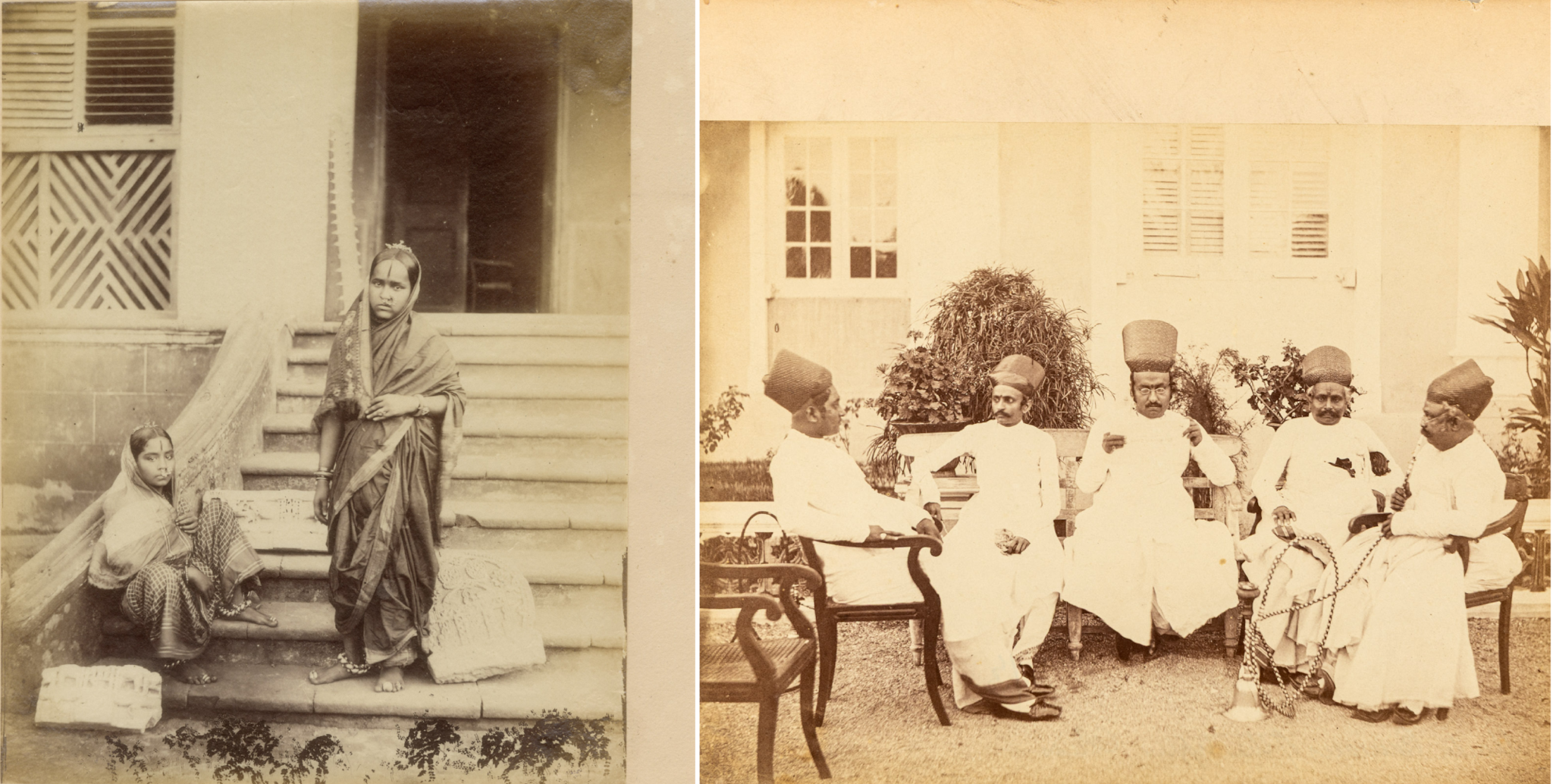
By 1839, Louis Jacques Mandé Daguerre’s daguerreotype had already made photography better and easier — the technology had travelled to India within the year. So when the British government of the day formally articulated the need to document subjects in the colonies roughly 22 years later, in 1861, the annotated photograph emerged as the obvious way to do it. The idea that photographs could capture the likeness of the subject objectively and truthfully — however widely accepted back then — has of course been subjected to finer scrutiny since. ‘Typecasting’ curator and special advisor on early photography to DAG, Sudeshna Guha explains some of the reasons in her essay in the book. For one, she writes, photographs “have an unknowability to them”. Two, “they embody an excess of information”. And three, she quotes researchers to make the point that there’s value in studying “photographs as remaining active in meaning-making”. When you see the photos in this exhibition through this lens, it opens up further readings of the British Raj — and sometimes, the resistance to it. (Pictured here are 'Brahmin Girls' and 'Parsees'. Photos courtesy DAG) 
By 1839, Louis Jacques Mandé Daguerre’s daguerreotype had already made photography better and easier — the technology had travelled to India within the year. So when the British government of the day formally articulated the need to document subjects in the colonies roughly 22 years later, in 1861, the annotated photograph emerged as the obvious way to do it. (Pictured here are 'Brahmin Girls' and 'Parsees'. Photos courtesy DAG)
7/12
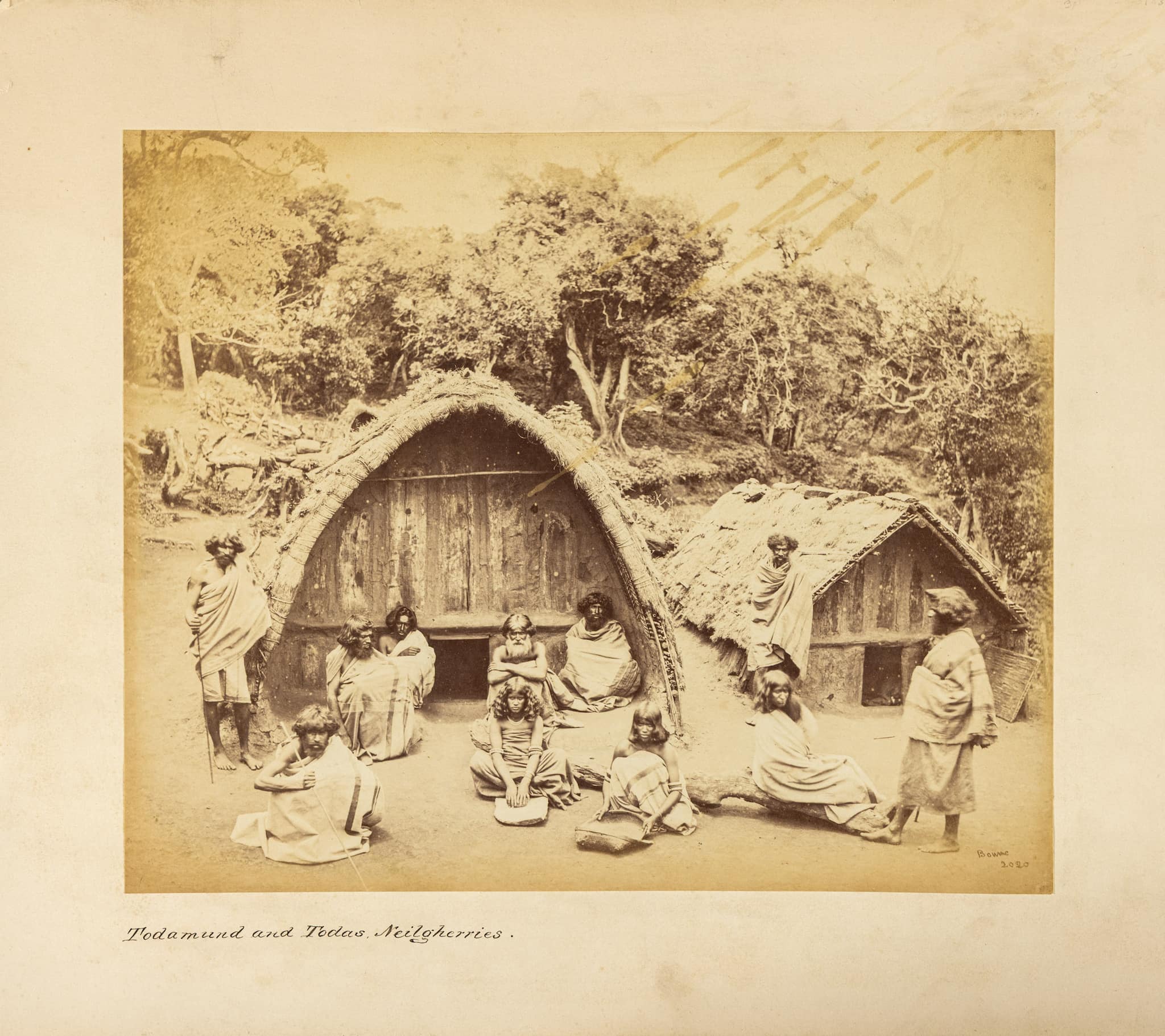
The idea that photographs could capture the likeness of the subject objectively and truthfully — however widely accepted back then — has of course been subjected to finer scrutiny since. ‘Typecasting’ curator and special advisor on early photography to DAG, Sudeshna Guha explains some of the reasons in her essay in the book. For one, she writes, photographs “have an unknowability to them”. Two, “they embody an excess of information”. And three, she quotes researchers to make the point that there’s value in studying “photographs as remaining active in meaning-making”. When you see the photos in this exhibition through this lens, it opens up further readings of the British Raj — and sometimes, the resistance to it. (Image courtesy DAG)
8/12
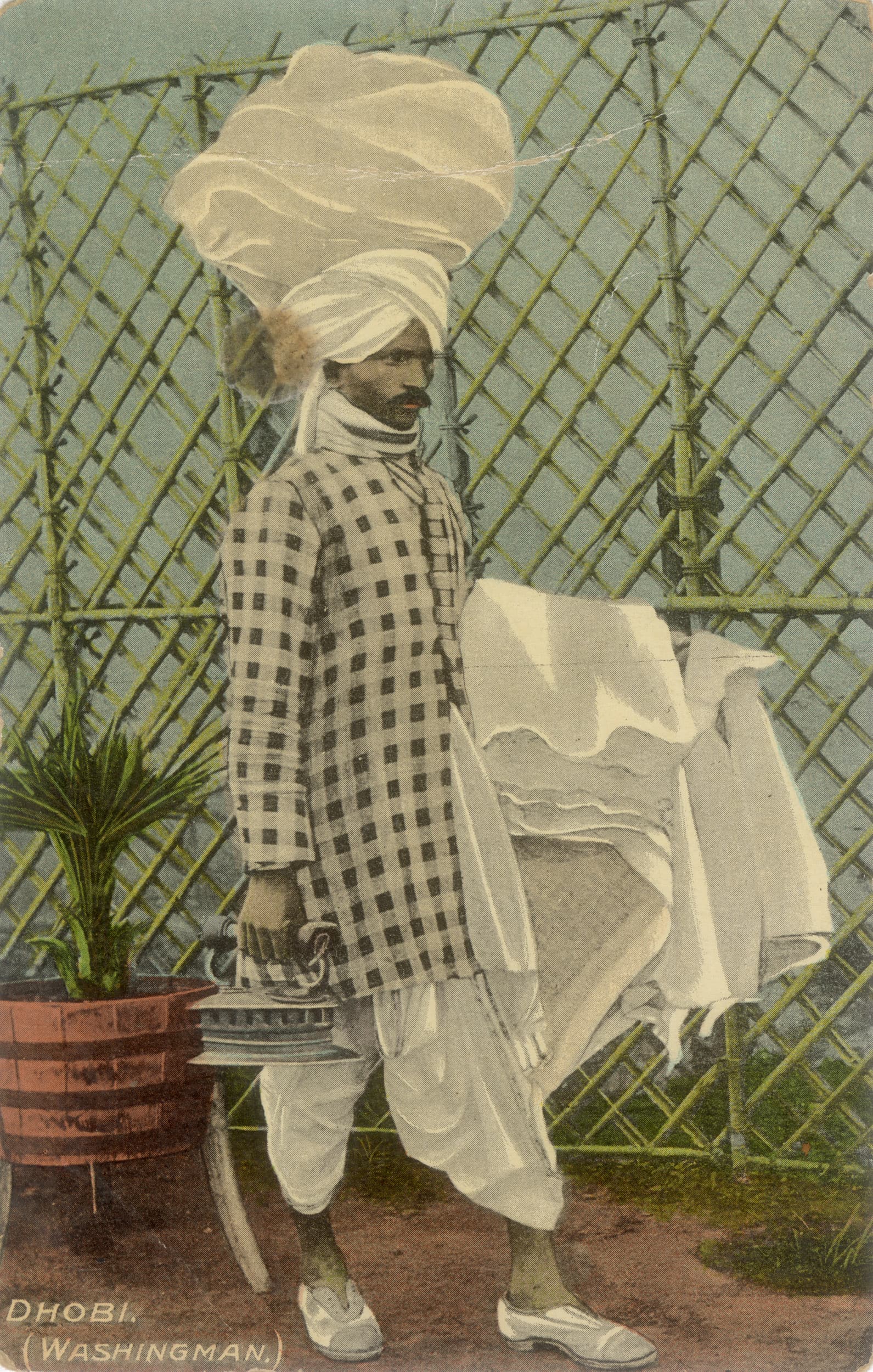
Of course, during the Raj years Indian publishers and photographers understood the commerce of postcards depicting India and Indians. One example is Moorli Dhur & Sons who made photos of places, nature and people in various professions including street cobbler, sweeper, night watchman and (pictured here) dhobi or washing man in the first two decades of the 20th century. (Photo courtesy DAG) 
Of course, during the Raj years Indian publishers and photographers understood the commerce of postcards depicting India and Indians. One example is Moorli Dhur & Sons who made photos of places, nature and people in various professions including street cobbler, sweeper, night watchman and (pictured here) dhobi or washing man in the first two decades of the 20th century. (Photo courtesy DAG)
9/12
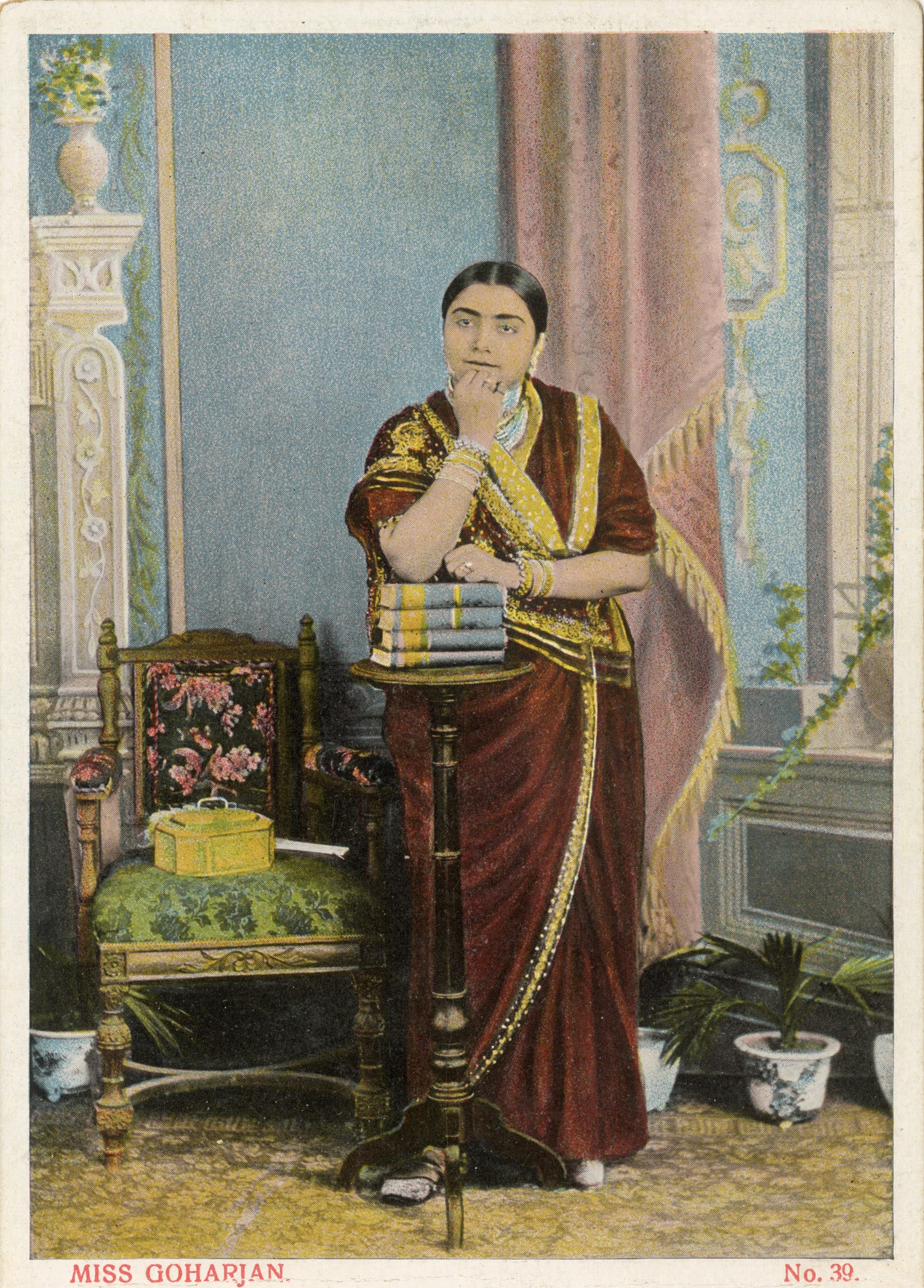
The popularity of this coloured halftone postcard of singer Gauhar Jaan, marketed by D.A. Ahuja, Rangoon, was a sign of her celebrity even then. (Image courtesy DAG)
10/12
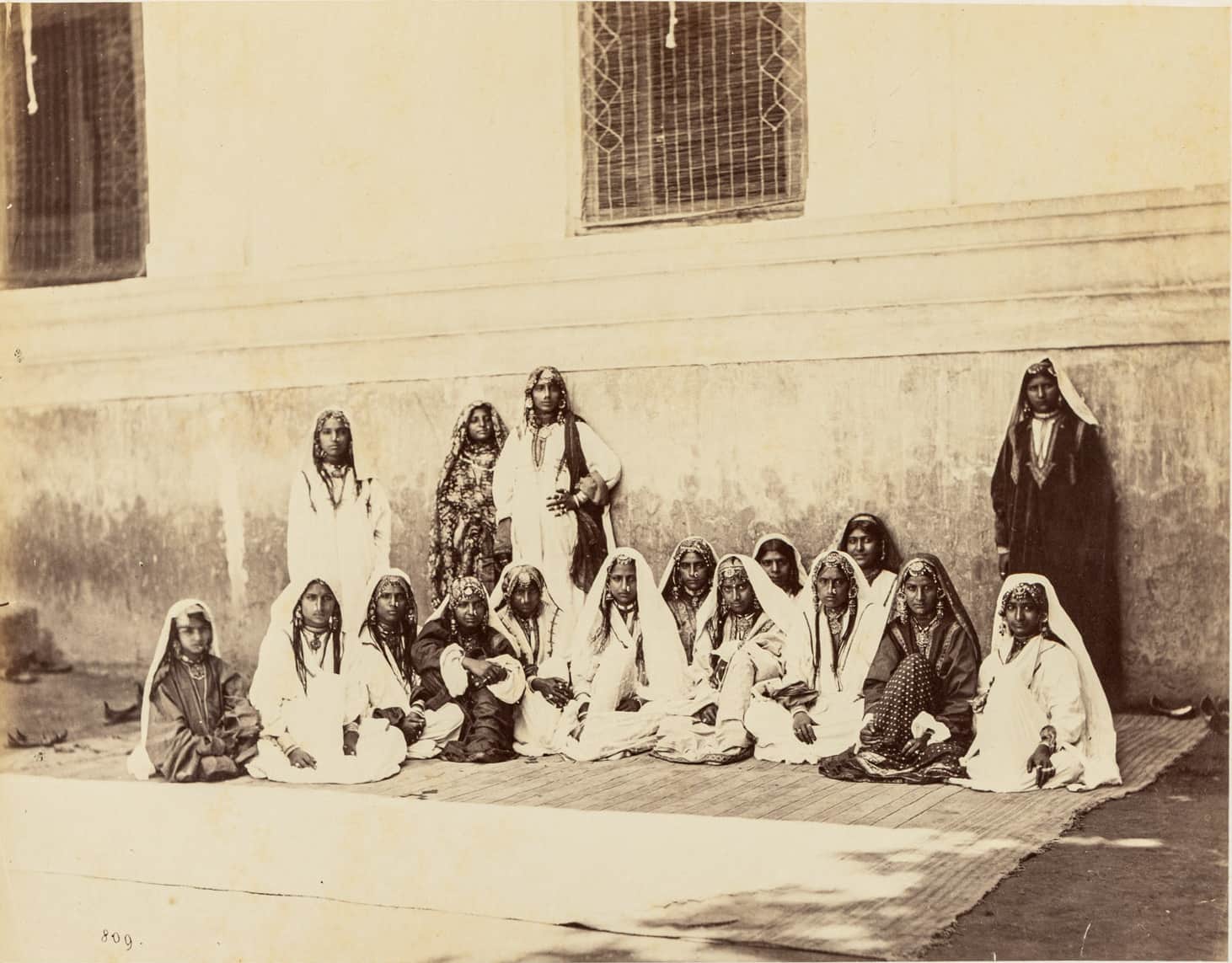
To be sure, far from being objective, the essayists explain, these photos were heavily posed. For example, if a British officer and his family were pictured in the photo with their staff, their positions and postures were carefully choreographed to highlight the prominence, power and prosperity of the British family. For the natives, a sort of SoP for making the pictures started coming together quite early on in the project. Such that when there are multiple people in a photo, they are posed sitting, standing, facing forward and in profile, to give a sense of the physical features, dress and other attributes of their race or tribe. Specific subjects in the photo were typically considered to be representative of the group. The annotations carried the presumptions and prejudices of the creator as much, if not more than the pictures themselves. But the problems with the project run deeper still. Sudeshna Guha in her essay quotes from an 1862 edition of the ‘British Journal of Photography’: “Our good friends at home constantly request us out here to take groups of the natives, but they little know what a labour it is. Only point a camera at a native, and notwithstanding his natural grace, suppleness of limb and easy carriage and bearing when taken unawares, from fear of being shot, or converted into some kind of uncouth animal by means of necromancy, he becomes, on seeing you, as rigid as the camera stand, or moves away altogether…” Some subjects simply did not want to be photographed. (Pictured here: A Group of Kashmir Females, Srinuggur; silver albumin print from wet collodion glass negative mounted on card, c. 1864; photo by Samuel Bourne courtesy DAG)
The essayists explain that far from being objective, these photos were heavily posed. For example, if a British officer and his family were pictured in the photo with their staff, their positions and postures were carefully choreographed to highlight the prominence, power and prosperity of the British family. For the natives, a sort of SoP for making the pictures started coming together quite early on in the project. Such that when there are multiple people in a photo, they are posed sitting, standing, facing forward and in profile, to give a sense of the physical features, dress and other attributes of their race or tribe. Specific subjects in the photo were typically considered to be representative of the group. (Pictured here: A Group of Kashmir Females, Srinuggur; silver albumin print from wet collodion glass negative mounted on card, c. 1864; photo by Samuel Bourne courtesy DAG)
11/12
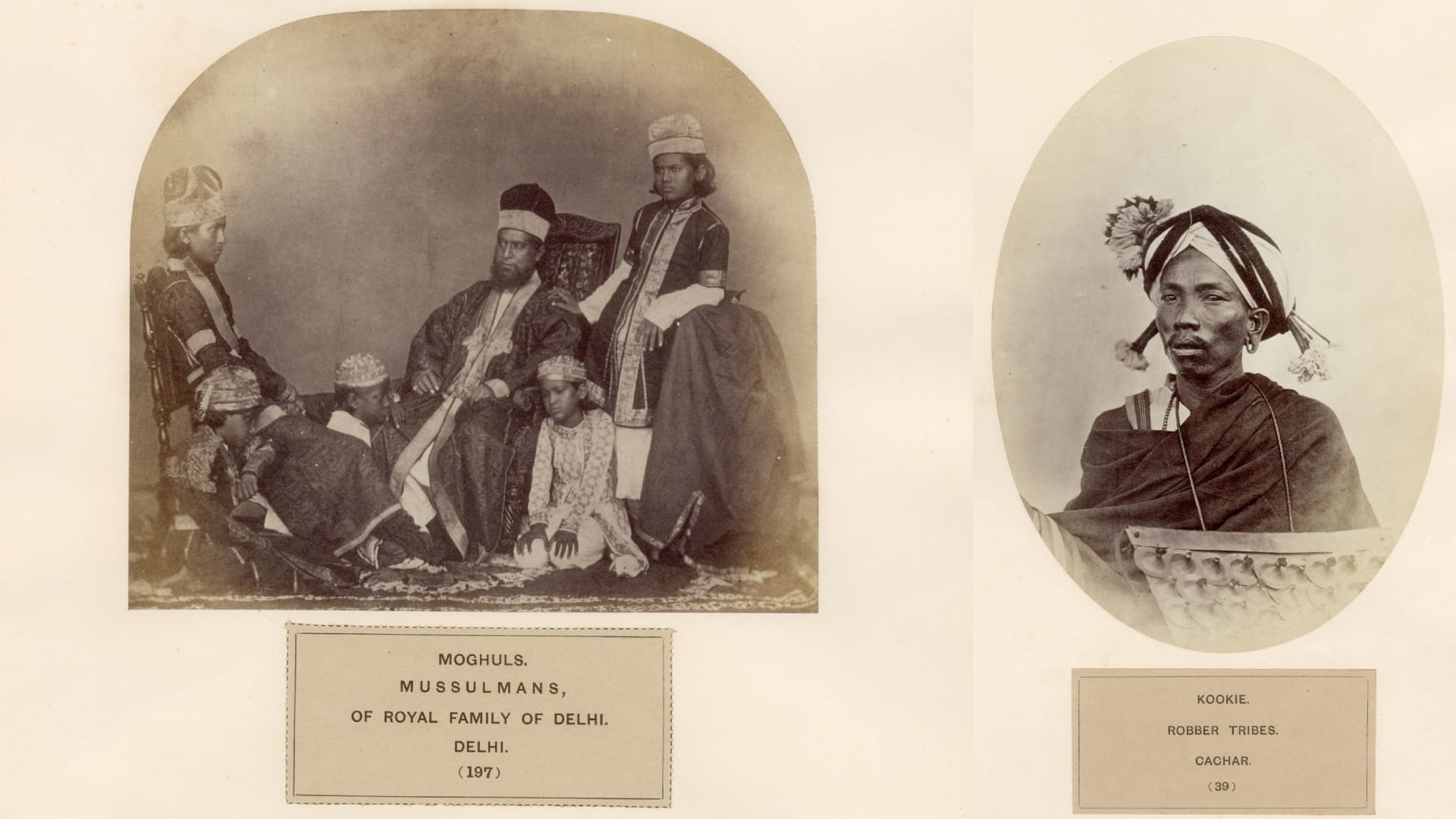
The annotations carried the presumptions and prejudices of the creator as much, if not more than the pictures themselves. But the problems with the project run deeper still. Sudeshna Guha in her essay quotes from an 1862 edition of the ‘British Journal of Photography’: “Our good friends at home constantly request us out here to take groups of the natives, but they little know what a labour it is. Only point a camera at a native, and notwithstanding his natural grace, suppleness of limb and easy carriage and bearing when taken unawares, from fear of being shot, or converted into some kind of uncouth animal by means of necromancy, he becomes, on seeing you, as rigid as the camera stand, or moves away altogether…” Some subjects simply did not want to be photographed. (Photos courtesy DAG)
The annotations carried the presumptions and prejudices of the creator as much, if not more than the pictures themselves. But the problems with the project run deeper still. Sudeshna Guha in her essay quotes from an 1862 edition of the ‘British Journal of Photography’: “Our good friends at home constantly request us out here to take groups of the natives, but they little know what a labour it is. Only point a camera at a native, and notwithstanding his natural grace, suppleness of limb and easy carriage and bearing when taken unawares, from fear of being shot, or converted into some kind of uncouth animal by means of necromancy, he becomes, on seeing you, as rigid as the camera stand, or moves away altogether…” Clearly, some of the subjects simply did not wish to be photographed. (Photos courtesy DAG)
12/12
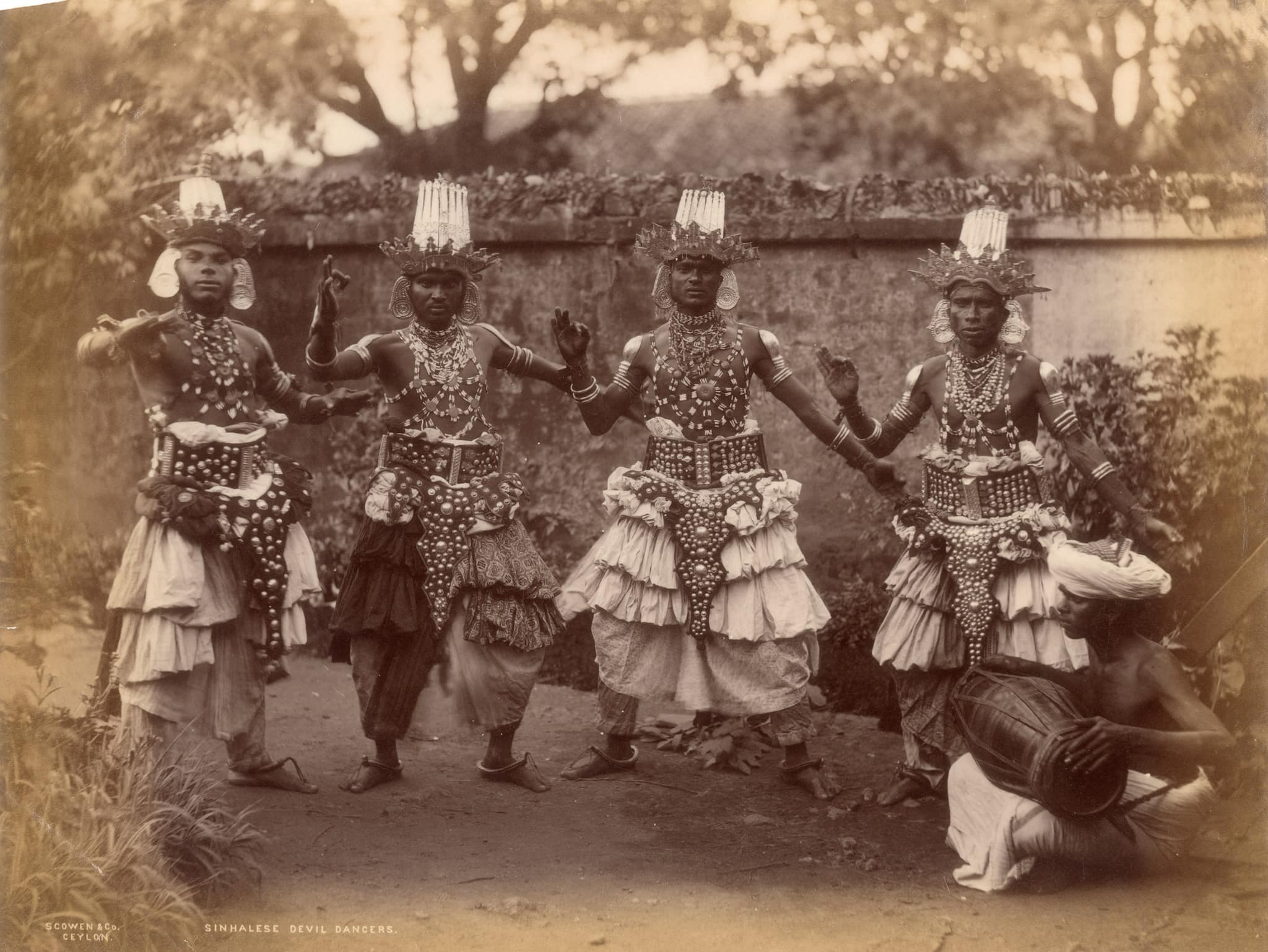
As a register of colonial anxieties and preoccupations, the photographs in ‘The People of India’ (1868 – 75) reveal a great deal. With 468 annotated photo illustrations across eight volumes, the ‘PoI’ series began as a way for the British to understand, categorise and potentially govern India and Indians better. That the ethnographic project grew out of a kind of response to India’s First War of Independence, is telling of how massive a blow the 1857 Uprising was to the British East India Company. An exhibition of photographs from the period — ‘Typecasting: Photographing the Peoples of India 1855 –1920’, drawn from the collection of Delhi art gallery DAG, on at Bikaner House in Delhi till February 15 — offers perspectives and arguments to re-examine these images, both as a lookback at the colonial project that occasioned them and as an alternative reading for what the images and their subjects themselves might reveal to us a century-and-a-half later. (Pictured here: Sinhalese Devil Dancers; silver albumin print on paper, c. 1880; by Scowen & Co., courtesy DAG)
As a register of colonial anxieties and preoccupations, the photographs in ‘The People of India’ (1868 – 75) reveal a great deal. With 468 annotated photo illustrations across eight volumes, the ‘PoI’ series began as a way for the British to understand, categorise and potentially govern India and Indians better. That the ethnographic project grew out of a kind of response to India’s First War of Independence, is telling of how massive a blow the 1857 Uprising was to the British East India Company. (Pictured here: Sinhalese Devil Dancers; silver albumin print on paper, c. 1880; by Scowen & Co., courtesy DAG)

Discover the latest Business News, Budget 2025 News, Sensex, and Nifty updates. Obtain Personal Finance insights, tax queries, and expert opinions on Moneycontrol or download the Moneycontrol App to stay updated!


Advisory Alert: It has come to our attention that certain individuals are representing themselves as affiliates of Moneycontrol and soliciting funds on the false promise of assured returns on their investments. We wish to reiterate that Moneycontrol does not solicit funds from investors and neither does it promise any assured returns. In case you are approached by anyone making such claims, please write to us at grievanceofficer@nw18.com or call on 02268882347