In September 1924, then Archaeological Survey of India (ASI) chief John Marshall submitted an article and supporting photos to 'The Illustrated London New'. The article was about an urban ancient Indian civilization. The accompanying pictures depicted finds at archaeological sites across Punjab and Sindh in undivided India: photos of intricately carved stone seals, clay pots, beaded necklaces and figurines shared space with images of sophisticated brick buildings and streets laid out in grids in the multi-page spread.
The black-and-white photos that Marshall sent to 'The Illustrated London News' were the latest in a by-then established tradition of field survey photos. For, in 19th century India, photography had rapidly become better, easier and cheaper at the same time that archaeological and architectural surveys were gathering steam.
Despite the expense and difficulties of making photographs in the late 19th and early 20th centuries by mixing chemicals on site and sometimes joining multiple photos to rephotograph the complete picture, photos were much faster than painting — and to some degree more accurate — as study and archival materials. Plus, they offered the advantage of studying them at leisure even after the site visit was over.
Indeed, field surveyors often used photos of monuments and archaeological sites as materials for deeper — and sometimes, remote — study, explains Sudeshna Guha, professor of history and archaeology at the Shiv Nadar University and curator of 'Histories in the Making: Photographing Indian Monuments 1855 ̶ 1920' — an ongoing photography exhibition at the DAG in Delhi. Alexander Cunningham and James Fergusson wrote their books in England, Guha adds.
Some of the photos made at this time would later also find their way into our history books.
Far from being objective artefacts for study, though, images made for architectural and archaeological surveys offer a reading into their context and use as a tool for writing histories. For example, the photos represent an act of selection of monuments and things worth studying and sharing with the world.
(Guha also points to a delicious reading of Indian [she cites the example of Narayan Virkar] and foreign photographers' works as creating visual memories highlighting the valour and victories of their respective countries and countrymen — a kind of appropriation of colonial tools of photography, to wage a cerebral tug-of-war that resonates and is received even 100 years later.)
Guha explains there are many ways to read a photo. In 'Histories in the Making', her focus is on unpacking the contiguous rise of photography and antiquarian studies in India, and how photos can become objects to think with. Sample the story of Edmund David Lyon's 'Ramisseram Pagoda (Long Side Aisle) (Ramalingeswara temple, Rameswaram)' (below) from the exhibition.
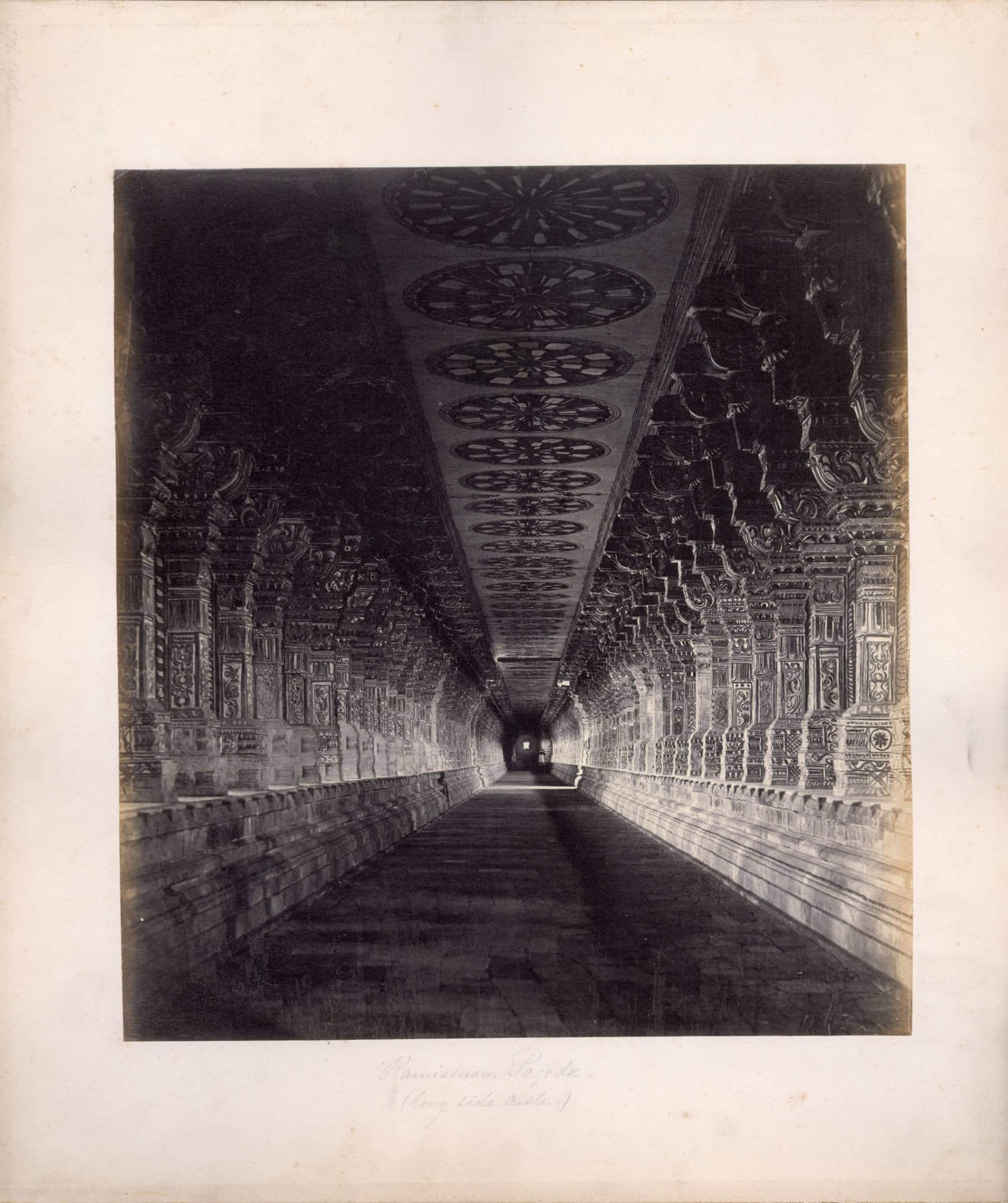 'Ramisseram Pagoda', 1867–68. (Image courtesy DAG)
A British photographer and army man, Lyon is said to have photographed 100 archaeological sites. To make an image of this temple corridor in south India, Lyon got his team to hold up aluminium sheets in-between the columns to light the corridor up for the photo. This, however, was not enough. And Lyon had to draw in a few architectural details before photographing the negative to get a clearer print.
Indeed, the technical challenges of photography, and a certain ad hoc-ness about the architectural and archaeological surveys conducted at this time by self-styled British experts, are important to keep in mind when looking at early photos of India by Indian and foreign photographers.
In an interview to Moneycontrol, she explains how advances in photography, architectural surveys and archaeological excavations coalesced in the 19th century to produce images that became objects "to think with". Edited excerpts from an interview:
What is 'Histories in the Making' about?This exhibition is about the connected history of photography and the architectural surveys of India. The architectural surveys of India began the archaeological scholarship of India (in the 19th century)... And the idea of this exhibition was to show how photography actually helped in the creation of the archaeological scholarship. All these are part of what is called antiquarian scholarship.
You mentioned (Alexander) Cunningham, Cunningham was a self-declared archaeologist. Like James Fergusson was a self-declared architectural historian. However, it is through the architectural surveys of India that the archaeological scholarship begins.
Having said that, in 1816, what we have is perhaps the first instance of an excavation, which is at Amravati done by Colin MacKenzie. So the ways in which we think about archaeology today is a retrospective thinking of what was happening in the 19th century.
These things were much more eclectic. These things were much more mixed. They have a different history here. The exhibition here is actually just to show two things. One is that photographs are something good to think with. The second thing is the connected histories of photography and the architectural and archaeological surveys of India - so connected histories of photography with the observational sciences.

So even before the postcards happen, the photographs are currencies of information. Photographs are used throughout and that starts happening from when the photographic technology becomes cheaper and easier to use. It happens from 1880; stereographs are made from 1850, well before the postcards. Photograph becomes, as Omar Khan would say, super-highways of information.
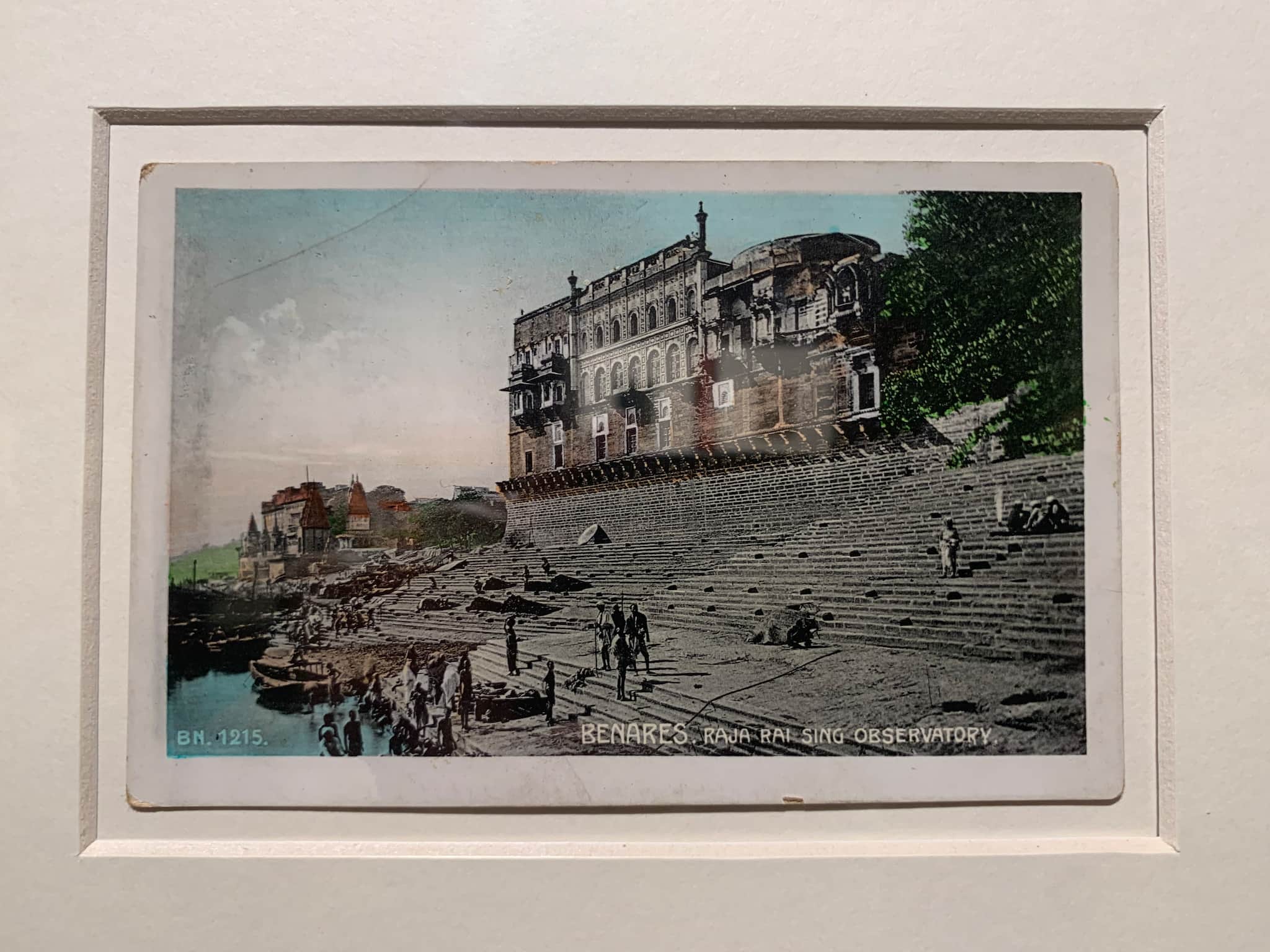 Benaras postcard by D. Macropolo & Co., Calcutta, on display at DAG
Photography as a technology produces a maximum number of different kinds of objects; you have prints, you have glass-plate stereo negatives, huge amount of things which came up. Postcards came at the end: in 1896. But postcards revolutionized the ways in which information went out.
And with postcards, there are also other histories. Histories of collection; people collected postcards, and there is a story of (a woman) who collected 28,000 postcards and she won a prize. The division on the back of the postcard allowed information to be given in a certain way. Postcards were not put in envelopes or sealed. There is a whole history of postcards (and hidden messaging), where if you put the stamp on the left, then (it meant) I love you... there was information carried in very many ways.
Now the point is it comes back to photographs. Photography allowed information to be transferred, to be created, to be negotiated, to be reused in many different ways. And postcards are the last bits of it. The reason I put postcards (in the show) is that postcards have played a very important role in the dissemination of archaeological knowledge.
Think about the archaeological picture postcards which were produced, and the Archaeological Survey of India during John Marshall's time at least produced them in volumes. In 1904, John Marshall began a photographic section in the ASI. They started doing before and after conservation (photos) to kind of vouch for the fact that the work has been done in a systematic manner.
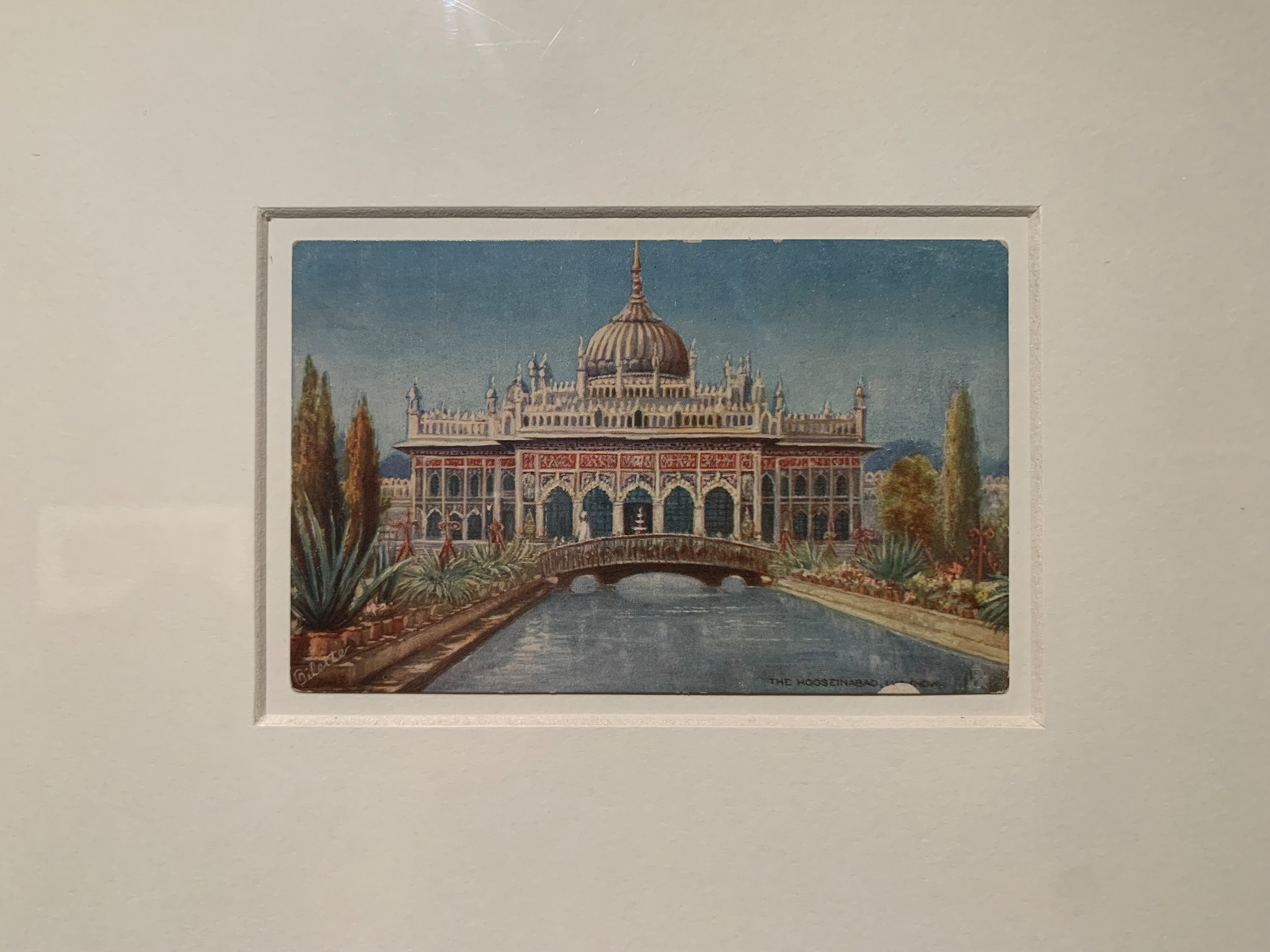 Postcard produced by Raphael Tuck & Sons, London, on display at DAG.
But if you pull this story before, in the 19th century, these are not small cameras, these are big cameras they're using. So there's a techno materiality of photography, that they are actually producing chemicals on the site. So field studies are not only about field surveys, they are also producing chemicals. They have got these negatives.
James Waterhouse, who does the first photograph of Sanchi (Stupa), for example, complains that for every was every good photograph he's produced, there have been four problematic broken negatives. Samuel Bourne says how many negatives... So they really incur heavy losses. There's lots of other experimentation which is happening. Irrespective of that, when Henry Hardy Cole becomes the curator of monuments in 1881 to 1882 - and there's a book of Cole's here within which there is a photograph of John Burke in Kashmir with that scale - and that is what becomes the standard feature from Marshall's time. But it was much more standardized later on by Mortimer Wheeler.
To come back to your question, what you see is the making of an archaeological image. Now what is an archaeological image going to be? It's not the rims. The history which has happened in India for a very long time has been (characterized as) this is colonial photography, and this is a colonial gaze. But there are many more histories involved here. Many more things to think about and somebody who does it very beautifully is Cristopher Pinney through his book 'The Coming of Photography to India'. He talks (of the British seeing photography) in terms of a cure (for the earlier representational ills of painting, which was all about the mind). But then the British find it very hard to see it as a cure because the Indians use it to do what they want to do. That happens with Narayan Virkar's photographs of Raigad Fort, for example. Virkar does the same visual memory which Linnaeus Tripe tries to do.
With the archaeological images, however, more than visual memory, I think (colonial historians and photographers) are trying to begin a systematic method of field surveys. But in the 19th century, these photographs don't show you a systematic method. These photographs are simply showing you the monuments they have captured. Yet when we look at (Col. Thomas) Biggs' photographs of Ahmedabad, what they try to do, within the constraints of the technology, is actually take an element very clearly. So you have the jaalies and you have kind of architectural elements which they're taking.
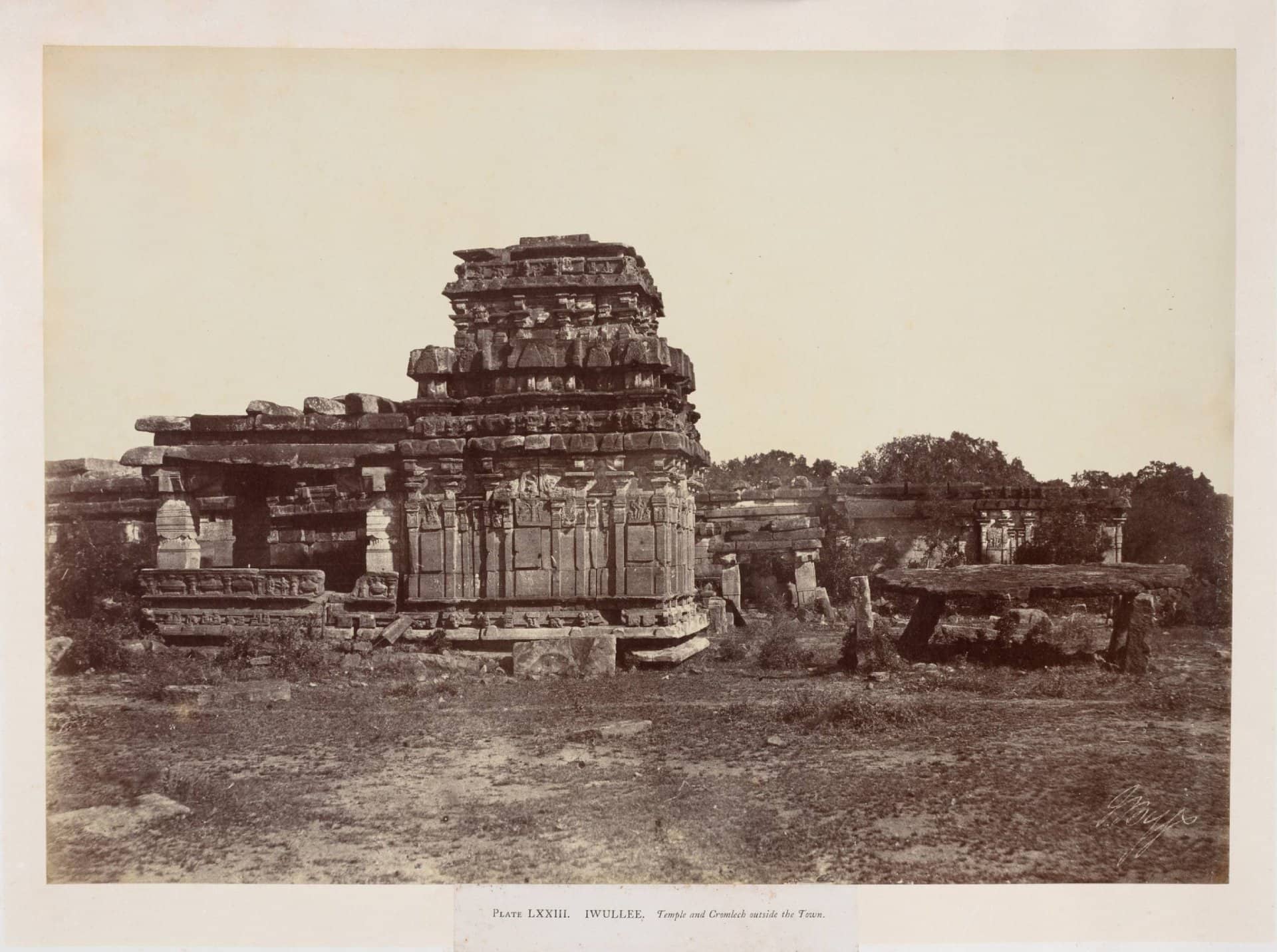 Thomas Biggs' 1855 photo of Aihole temple, Bijapur. (Image courtesy DAG)
Something to remember here is also that in 1858 they start establishing schools of art like the JJ School of Art in Bombay (Mumbai). And these photographs are also given to the craftsmen to talk in terms of the tradition of Indian art and Indian crafts. Photography, unlike the painting arts, was categorized as a craft.
So photographs were used in many, many ways. Many of these photographs got into the history books. The first history book we know is the Students' Manual of Indian History by Meadows Taylor, 1871... After Meadows Taylor, you have RC Dutt, you have RN Dandekar, RG Bhandarkar writing about Indian histories, and they use these photographs. There is a photograph here of a tank from Madurai which is the same photo in a book called L'Art Hindou which was published in Paris. So these photographs making history through the letterpresses and at the same time they are vouching for the fact that what you've been seeing, you've been seeing it properly.
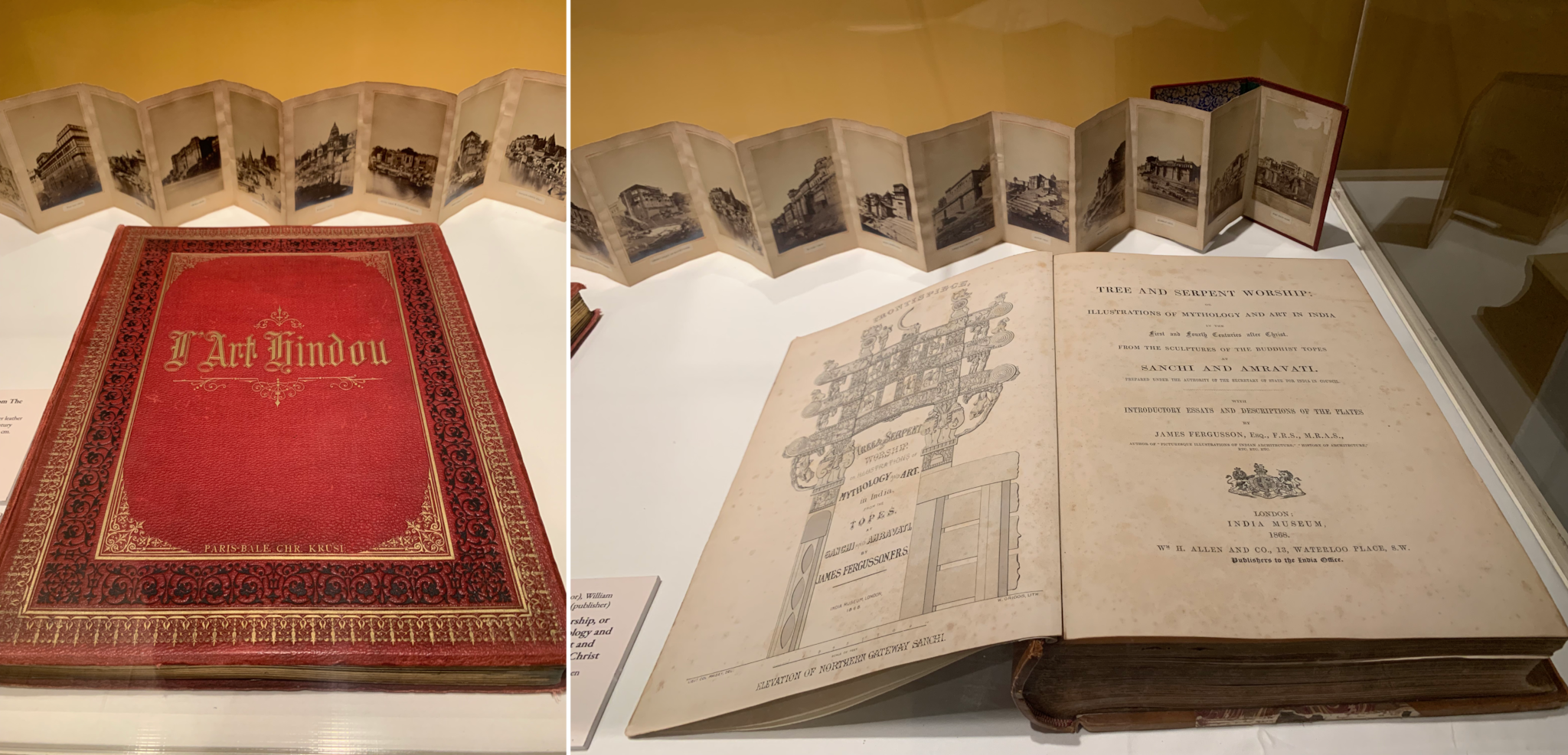 Copies of L'Art Hindou and Tree and Serpent Worship, in the DAG collection.You mentioned the books in the collection that you're also showing here, including Tree and Serpent Worship by James Fergusson.
Tree and Serpent Worship is one of the first books of Fergusson, but Fergusson before that had produced books. There is a lavish book which is the Picturesque Illustration of Hindustan, 1848, which has got Fergusson's own illustrations. Fergusson himself took sketches of Indian architecture. After his indigo business went down after having made huge amounts of money, Fergusson went on self-styled architectural survey from 1837 to 1842, and he made illustrations because what he believed in spot drawing, and he did those with Camera Lucida. He actually mentioned (in the book) that whatever I have done is on the spot. So that was his first book. But prior to that he had also gone and photographed the 'Cave temple' which is the rock-cut architecture of the Deccan. He had given an illustrated lecture of this in London in the Royal Asiatic Society in 1843, and his first article was on the Cave temples of India. Through that, because he made a bit about the fact that many of the things he had seen were being vandalized also by the antiquaries, the Cave Temple Commission was formed in 1850.
The history of its formation is there was a dispatch which was brought from London to Kolkata in 1847. John Faulkner called it the great objective because the dispatch was to list all the monuments of India with the idea that these would be then studied and conserved. The East India Company and the Raj has always been very parsimonious. So the conservation kind of lagged behind. But this is the history of this kind of seeing.
Fergusson, when he goes back to England, carries in his portfolio with him 3,000 photographs. Fergusson, as we all know, wrote the first seminal book (on the subject) called the History of Indian and Eastern Architecture, which is later than the Tree and Serpent Worship.
The Tree and Serpent Worship is his first book on architecture where he makes the bit (argument) that Hindus and Buddhist are two different races of people and he uses the photographs of Sanchi. (Sir James Waterhouse begins photographing Sanchi in 1861. We don't know where all the photos are, but what the DAG has are the surviving ones.) So those photographs are used in Tree and Serpent Worship and the photographs of Amaravati (in the book) were probably taken by the Duke of Connaught - probably.
But the Tree and Serpent Worship is his attempt towards a pan-Indian writing about architecture, but using architecture to write an ancient Indian history. That's why I put that there, because in retrospect we criticize Fergusson for classifying Indian buildings into Hindu, Jain, whatever, not taking cognizance of the fact that there were other people of other kinds who were worshipping. (For example,) there's a William Henderson photo of the Karla Caves. What you see in the photograph quite prominently is the Koli temple which is in front of the stupa. Even today when people go to Karla, they go to worship (there). The Kolis are the fisherfolk of Bombay and the reason they go there is to worship the Koli mata. So the British, actually Fergusson, he never talked about the Koli worship, just like in Sarnath... (in) the Handbook of Benaras written in 1889 the author mentions that the Hindu rajas come and put mohar. So they (Fergusson, et al) kind of obliterated it (that connection).
So, Tree and Serpent Worship is also the first kind of creation of (a distinction between) Hindu architecture and Buddhist architecture. But the tree and serpent worship is Buddhist architecture - it's Sanchi and Amravati. He said these are the earliest forms of architecture, but also that these are the local Indian native motifs. So he's kind of creating a history of Buddhist architecture. That got, at that time, critiqued by an anonymous critic who said, I refuse to believe that there are two races of people who do this - in the Amravati Stupa, he says, I see faces and they look like the Indian types. So these architectural photographs can also be used for ethnography.
It doesn't come into this exhibition, but it should come in the book: The point is that when you create photographs and you say this is an archive of architecture photograph, these are the archive of ethnographic photograph, which is what the British, these histories of archive making then also feed into the histories of discipline making - which was happening by the 1880s within India.
What do we know about the pictures that John Marshall took of Harappa and Mohenjo-Daro, and the John Marshall Albums.The Marshall Albums is a book that I edited. There are a few Marshall family photographs in the Alkazi collection. The cover of that book is John Marshall and his wife and daughter in front of the Sanchi Stupa. But the Marshall collection... because he was was the director-general of the Archaeological Survey of India, he took care to think through photography. Aurel Stein, for instance, was a fantastic photographer. Marshall and Stein hated each other because both wanted to be very big or whatever, but both of them actually thought in terms of photography and how a building was to be photographed, etcetera.
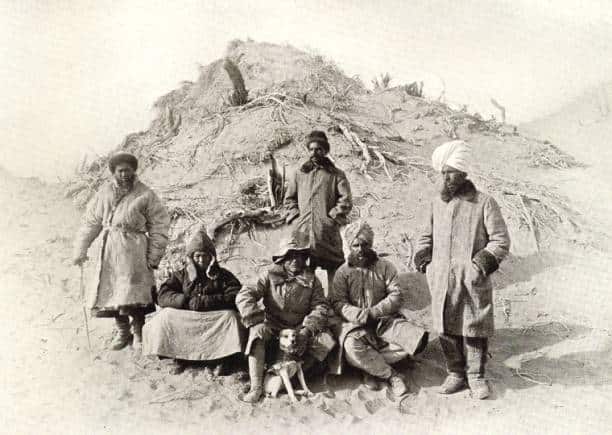 Archaeologist Aurel Stein with his dog Dash in Northwest China, c. 1910 (Image via Wikimedia Commons)
So that book has got things about John Marshall's creation of a photographic collection here, which was very different from the 1869 creation of a photographic collection.
The first creation of a photographic collection was in 1869, which was an injunction by Forbes Watson, and it was fed the contribution by Alexander Cunningham, James Fergusson and Meadows Taylor into collating a large collection of photographs of Indian monuments, taking the parent negatives to England so that these can be shown as a representative of Indian archaeology. That actually gives for the first time a unique view of the archaeological aspects in India today. So that sets up a whole thing about history books coming up. That collection is still there in the British Library, and it's completely digitized. But I think none of you can see today because there's been a huge outage and the British Library got it got hacked in October. But John Faulkner's work has been there.
Marshall, when he comes to India, he makes the Archaeological Survey of India into something which we know today. One of the things he does is he also sets up a photography collection and he says all the photographs and negatives are to stay in India. So that collection is what we have today in the ASI.
Marshall was actually questioned in the Parliament about why he did not publish about Harappa and Mohenjo-Daro in an Indian journal and why he published in 'The Illustrated London News'. It's quite a something to have a parliamentary question, and he answered because I wanted other people to see to it and then give a comment about what date, what time, etc., this may have been (to date the findings and the civilization). The photographs actually of Harappa and Mohenjo-Daro - most of them were probably taken from 1923 - they actually created the view about this so-called long-forgotten prehistoric civilization which had been suddenly discovered.
And Marshall got into the ire because RD Banerjee had excavated at Mohenjo-Daro, Daya Ram Sahni had done it at Harappa. Prior to that there was DR Bhandarkar who had seen Mohenjo-Daro. And it's always been thought that Marshall kind of suppressed the Indian side of this view and he published his own.
But the photographs made the news... Ernest McKay was excavating at Kish (at the time). So if you see The Illustrated London News, they had put photographs of objects from Kish next to photographs of objects from Harappan and Mohenja-Daro and through that they made the comparison. And so Marshall's Indo-Sumerian civilization (idea) was first formula. Marshall later on changed the name to Indus civilization. And that's the term I use... But it is photographs actually, when we think in terms of what allowed this knowledge about the Indus to be created in the first instance and get a wider, I guess, circulation of scholars to work in there were the photographs - not the objects, because you couldn't send these objects out.
Photographs for Indus Civilization were absolutely crucial in making the early inferences about the civilization. Photographs were also very crucial in the political, which happened with the Indus civilization.
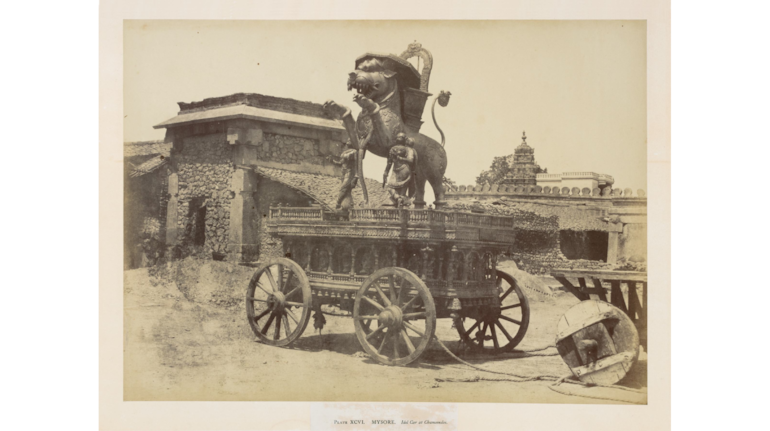
There are a couple of photographs here of Tipu Sultan's summer palace. Is Tipu Sultan still a figure the British are obsessed with in the 19th century?With Srirangapatna, there are two things which I've tried to show. The photo by Edmund Lyon which you see here, that is actually about visual memory but also the limitedness of a photographic scrutiny. It is a photograph of Rameshwaram (temple): the corridor. The corridor is dark, so he has his team put in aluminium plates, and then they get the light, but that is not enough either. So when the negative comes out, then he actually inscribes on that negative the elements of the architectural column and they rephotograph it. So (the idea that) something which is placed before the camera and the camera shoots... the idea of realism in photography — as something which is (painted with) the sun's rays, which is of the chemical, it's got nothing to do with the hands or the intellect — the point is that if we really think in terms of histories of photography, the photography makes something which is invisible visible, but the photography also makes something which is visible invisible. There are many aspects of photography, and I would actually take you back to thinking about the ways in which photography has been approached by scholars of photography.
With Linnaeus Tripe, he actually invokes Seringapatam (Tipu Sultan's capital in Karnataka before he was killed in May 1799; it is now known as Srirangapatna). He was a commercial photographer; he was very well known in his time. And he had accompanied the British to their mission in Burma and after that, because of the success of the first photographs of upper Burma, Tripe was then commissioned by the Madras Presidency to be the first government photographer (there). Tripe's photographs, most of them, were accompanied by letterpresses. There is a book here (in the DAG show, on till October 12) which shows the Madura series: through Madura, Pudukottai, Rayakottai, et cetera, Tripe actually tried to show through the letterpress that it was a great tent that the British had conquered India.
But the thing with Tripe's photography of South India is also... the idea that this is their Srirangapatnam; so, the British had defeated a tyrant (Tipu Sultan) and had come in. These are instances of photography creating — and that's how it was used as well — certain key moments of the colonial advancement in India which predated photographic times. In 1799 when Tipu was defeated, there was no photography. The photography was launched in 1839. On the other hand, a history of photography can be traced from the 12th century when they were using the camera obscura.
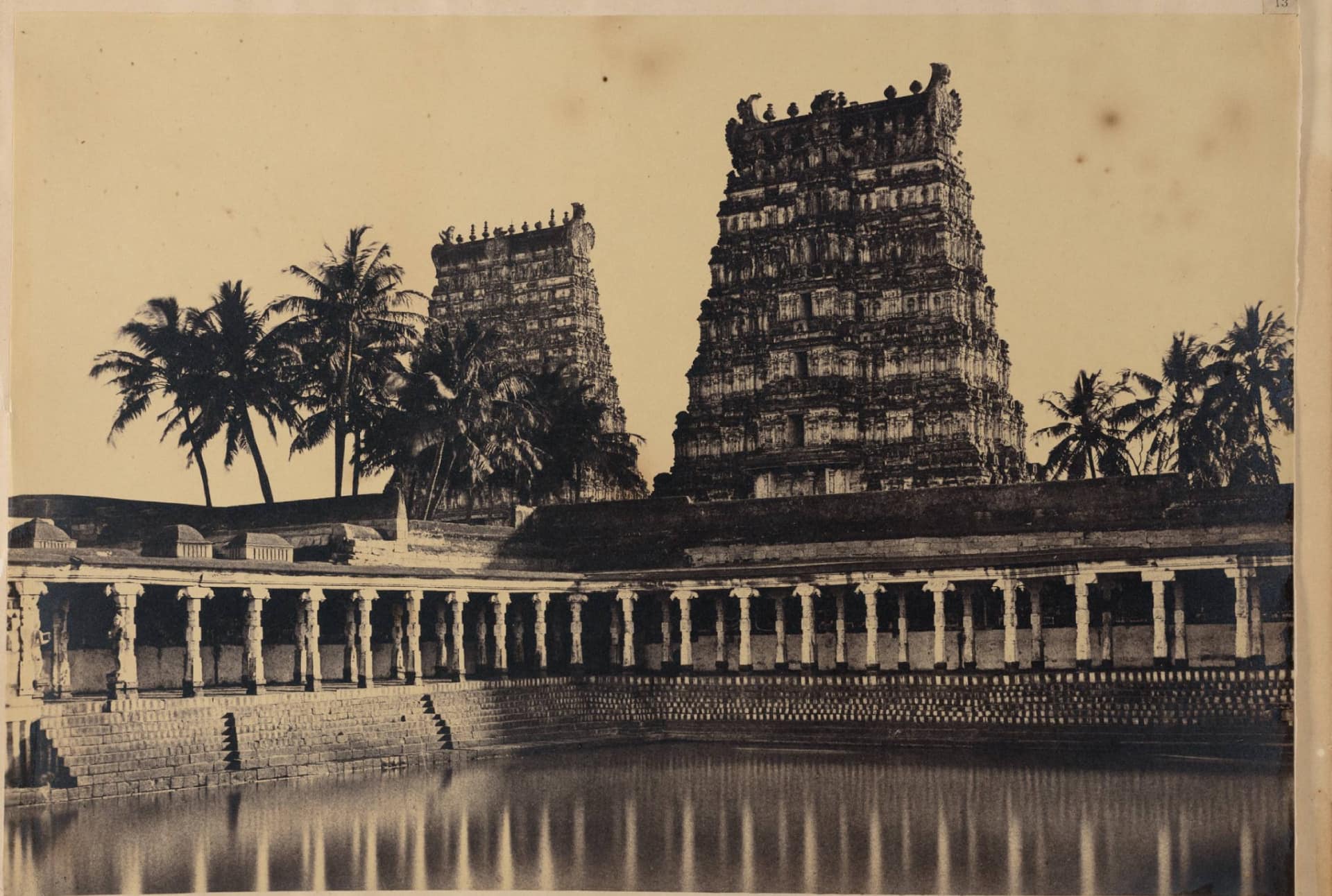 Linnaeus Tripe's 'The Great Pagoda (Minakshi Sundareshvara Temple, Madurai)', 1858. (Image courtesy DAG)
Lyon also photographed in Madras for the Madras Presidency, where you have Srirangapatna. (But) there is nothing spectacular about Srirangapatna which is a story here... These photographs also embodied an image of the British defeat of Tipu and the British defeat of Tipu was important because between 1799 and 1818, the British India we know had been formulated... the fact that you're seeing only the Summer Palace, the Daria Dowlat, does not mean very much apart from the fact that these are in the DAG collection.
If I were to take you to the collection of the British Library, which I know extremely well, there are many other photographs, but also certain things get photographed in a certain manner and that creates a bit of heritagization.
They were not obsessed with Tipu Sultan. It is simply that as photographers of the Madras Presidency... they took photographs of these buildings because these were the palaces and other things which were photographed. They were not creating a memorial of Tipu with photography. They were doing a field survey of the Madras Presidency.
Having said that, it's the Bombay Presidency which kick started architectural surveys and it's The Cave Commission which kick-started it. And its only in 1861 that, when they were preparing for one of the international exhibitions, they realized that they had very few photographs of Madras and that's when they had David Lyon come up and he becomes the photographer for that (presidency).
Why were they so interested in photographing the architecture around India?Architecture and archaeology were the same things. Remember that Alexander Cunningham declared himself an archaeologist, and James Fergusson declared himself to be an architectural historian. So, we actually spout the colonial historiography when we take Cunningham as the forefather of Indian archaeology.
The point here is that this is the forefront of the scholarship of antiquaries. They were all antiquaries. And why were they taking it? Because these subjects were being developed at this point of time. Archaeology is the latest of the Victorian sciences, archaeology as it gets developed as the way we know archaeology today, that happens from Egypt.
So I would take you to William Matthew Flinders Petrie, who was an Egyptologist. And there is somebody called Augustus Henry Lane-Fox Pitt-Rivers, who excavates Cranborne Chase in Dorset. These are the kind of genealogies which you have to put in for excavation archaeology.
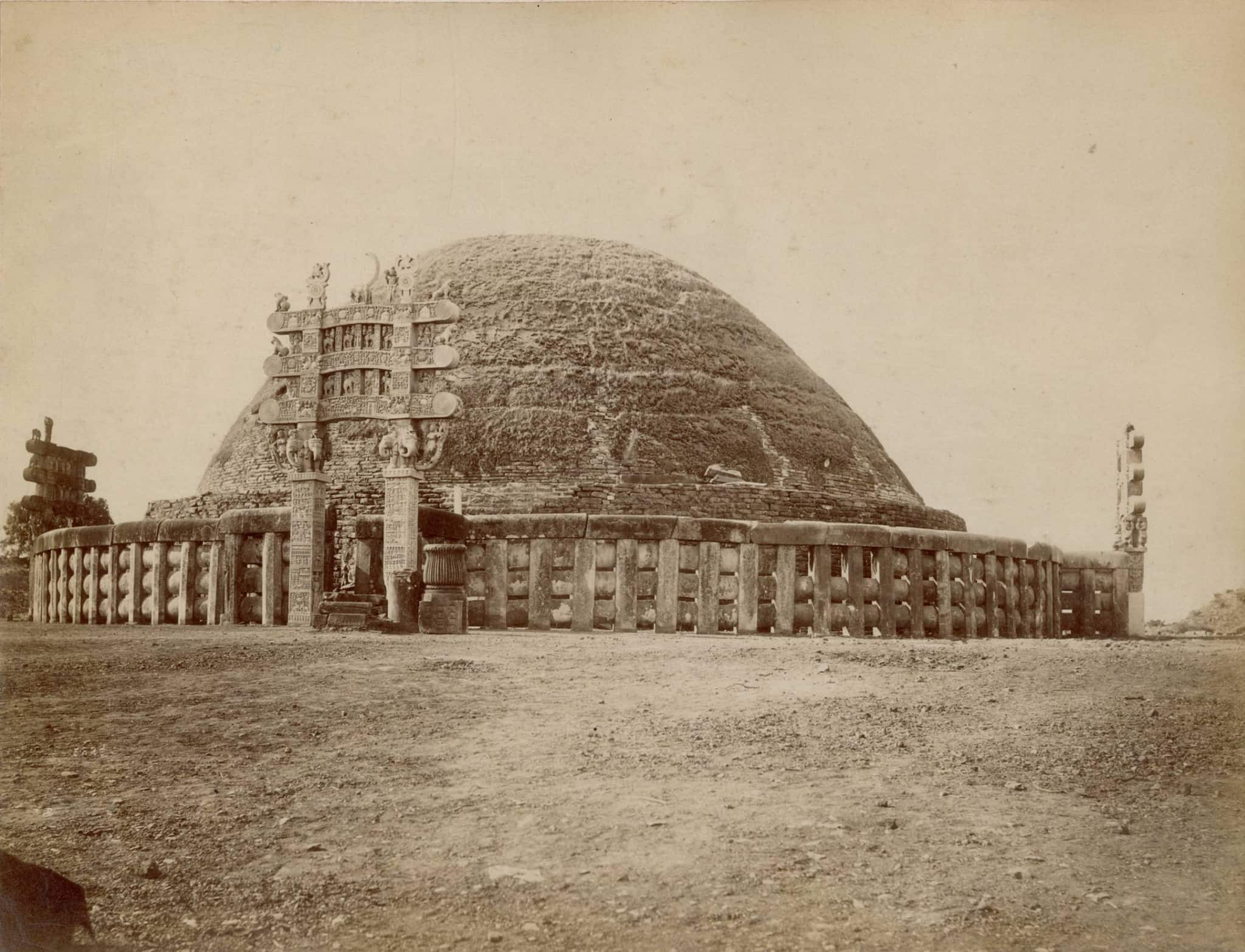 Lala Deen Dayal's Sanchi Stupa, 1880. (Image courtesy DAG)
But archaeologies had many other facets. And the distinction which we draw today between architecture-historian, and architecture and archaeology is a fraught distinction.
So if you think in terms of the subject, think in terms of histories of subject, photography actually tells you that these are fraught. But that's not your question. Your question is what photography did.
The launch of photography happens at a time when field sciences were being developed and the two field sciences which are being developed outside the colonial world are architectural surveys - it happens in Europe as well - and ethnography - people.
When we think in terms of the making of the archives, for example, the British Library archives - and I keep harping on that because that's what seems to be known more in India - become the Archaeological Survey of India because in 1869 there was an injunction by Lord Northbrook's government that we would take all the parent negatives of the architectural surveys and store it in an archive which would represent the archaeological surveys of India which had been done.
So these photographs, if I have to make a distinction, it would be photographs of what one would say archaeological intent, and the others would be photographs of ethnographic intent. The DAG's collection has got both. I curated something with the brief, which I formulated and which they understood, was the connected histories between photography and the archaeological scholarship of India. And as I'm telling you, the archaeological scholarship of India begins with the architectural surveys of India and also with Alexander Cunningham, actually with Colin MacKenzie excavating. So they are both connected.
When you look at Cunningham's drawings, you realize that photography was used by Cunningham, but Cunningham was no photographer. James Fergusson, on the other hand, really promoted photography. What photography allowed both Cunningham and James Fergusson to do, was to take the field into the study. Both of them used the photographic archives to linger on the monuments, to linger on the sites, and then to think in terms of their theories of what they thought about a site. Fergusson in fact boasted that at some point he had 3,000 photographs. All their books were written in England; Fergusson's, for example.
So the architectural history was created through photographs - because of the size, because photographs as objects allow two things which are very different to be compared, to be classified, to be sorted. And there is a whole history-making here of ancient India, medieval India or pre-colonial India, which happens through the ways in which these photographs were consumed, the ways in which photographs were used by both the scholars and also by other people.

Discover the latest Business News, Sensex, and Nifty updates. Obtain Personal Finance insights, tax queries, and expert opinions on Moneycontrol or download the Moneycontrol App to stay updated!
Find the best of Al News in one place, specially curated for you every weekend.
Stay on top of the latest tech trends and biggest startup news.