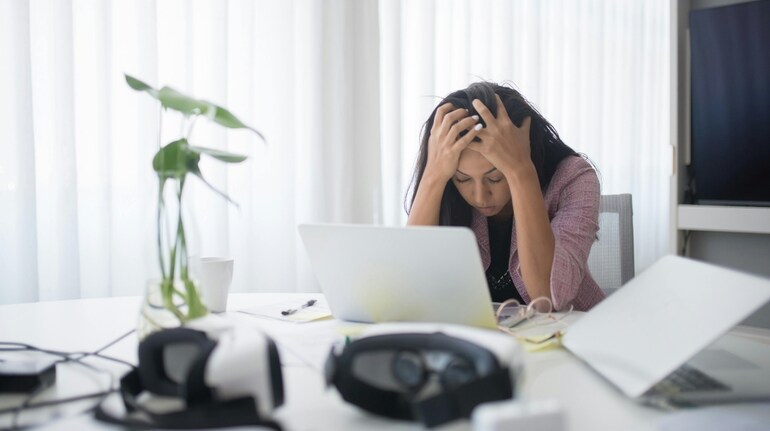
NCP MP Supriya Sule introduced the Right to Disconnect Bill, 2025, in Lok Sabha, demanding legal rights for employees to refuse work-related messages, e-mails, calls or any other form of communication after official working hours and on holidays.
A lot of professionals these days grudgingly respond to messages and e-mails after their official working hours are over, because of a number of reasons. A: They don't want to upset their seniors B: They strive to create a good impression by replying promptly to messages and e-mails in hopes of getting a good appraisal and be in good books of seniors C: They fear they would come across as someone irresponsible if they are not available 24x7 for work-related things.
Tell honestly how many of you have worked after official working hours, because of aforementioned reasons? Chances are a good percentage of you have done it. A lot of professionals work till late and respond to every query and message on official groups well beyond working hours without even realizing that this behavior impacts their work-life balance severely.
The bill says employees should not feel compelled to respond to official communication after work hours and on holidays. It grants every worker the right to refuse calls and emails without fear of disciplinary action.
Also read: Microshifting trend: Is Gen Z rewriting work life rules for good?
- Employees are not obliged to answer work calls, emails, or messages after hours.
- No employee can face disciplinary action for refusing to respond.
- The right applies to all forms of communication like phone calls, texts, emails, video calls, etc.
- Employers and employees must mutually agree on emergency contact rules, if needed.
Thanks to digital advancement and tools, professionals now enjoy some degree of flexibility. However, with this, the culture of being available at all times has also come about.
The bill cites research linking the culture of constant availability to sleep deprivation, stress and emotional exhaustion, telepressure and info-obesity (the idea of constantly monitoring work messages).
Moneycontrol team reached out to Dr Pavitra Shankar, Associate Consultant, Psychiatry, Aakash Healthcare, to understand how the bill, if it gets passed, will guarantee work-life balance.
"If the bill gets passes and becomes a law, it will help professionals in many ways. It will likely normalise the culture where professionals will no longer be expected to reply to messages and calls promptly. It will enable employees to unplug without feeling they will be penalised for it," shared Dr Shankar.
"I don't think so per so. Real work-life balance requires the right workplace culture, attitude of managers, and employees' ability to set boundaries without feeling guilty. Legal rights can reduce the pressure on employees for being available after working hours, but organisations too need to do their bit by having structural policies in place and having supportive leadership. If the intention is missing at the end of organisations, the well-being of employees can still suffer," highlighted Dr Shankar.
Also read: Achieve work-life balance when working from home: Set clear hours, take breaks, and more
"I come across a lot of professionals who are just a call, message or an e-mail away. In the long run, the health of such professionals gets compromised majorly. They feel stressed out, emotionally tired, and they feel incapable of segregating their personal and professional life," Dr Shankar told Moneycontrol.
To be emotionally stable, mentally clear, and physically healthy, one needs work-life balance, opined Dr Shankar. "The nervous system of individuals recovers from stress when people take time out to relax and do things they actually love. People who enjoy a good work-life balance are able to cope with stress, improve their relationships and are able to sustain well in the long run as well," she added.
Employees should have firm boundaries in place. They should know when to switch off and draw the line. They can always tell their seniors and colleagues in advance that they wouldn't be available after a certain hour so that it creates less hassle and everyone else can respect their decision.
Mental overload can be minimised by prioritising rest, pursuing hobbies, and setting attainable goals, Dr Shankar told Moneycontrol. Time management, breaks and multitasking help to enhance concentration at the workplace, which leave a person full of energy to carry out personal activities in the future.
It is normal to feel overwhelmed. Dr Shankar is of the opinion that one should take leaves when necessary and seek support from others to cope when the going gets a tad tough. "This will help a person achieve long-term emotional stability and allow them to establish healthier patterns in their daily life," she explained.
1. Why is work-life balance important?
It helps reduce stress, prevents burnout, and supports better mental and physical well-being.
2. How does work-life balance improve productivity?
When you’re well-rested and mentally refreshed, you can focus better, make clearer decisions, and work more efficiently.
3. Can poor work-life balance affect health?
Yes. Chronic overworking can lead to fatigue, anxiety, sleep issues, and long-term lifestyle-related health problems.
4. Does maintaining work-life balance improve relationships?
Absolutely. Having time for family, friends, and personal interests strengthens emotional bonds and reduces conflicts.
5. How can someone achieve a better work-life balance?
Set clear boundaries, prioritize tasks, take regular breaks, schedule downtime, and practice saying no when necessary.
Disclaimer: This article, including health and fitness advice, only provides generic information. Don’t treat it as a substitute for qualified medical opinion. Always consult a specialist for specific health diagnosis.
Discover the latest Business News, Sensex, and Nifty updates. Obtain Personal Finance insights, tax queries, and expert opinions on Moneycontrol or download the Moneycontrol App to stay updated!
Find the best of Al News in one place, specially curated for you every weekend.
Stay on top of the latest tech trends and biggest startup news.