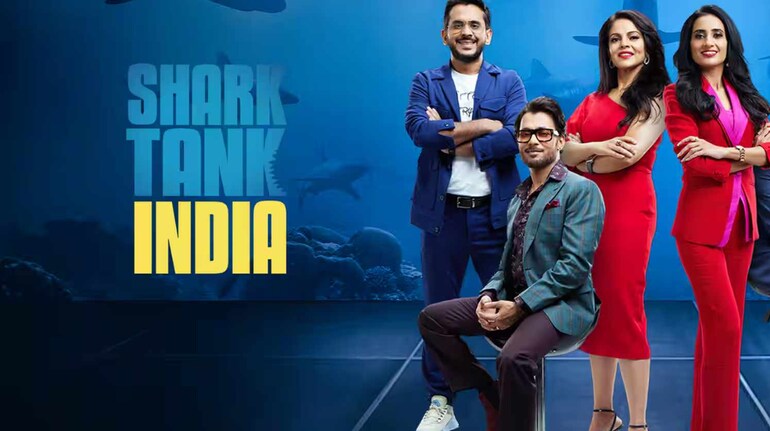

Shark Tank India has moved well beyond being just a prime-time television show. Over five seasons, it has emerged as a serious business platform that mirrors the evolution of India’s startup ecosystem. From early experimentation to sharper execution, higher valuations and global ambition it has really become a go to reality show for budding entrepreneurs.
What began as a curiosity-driven show has now become a key reference point for founders, investors and even first-time business learners across the country.
In an exclusive conversation with Moneycontrol, three of the most influential faces of the show who are now know as the OGs of Shark Tank - Vineeta Singh, Co-Founder & CEO, SUGAR Cosmetics; Anupam Mittal, Founder & CEO, People Group (Shaadi.com); and Aman Gupta, Co-Founder & CMO, boAt — break down what Shark Tank truly represents, cutting through assumptions of glamour and scripted drama.
The sharks speak candidly about how media visibility has changed entrepreneurship, why tougher scrutiny has become inevitable, and how founders today are far more prepared than those in Season 1.
They also explained how Shark Tank has helped normalise business vocabulary in Indian households while also stressing on the fact that visibility alone does not build sustainable companies.
Most importantly, the trio clarifies a key misconception: Shark Tank India is not a shortcut to success. It is a high-pressure entry point into a long, demanding entrepreneurial journey - one where numbers, ethics, market understanding and founder integrity ultimately decide outcomes.
Here are some excerpts from the exclusive conversation
Is Shark Tank real, or has entrepreneurship been over-glamourised?
Vineeta Singh: The media has glamourised entrepreneurship the most. Shark Tank does that only to a certain extent because we ask very tough questions. Around 60,000 companies apply, and only about 100 make it. It’s extremely hard. Over the last five years, valuations, unicorns and startups have been celebrated heavily by the media, and I’m grateful for that. But that’s where the glamour comes from not from Shark Tank itself.
Anupam Mittal: When I look at it, a massive entrepreneurial revolution was happening in India and most people didn’t even know about it. Shark Tank India took what was happening behind the scenes and brought it into people’s living rooms, turning it into dinner-table conversations. In the last five years, India has learned terms like EBITDA and gross profit — earlier people were scared of these words. There’s nothing wrong with glamorising if it helps reach more people. But business is not built through camera angles; business is built from the customer’s perspective. Shark Tank can give you a head start — maybe drop you one kilometre ahead — but in a 42-kilometre race, that means nothing if you can’t sustain for 10 years.
Aman Gupta: I think it’s good that Shark Tank exists. Earlier people didn’t know us, now they do. It’s positive in that way. Boat has become a much more recognised brand because of Shark Tank. Small founders who struggle with advertising get visibility here. Even for the country, it’s good that people are watching Shark Tank instead of only daily soaps. There is entertainment, there are deals — so overall it’s good. But where there is applause, there is criticism too. Both positives and negatives come with fame.
How has Shark Tank evolved from Season 1 to Season 5?
Anupam Mittal: We’ve been consistent because people want to watch us. But there has been a lot of change. In Season 1, we were very innocent when it came to television. We had never done reality TV before. People liked that raw authenticity. Season 1 was about the Sharks. Season 2 became about founders when they realised the mileage and sales boost they could get. Season 3 happened during a global funding winter, but it was a spring inside Shark Tank — we did the highest number of deals and invested the most capital. Now we’re seeing maturity, where top founders are bringing companies built for global markets.
Aman Gupta: There has been massive change. In Season 1, a pitcher once came to me asking for Rs 300 crore for 25% at a Rs 1,200 crore valuation — there was a lot of vagueness. Founders didn’t know what terms to ask for. But as they watched the show, they learned. Shark Tank reflects what’s happening outside. If AI is trending in the market, you’ll see AI pitches on the show. Founders have become smarter, sharks have become sharper — it’s a learning curve for everyone.
Vineeta Singh: In Season 1, the common ask was Rs 60–70 lakh for 5–10% equity. Today, 70% of founders come asking Rs 1 crore for 1%, implying a Rs 100 crore valuation. That shows how far the ecosystem has come. The best founders now want to come on Shark Tank not just for funding, but because every pitch gives at least ₹1 crore worth of visibility. Many companies grow 30–40% within weeks, and some see daily sales jump 10X.”
Q: How real is the due diligence after the cameras switch off?
Aman Gupta: Once the pitch happens and there is a match, it’s like the first date. Then comes the second date — due diligence. We check how many stages the business is at, whether it’s ethically run, and whether the sales numbers are real. About 50% of deals committed on the show actually close, which is a good number. In nearly 90% of cases, the valuation decided on the show remains the same. Founders sometimes get higher offers from angels or VCs (Venture Capitalists) after airing, but they realise we bring more than capital — we are founders ourselves.
Anupam Mittal: Founders are morally bound, not technically bound. VCs work for Limited Partners and focus only on maximising returns. We invest from our own balance sheets. Our incentive is not a 30% IRR in ten years. It’s mentorship, commitment and ecosystem building. That’s why our relationship with founders is more informal and collaborative.
Vineeta Singh: We, including Namita Thapar, have been investing for five seasons and haven’t exited any portfolio. These are long-term bets. We expect to stay invested for the next five to six years. It’s like a marriage, we are committed for a decade.
Q: What should founders understand before entering Shark Tank India 5?
Vineeta Singh: It’s a trial by fire. Early seasons had under-prepared founders. Expectations are far higher now. If you’re not ready for tough questions or public scrutiny, you shouldn’t come. There are no retakes. Whatever happens is final.
Aman Gupta: We’ve seen over 1,000 founders. We understand authenticity. Some bring emotional stories or oversell. We prefer numbers. We read between the lines and can tell whether someone is honest or bluffing.
Anupam Mittal: Showmanship is fine at the opening — it gets our attention. But after that, your job is to educate us honestly. If you try to hide things, we will find out. In Season 5, we have already called out serious issues in a few pitches. Shark Tank is for funding and mentorship — if you’re not transparent, we will call you out.
Q: Is Shark Tank scripted or edited for drama?
Vineeta Singh: There is no scripting and no prior information. We go in blank and decide on the spot. There are no retakes, neither for us nor for founders. People think it’s edited or planned, but that’s completely false.
Anupam Mittal: Cheerleading is easy. Showing founders the harsh reality is difficult. We see ourselves as coaches — and coaches have to be tough.
Aman Gupta: The real market is not kind either. You will face all kinds of feedback there too.
About Shark Tank India Season 5
Shark Tank India Season 5 premiered on January 5, 2026, airing on Sony Entertainment Television and SonyLIV.
The season features returning sharks Vineeta Singh, Anupam Mittal, Aman Gupta, Namita Thapar, along with other investors, continuing the show’s focus on real businesses, rigorous evaluation, and long-term mentorship.

Discover the latest Business News, Sensex, and Nifty updates. Obtain Personal Finance insights, tax queries, and expert opinions on Moneycontrol or download the Moneycontrol App to stay updated!
Find the best of Al News in one place, specially curated for you every weekend.
Stay on top of the latest tech trends and biggest startup news.