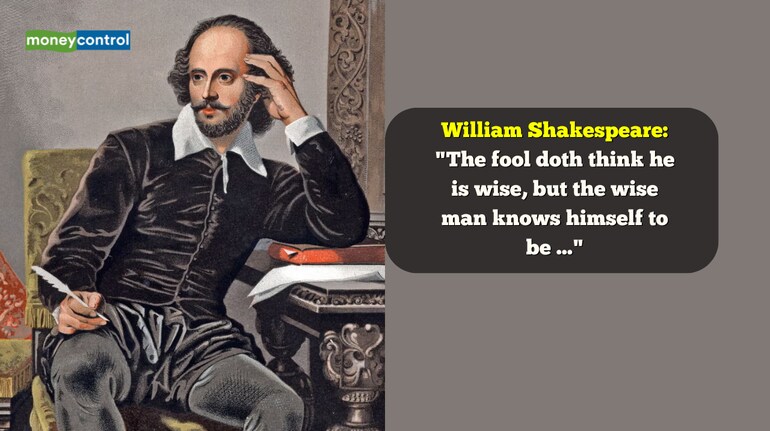

In a world that often rewards the appearance of certainty, William Shakespeare offered a counterintuitive truth about the nature of true wisdom. In his comedy As You Like It, he wrote:
"The fool doth think he is wise, but the wise man knows himself to be a fool."
This elegant paradox cuts to the heart of self-awareness, exposing the vast difference between confidence and competence, and between ignorance and understanding.
The Illusion of the Certain Fool
The first half of the quote sketches a familiar figure: the person who is convinced of their own infallibility. This "fool" operates with a closed mind, untroubled by doubt. Their knowledge is shallow, yet their confidence is absolute. Because they never question their own assumptions or limits, they cannot learn, grow, or recognize their errors. Their perceived wisdom is a prison, locking them out of true understanding. Shakespeare suggests that the first and greatest barrier to knowledge is the belief that you already have it.
The Humility of the Wise "Fool"
In stark contrast, the wise person possesses the humility to recognize the limits of their own knowledge. To "know oneself to be a fool" is not a statement of stupidity, but of profound intellectual honesty. It is an acknowledgment that no matter how much one learns, the universe of the unknown remains infinitely larger. This awareness creates an open, curious, and adaptable mind. The wise person is comfortable with uncertainty, asks questions freely, and is always prepared to update their beliefs in the face of new evidence. Their strength lies not in having all the answers, but in understanding the depth of the questions.
The Paradox of Socratic Wisdom
Shakespeare’s line is a direct echo of the ancient Socratic paradox: "I know that I know nothing." True wisdom, therefore, begins with this moment of disillusionment—the realization that our certainty is often unfounded. This is not a call for helplessness, but for a specific kind of courage: the courage to confront your own ignorance. The path to wisdom is paved with the admission of "I don't know," which is the only honest starting point for seeking true understanding.
A Mirror for the Modern World
This 400-year-old verse serves as a piercing mirror for our modern age of instant information and strong opinions. It asks us to check our own impulses: Do we speak from a desire to appear wise, or from a genuine, humble engagement with what we do not understand? It champions intellectual humility not as weakness, but as the most reliable sign of a mature and discerning mind.
Ultimately, Shakespeare invites us to a quieter, more honest way of being. By embracing the "fool" within—our own capacity for error and limitation—we disarm our ego and open ourselves to the endless, rewarding pursuit of actual wisdom. The greatest knowledge, it seems, is knowing how much there is left to know.
Discover the latest Business News, Sensex, and Nifty updates. Obtain Personal Finance insights, tax queries, and expert opinions on Moneycontrol or download the Moneycontrol App to stay updated!
Find the best of Al News in one place, specially curated for you every weekend.
Stay on top of the latest tech trends and biggest startup news.