






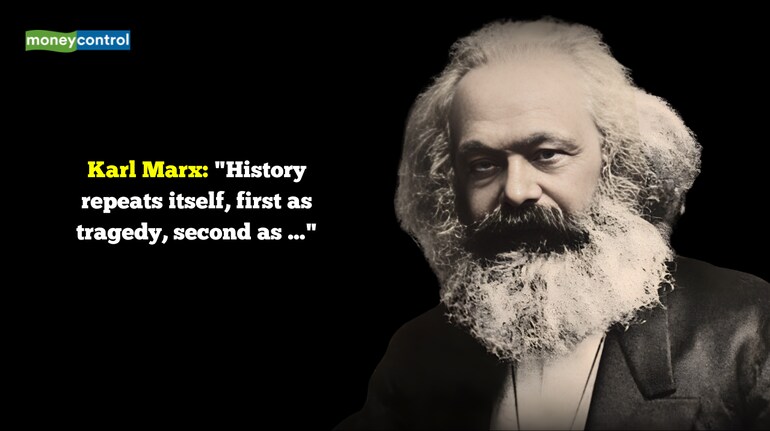

There is a peculiar feeling that comes from watching events unfold that seem eerily familiar. We sense we have seen this all before, yet the new version feels somehow diminished, almost absurd. The philosopher and economist Karl Marx captured this phenomenon in a line that has echoed through generations of political and social thought:
"History repeats itself, first as tragedy, second as farce."
This observation, drawn from his analysis of revolutionary movements, offers a lens through which to view not only grand historical events but also the smaller patterns of human behaviour that cycle through our lives.
The Weight of the First Act
The "tragedy" in Marx's formulation represents the original event of genuine significance and gravity. This is the revolution fought with true conviction, the movement born of real suffering and authentic hope. The French Revolution of 1789, for Marx, was such a tragedy—a monumental upheaval driven by profound ideals, claiming real victims, and reshaping the world with terrible and magnificent force. Tragedy commands respect, even in its failures. It carries the weight of genuine consequence and the dignity of sincere belief.
The Hollow Echo of the Second
The "farce" arrives when later generations, consciously or unconsciously, attempt to recreate that original moment. The costumes are the same, the slogans are borrowed, but the soul is missing. What was once a genuine cry from the oppressed becomes a theatrical performance. The later revolutionaries, in Marx's view, were not driven by the same raw necessity; they were imitating greatness, not creating it. The result is absurd—a parody that lacks the depth of the original and often collapses into ridiculousness.
Why the Pattern Emerges
This repetition occurs because we are prisoners of memory and imagination. The original event creates a template so powerful that it seduces later actors into believing they can replicate its magic. They borrow its language, its symbols, its heroes, hoping to channel its power. But the circumstances have changed, the spirit has cooled, and what emerges is a hollow echo. The farce is not a conscious joke, but it becomes one through the gap between grand ambition and diminished reality.
A Mirror for Our Time
Marx's insight remains startlingly relevant. We see it in politics, where failed policies are recycled with new names and old promises. We see it in culture, where artistic movements are revived without the conditions that birthed them. We see it in personal life, where people repeat the mistakes of their parents, but with a strange, knowing irony that somehow makes the failure more absurd. The first fall breaks bones; the second fall, having seen it coming, breaks something in the spirit.
The Possibility of Breaking the Cycle
Yet, if we understand Marx's observation, we gain a tool. Recognizing the pattern is the first step to breaking it. When we feel ourselves slipping into imitation—borrowing solutions from a past that no longer exists, wearing costumes that no longer fit—we can pause and ask: Am I acting from genuine necessity and authentic understanding, or am I performing a script written by another time? The question itself is a form of liberation.
Marx does not offer us optimism. His famous line is darkly humorous, the laughter of someone who has seen too much to be surprised. But within that darkness is a challenge: to make our own history, not as tragedy or farce, but as something lived with honest eyes and open hands, fully present to our own moment rather than haunted by the ghosts of another.
Discover the latest Business News, Sensex, and Nifty updates. Obtain Personal Finance insights, tax queries, and expert opinions on Moneycontrol or download the Moneycontrol App to stay updated!
Find the best of Al News in one place, specially curated for you every weekend.
Stay on top of the latest tech trends and biggest startup news.





