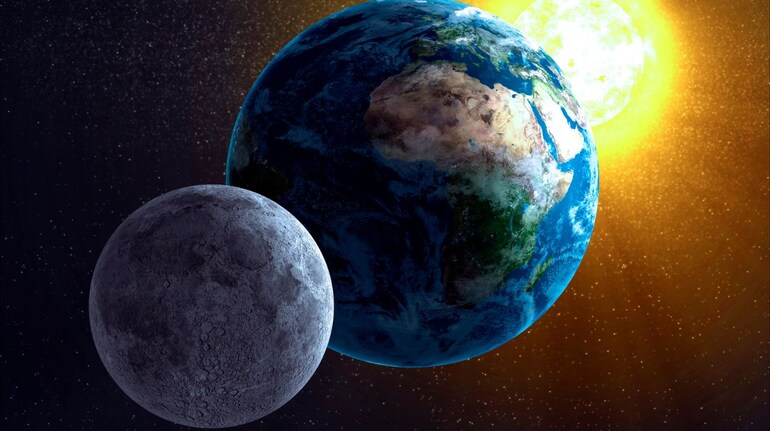
The origin of life on Earth has fascinated scientists for centuries, and while the exact process remains a mystery, several compelling theories have emerged based on extensive research. From primordial soup to deep-sea hydrothermal vents, here’s what science has uncovered so far about how life on Earth began.
1. The Primordial Soup TheoryOne of the most widely accepted theories is that life began in a "primordial soup"—a nutrient-rich environment filled with simple organic molecules. This idea dates back to the 1920s when scientists Alexander Oparin and J.B.S. Haldane independently hypothesized that Earth's early atmosphere, rich in gases like methane, ammonia, and water vapor, could have facilitated chemical reactions powered by lightning or ultraviolet radiation. These reactions may have led to the formation of amino acids and other basic organic compounds, which eventually assembled into more complex molecules and ultimately formed the first cells.
In 1953, the famous Miller-Urey experiment successfully demonstrated that simple organic molecules, such as amino acids, could be synthesized from inorganic precursors under conditions thought to resemble early Earth, lending support to the primordial soup theory.
2. Hydrothermal Vent HypothesisAnother significant theory is that life may have originated near hydrothermal vents at the bottom of the ocean. These deep-sea environments, found along mid-ocean ridges, release mineral-rich water heated by the Earth's mantle. In 1977, scientists discovered ecosystems thriving around these vents, despite the absence of sunlight, which suggested that life could develop in extreme conditions.
Researchers now propose that the temperature gradients and rich chemical composition of hydrothermal vents could have provided the perfect environment for the formation of organic compounds and early cellular life. Studies suggest that the vents' chemical-rich water could have spurred the synthesis of essential molecules, like proteins and RNA, vital for life.
3. Panspermia: Life from Space?The panspermia hypothesis offers a different perspective, suggesting that life didn't originate on Earth but was brought here from space. According to this theory, microscopic life forms or organic molecules could have hitched a ride on asteroids, comets, or meteorites and landed on Earth, where conditions were favorable for development.
Recent studies have found that some organic compounds, like amino acids, can survive the harsh conditions of space and the intense heat of entry into Earth’s atmosphere. In 1969, a meteorite that landed in Murchison, Australia, was found to contain a variety of organic compounds, including amino acids, supporting the idea that space may have delivered the building blocks of life.
4. RNA World HypothesisOne of the major questions in the origin of life is how simple molecules transitioned into complex, self-replicating systems. The RNA world hypothesis suggests that RNA, a molecule similar to DNA, may have been the first self-replicating molecule and played a crucial role in the formation of early life.
RNA can store genetic information and catalyze chemical reactions—properties that make it a candidate for the first life-forming molecule. This theory suggests that early life was based on RNA, which later gave rise to DNA and proteins as the main components of modern life.
5. Role of Clay and MineralsAnother intriguing theory involves the role of clay and minerals in the origin of life. Some scientists propose that the surfaces of certain minerals could have acted as catalysts for the formation of organic molecules. Clay minerals, in particular, have charged surfaces that could have helped to organize and concentrate organic compounds, facilitating the complex chemistry required for life.
Experiments have shown that clay can promote the formation of RNA chains and other biomolecules, lending support to this idea.
6. LUCA: The Last Universal Common AncestorThough the exact process of life's origin remains unresolved, researchers have identified the concept of the Last Universal Common Ancestor (LUCA), a single-celled organism that is thought to be the common ancestor of all life on Earth. LUCA likely lived around 3.5 to 4 billion years ago, during a period when Earth was undergoing significant changes.
Through the study of genetics, scientists have traced certain shared molecular traits back to LUCA. However, whether LUCA originated from a primordial soup, hydrothermal vents, or extraterrestrial sources remains a subject of intense research and debate.
The Search ContinuesWhile many hypotheses exist, none have definitively answered the question of how life began on Earth. Each theory offers valuable insights, but the complete picture is likely far more complex. Ongoing research in genetics, chemistry, and astrobiology continues to uncover new clues, bringing us closer to understanding one of the greatest mysteries in science.
From deep-sea vents to outer space, the possibilities for the origin of life are vast, and new discoveries could rewrite what we currently know. As technology advances, scientists remain hopeful that the answers may soon emerge, whether from Earth or beyond.
Discover the latest Business News, Sensex, and Nifty updates. Obtain Personal Finance insights, tax queries, and expert opinions on Moneycontrol or download the Moneycontrol App to stay updated!
Find the best of Al News in one place, specially curated for you every weekend.
Stay on top of the latest tech trends and biggest startup news.