







Just before dawn on November 3, 1988, armed men began seizing key points in Malé. The attackers moved fast and aimed for the essentials: government buildings, communications nodes, and the ability to control the narrative and the streets. In the confusion, President Maumoon Abdul Gayoom evaded capture and began calling for help from abroad. Sri Lanka, Pakistan and Singapore were approached, but none intervened. The United States, he was told, would take days to respond from its nearest major base. Britain advised him to contact India.
What followed became Operation Cactus, India’s lightning intervention in the Maldives. Within hours, the Indian state decided. Within the same night, the Indian Air Force was airborne with paratroopers. And by the early hours of November 4, control in Malé had swung back to the legitimate government, with the coup leaders either captured in the capital or trying to flee by sea.
The operation is remembered for its speed, its economy of force, and the clarity of its objective. It did not attempt to remodel Maldives politics or occupy territory. It aimed to restore the elected government, secure key nodes, and neutralise the escaping coup element before it could regroup.
Who were the attackers, and why Malé was vulnerable
The coup attempt was led by Maldivian plotters and supported by armed mercenaries linked to the People’s Liberation Organisation of Tamil Eelam (PLOTE), a Sri Lankan Tamil militant group. Indian Express accounts describe how the attackers infiltrated Malé in advance and then landed additional men by sea, rapidly occupying key installations before attempting to reach the president.
Malé’s geography amplified the vulnerability. The capital is compact, dense, and institutionally concentrated. If armed men seize a few junctions, a radio station, a port node, and the airfield access, the state can be paralysed quickly. That makes counter-coup operations brutally time-sensitive. Delay does not merely increase risk. It changes the situation on the ground, turning a raid into a fait accompli.
That sense of urgency shaped New Delhi’s response.
New Delhi’s decision and the logic of a “first responder”
Indian Express reporting has consistently framed Operation Cactus as a demonstration of India’s ability to act as a regional first responder in the Indian Ocean, especially when a neighbouring government requests assistance. The logic was not only altruistic. A violent overthrow in the Maldives, so close to India’s southern seaboard, risked drawing in outside powers and reshaping security dynamics in India’s maritime backyard.
A key feature of the decision-making was that the objective remained limited and practical: secure the state authority, rescue the head of government, and end the coup attempt. That clarity enabled a clean military plan.
The airlift that made the operation possible
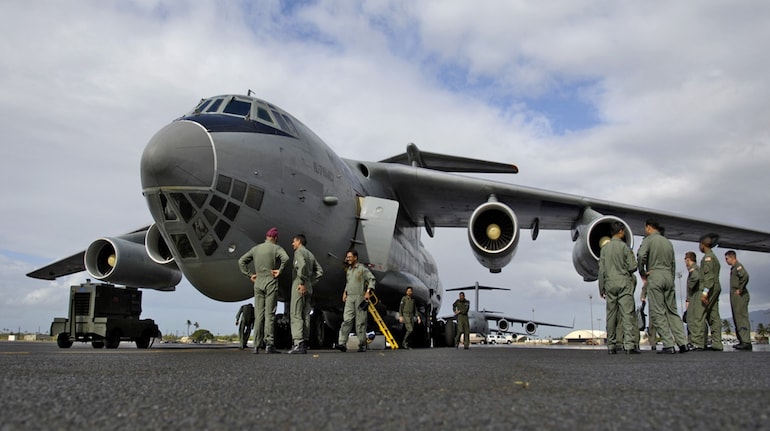
The signature move of Operation Cactus was the Indian Air Force’s long-range airlift. IL-76 transport aircraft flew paratroopers from Agra to Hulhulé, the island where Malé’s international airport sits, enabling Indian troops to enter the theatre at speed without requiring staging through another country. Indian Express accounts describe the paratroopers securing the airport and then moving across to Malé by boat to reach the president.
A professional military account published by the United Service Institution of India describes senior-level coordination and outlines how the political leadership and service leadership aligned quickly to translate intent into action.
This is the crisis-response lesson that militaries keep returning to: speed is not only about fast soldiers. It is also about logistics that can move decision into deployment in hours, not days. The IL-76, the crews, the load plans, the runway compatibility at Hulhulé, and the ability to fly a decisive force package across open ocean were what turned intent into reality.
Times of India’s recounting of the operation highlights how rapidly the paratroopers and naval elements were dispatched after Gayoom’s request, reinforcing the central point that the response was measured in hours.
The PARA assault: Secure the airhead, then flip the capital
Once the first wave landed, the immediate requirement was to secure the airhead. Without the airfield, follow-on forces cannot arrive, wounded cannot be evacuated, and the operation can be politically and militarily trapped. Indian Express reporting notes that the paratroopers secured the airport and then moved to the adjacent island of Malé to rescue Gayoom and restore control.
This sequencing matters. It reflects classic airborne logic applied to a micro-theatre: lock down the entry point, then surge into the political centre. The goal was not to fight a prolonged urban battle, but to break the coup’s momentum, recover the legitimate leadership, and push the attackers into flight, surrender, or capture.
Indian Express further reports that by the time Indian forces had stabilised the capital, key coup figures were attempting to escape by sea, taking hostages with them.
The naval chase: Finishing the job at sea
Operation Cactus is often described as an airlift-and-assault story, but it had a crucial maritime epilogue. As coup elements attempted to flee toward Sri Lanka on a hijacked vessel, Indian naval units moved to intercept. Times of India has chronicled the “high seas” dimension of the operation, emphasising that the mission’s closure came not only in Malé but through pursuit and capture at sea.
That maritime piece is what turned a tactical reversal into a strategic closure. If armed coup forces escape intact, they remain a political instrument. They can claim survival, regroup, and become a bargaining chip. Interception removed that possibility, and it signalled that India’s response was not a one-night raid but a comprehensive restoration of order.
Civilian risk, political restraint, and why the operation stayed “clean”
Operation Cactus succeeded partly because it remained tightly bounded. There was no attempt to turn the intervention into a long-term presence. Indian Express accounts underscore that India intervened at the request of the Maldivian president and withdrew after stabilising the situation, a posture that helped frame the action as assistance rather than occupation.
This restraint also reduced the political space for the coup plotters to rebrand themselves as nationalists resisting foreign troops. In small states, perception can be as decisive as firepower. The more limited and precise the intervention, the harder it is for the defeated side to build a durable narrative of “foreign domination.”
Why it became a textbook response
Operation Cactus is still cited in Indian strategic commentary for a few concrete reasons.
First, it showcased decision velocity. The time from SOS to boots on the ground was short enough to prevent the coup from consolidating. Indian Express retellings repeatedly highlight the speed of response as the defining attribute.
Second, it combined capabilities without overcomplication. The IAF delivered decisive mass into the theatre. The PARA element executed rapid seizure and stabilisation. The Navy ensured the escape route did not become a second front. That is jointness not as a slogan, but as sequencing.
Third, the political aim matched the military method. Restore the legitimate government, protect key institutions, end the coup attempt. There was no mission creep embedded in the plan.
Fourth, it reinforced a regional signal. India demonstrated that it could act quickly in the Indian Ocean when invited, and that it could do so without large-scale escalation. Indian Express’s later “explained” pieces explicitly connect Operation Cactus to the broader idea of India’s role in its near maritime neighbourhood.
The less romantic takeaway: A warning about how fast small capitals can fall
It is tempting to read Operation Cactus as a triumphant vignette, and it was a striking success. But it also reveals an uncomfortable reality: in a small island capital, a relatively small group of armed men can generate strategic crisis quickly if they seize a few critical nodes in the first hour.
That vulnerability is not unique to the Maldives. It is a feature of many small states where governance infrastructure is concentrated and security forces are limited. Operation Cactus mattered because it arrived before that initial shock could harden into a new regime.
What the operation changed for India’s crisis playbook
Even decades later, the core lesson remains relevant for Indian planners: crisis response is not only about having elite units. It is about having ready lift, rehearsed command channels, and a political decision process that can translate warnings into action at speed.
Times of India’s later recountings, written in moments when India-Maldives relations were again being debated, return to Operation Cactus precisely because it sits at the intersection of capability and intent. It is a case study that can be invoked in public discourse, but it is also a practical reminder to military professionals about readiness and reach.
The legacy: A night when distance stopped mattering
From Agra to Hulhulé, from the airfield to the narrow lanes of Malé, and then out into the surrounding seas, Operation Cactus compressed geography and time. It demonstrated that in the Indian Ocean, distance is not a defence if a nearby power can move faster than a coup can consolidate.
And that, more than any single tactical detail, is why the 1988 intervention is still described as a textbook crisis response.
Discover the latest Business News, Sensex, and Nifty updates. Obtain Personal Finance insights, tax queries, and expert opinions on Moneycontrol or download the Moneycontrol App to stay updated!
Find the best of Al News in one place, specially curated for you every weekend.
Stay on top of the latest tech trends and biggest startup news.





