







Gandhinagar is witnessing a rise in typhoid cases linked to contaminated drinking water, exposing major flaws in the city’s newly laid water supply system. Health officials have confirmed 70 active cases so far, concentrated in Sectors 24, 26, 28 and Adiwada. At least seven leaks have been identified in the pipeline network, allowing sewage to mix with the drinking water supply.
The Gandhinagar Civil Hospital has opened a 30-bed paediatric ward to handle children presenting with high fever and gastrointestinal symptoms. Doctors report a steady flow of patients and say early detection and treatment remain the top priority. Outpatient checks have been intensified, and authorities assure that medicines are available in sufficient quantity.
Typhoid spreading despite new pipelines
The outbreak comes despite a Rs 257-crore investment in a 24/7 water supply project. Officials admitted that the new pipelines were laid very close to existing sewer lines. When high-pressure water started flowing, weak pipes developed leaks, which allowed contamination.
A district collectorate officer explained that once leakages occur near sewer lines, contamination is almost inevitable. Engineering teams have begun super-chlorination to treat the water. Municipal Commissioner J N Vaghela said leakages are being fixed and fresh water tests show improvement. “We are hopeful of containing the outbreak in a day or two,” he was quoted by TOI as saying.
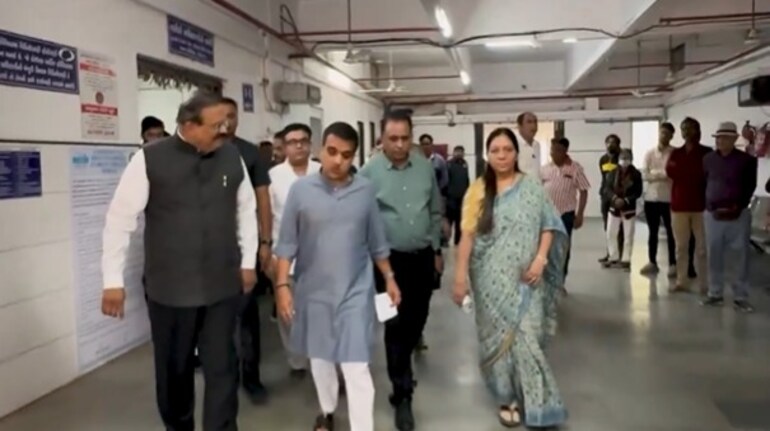
Deputy Chief Minister Harsh Sanghavi visited patients and guided emergency response teams.
What steps are being taken to control the outbreak?
Authorities have deployed 40 surveillance teams to conduct door-to-door visits, distribute chlorine tablets, and advise residents to boil water, maintain hygiene, and avoid eating outside food. Hospital sources said about 70 patients are under treatment, none in serious condition.
The situation is worsened by accidental damage to pipelines. Cable companies and contractors often dig without following engineering maps, leading to cuts in the water lines and creating additional leak points, officials said.
Which areas are affected by contaminated water?
Several parts of Gandhinagar and nearby areas are reporting contamination.
• Bapunagar: Gujarat Housing Board Colony
• Saraspur: Chawls around Shardaben Hospital
• Behrampura: Bombay Hotel Area, Khodiyarnagar, Ramrahimnagar, Jitu Bhagat Compound, Parikshitinagar
• Danilimda: Sakalchandra Mukhi ni Chali, Mazur Gam
• Maninagar: Millatnagar
• Vatva: Saiyadwadi, Vatva Gam Talavadi
• Lambha: Narol Gam, Area near Narol Court
• Gomtipur: Sundarnagar, Nurbhai ni Chali, Suvapankhi ni Chali
• Ramol: Khanwadi, Bachubai no Kuvo
• Amraiwadi: Shivanandnagar/Bhilwada
• Jamalpur: Kach ni Masjid, Sindhiwad, Shahpur Mill Compound
• Khadia: KK Shastrinagar, Juliwad
• Shahpur: Govt A Colony
Residents have been warned to use boiled or treated water until the system is fully restored. Health officials also noted that water-borne diseases like diarrhoea, jaundice, cholera, and typhoid have caused deaths in the past decade across major city hospitals, highlighting the long-term risk of unsafe drinking water.
A pattern seen beyond Gujarat
Gandhinagar’s situation mirrors similar water contamination crises seen in Indore, Madhya Pradesh. At least 10 people have died amid an outbreak of vomiting and diarrhea has struck Bhagirathpura in Indore, with contaminated drinking water as the suspected cause.
At least 38 new cases were reported on Monday. Meanwhile, a massive surveillance operation, involving 200 teams and national experts from across India, was launched on Monday in Bhagirathpura to contain the spread of acute diarrhoeal epidemic and identify the root cause of contamination.
Discover the latest Business News, Sensex, and Nifty updates. Obtain Personal Finance insights, tax queries, and expert opinions on Moneycontrol or download the Moneycontrol App to stay updated!
Find the best of Al News in one place, specially curated for you every weekend.
Stay on top of the latest tech trends and biggest startup news.





