






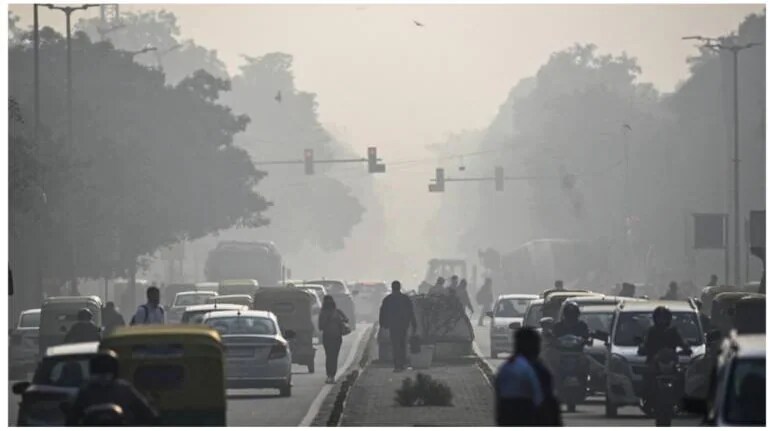
The Supreme Court on Wednesday modified its earlier August order while hearing a case related to worsening air pollution in Delhi-NCR. Taking note of the deteriorating air quality, the court reinstated restrictions on older vehicles that do not meet Bharat Stage-IV (BS-IV) emission norms. Read Delhi AQI Live News here .
The court clarified that these restrictions will remain in force only as long as the strictest pollution control measures under Stage IV of the Graded Response Action Plan (GRAP-IV) are active.
At present, all four stages of GRAP are in force across Delhi-NCR as air quality continues to remain in the “severe” category.
Which vehicles are now banned from Delhi roads?
As per the latest order, the following vehicles will not be allowed to ply in Delhi from Thursday:
Diesel vehicles
* Older than 10 years
* Meeting BS-III or lower emission norms
Petrol vehicles
* Older than 15 years
* Meeting BS-III or lower emission norms
These restrictions apply only during the period when GRAP Stage IV is in force.
What exactly is GRAP Stage IV?
GRAP Stage IV is the most stringent level of pollution control measures and is triggered when the Air Quality Index (AQI) crosses 450.
Measures under GRAP-IV include:
* Ban on construction and demolition activities
* Restrictions on truck movement
* Curbs on polluting vehicles
* Emergency steps to reduce vehicular emissions
What other restrictions are being enforced?
Along with the ban on older vehicles, the following measures are now in place:
* No PUC, no fuel
* Vehicles without a valid Pollution Under Control (PUC) certificate will not be given fuel
* Petrol pumps have been directed to stop refuelling such vehicles from December 18
* Each petrol pump will have a police officer and transport official deployed
* ANPR cameras will help identify non-compliant vehicles
* Trucks and vehicles carrying construction material are barred from entering Delhi
* The ban will remain until GRAP-IV is lifted
How will the restrictions be enforced on the ground?
Delhi Environment Minister Manjinder Singh Sirsa said the government is taking several steps to strictly enforce the restrictions. Around 580 police personnel will be deployed at 126 checkpoints across the city, including entry points at Delhi’s borders. Thirty-seven special “Prakhar” enforcement vans will also be on the roads to check violations.
Key enforcement steps include:
* Deployment of 580+ police and traffic personnel
* 126 checkpoints set up across Delhi, including border entry points
* 37 Prakhar enforcement vans patrolling the city
* 13 RFID-enabled entry points where BS compliance data is available
* Use of e-challan machines, where vehicle details are instantly verified through RC data
* BS-VI vehicles identified through colour-coded fuel stickers with holograms
How can vehicle owners check BS compliance?
Vehicle owners can identify their BS compliance by:
* Checking details on the VAHAN portal using the registration number
* Looking at the registration certificate (RC), where available
* Checking the manufacturing year (BS-VI engines were introduced in 2020)
What long-term steps is the Delhi government planning?
The Delhi government has also announced several long-term measures to tackle traffic-related pollution:
* Launch of a Delhi-specific carpooling app
* Identification of traffic congestion hotspots using Google Maps
* Rollout of an integrated traffic management system to better control signal timings
* Third-party survey to identify potholes across the city over the next year
The proposed carpooling app will allow commuters to share rides easily, helping reduce the number of private vehicles on the roads.
Discover the latest Business News, Sensex, and Nifty updates. Obtain Personal Finance insights, tax queries, and expert opinions on Moneycontrol or download the Moneycontrol App to stay updated!
Find the best of Al News in one place, specially curated for you every weekend.
Stay on top of the latest tech trends and biggest startup news.




