






India’s flood story in 2025 unfolded in waves — starting unusually early in the west with intense pre-monsoon rain, then escalating into a deadly Northeast deluge at the very beginning of June. This was followed by repeated cloudbursts and flash floods across the western Himalayas, large-scale river flooding across the northern plains through late August and early September and another high-impact spell of rain-driven flooding in the south during the post-monsoon season.
India experienced multiple major floods, driven by extreme monsoon rains, cloudbursts and glacial events, affecting over 45% of the country with more than 1,500 deaths nationwide.
Across regions, the year underlined a familiar but sharpening pattern: extreme rainfall events are increasingly arriving in short, high-intensity bursts; hill states are facing compound hazards (cloudbursts, landslides, debris flows) and cities are repeatedly overwhelmed by stormwater-drain and river-management constraints.
Gujarat’s pre-monsoon deaths
Before the monsoon became fully established, Gujarat saw deadly impacts from heavy pre-monsoon rain. Fourteen deaths followed days of intense showers in early May, an early warning of the kind of rainfall volatility that would define the rest of the year.
While pre-monsoon downpours are not unprecedented, disaster managers have increasingly flagged that early-season heavy rain can catch local systems off-guard, particularly in low-lying urban pockets and river-adjacent settlements where drainage and embankment readiness is calibrated more for “typical” monsoon timing.
Northeast deluge: Extreme rainfall, floods and landslides
The most nationally visible flood emergency of 2025 erupted in the Northeast as relentless rain triggered flash floods and landslides across multiple states. At least 34 deaths were reported by June 2, alongside mass evacuations - tourists moved out of Sikkim, people stranded in Meghalaya and widespread inundation in Assam, including in and around Silchar.
Silchar recorded 415.8 mm of rainfall in 24 hours on June 1 — described as its highest single-day total since 1893 — highlighting the “cloudburst-like” intensity that can rapidly overwhelm rivers and urban drainage.
Reports during this period described the flood situation in Assam as worsening, with deaths and extensive displacement being tracked in official updates. Down To Earth’s reporting on the “Northeast Deluge 2025” pointed to flooding risks compounded by intense rainfall and dam-water releases in Assam.
Western Himalayas: Cloudbursts, debris flows and repeated flash-flood episodes
Himachal Pradesh saw some of the most persistent and damaging monsoon impacts of 2025. A ReliefWeb situation report in mid-July described the state being “severely affected” by intense hydro-meteorological events since the monsoon onset, including cloudbursts, flash floods and landslides.
Media reports through the season documented the cumulative toll and infrastructure damage, including repeated road blockages, power and water-supply disruption and large estimated losses. Himachal alone tallied 300+ rain-landslide deaths since June.
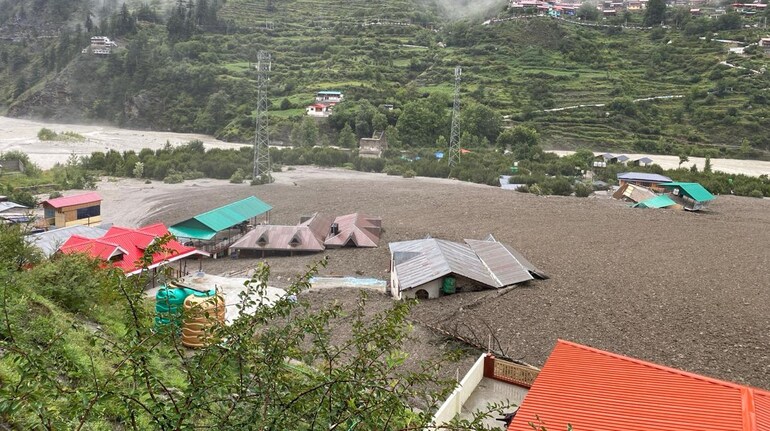
In early August, Uttarakhand’s Uttarkashi district witnessed a devastating cloudburst-linked flash flood and debris flow, with Dharali among the worst-hit areas on the Gangotri route. Reporting described homes, roads and businesses being swept away, rescue operations by SDRF/Army and continuing rain warnings during the critical response window.
This disaster again highlighted a central Himalayan vulnerability: steep catchments can convert short bursts of extreme rain into high-velocity flows carrying boulders and debris — events that behave very differently from slower-onset riverine floods on the plains.
Urban flooding and waterlogging
India’s financial capital Mumbai saw another high-impact rain spell in mid-August. Reuters reported that incessant heavy rain disrupted flights, flooded roads and prompted school shutdowns in Mumbai on August 18 — an example of how intense rainfall can quickly push the city’s transport and drainage systems into disruption mode.
The event also renewed focus on the Mithi River system and flood-control interventions. Recent reporting on Mumbai’s Mithi-linked projects frames pollution control and flood mitigation as intertwined priorities — because a choked, encroached and heavily burdened river channel reduces the city’s ability to drain stormwater during peak rain.
Northern plains and major rivers flooding
As the monsoon progressed, flooding broadened across the northern belt amid heavy rainfall in the Himalayas and swelling rivers downstream. Reuters reported the Yamuna in Delhi breaching the danger mark on September 3, with authorities responding to rising water levels and related risks.
A follow-up Reuters report (September 4/5) described continued heavy rain across northern India and Pakistan, flooding of homes and highways and large-scale impacts in Punjab on both sides — capturing the regional scale of this late-monsoon pulse.
This is the phase where flood management becomes a multi-state chain: what happens in upper catchments and dam operations can translate into high-river conditions downstream, requiring coordinated advisories and evacuation planning.
Post-monsoon flooding in the south The flood calendar in 2025 didn’t end with the southwest monsoon. IMD press releases in October warned of very heavy to extremely heavy rainfall across parts of south India, along with expected impacts such as waterlogging, closure of underpasses, traffic disruption and landslide risk in vulnerable terrain.
Ground-level reporting from Tamil Nadu during October described heavy rainfall episodes and widespread waterlogging concerns, as systems developed and moved across the region.
In early December, a cyclone-driven event in the south added another layer: Reports about Cyclone Ditwah showed flooding impacts in Chennai and wider disruption in the region.
But 2025 repeatedly showed that the hardest events to manage are often short-fuse disasters — cloudbursts, debris flows and urban cloudburst-style rainfall — where the time between “warning” and “impact” can be minimal. IMD’s flash-flood guidance products and heavy-rain warnings reflect the growing institutional emphasis on these risks, including watershed-level “flash flood risk” outlooks.
Discover the latest Business News, Sensex, and Nifty updates. Obtain Personal Finance insights, tax queries, and expert opinions on Moneycontrol or download the Moneycontrol App to stay updated!
Find the best of Al News in one place, specially curated for you every weekend.
Stay on top of the latest tech trends and biggest startup news.




