






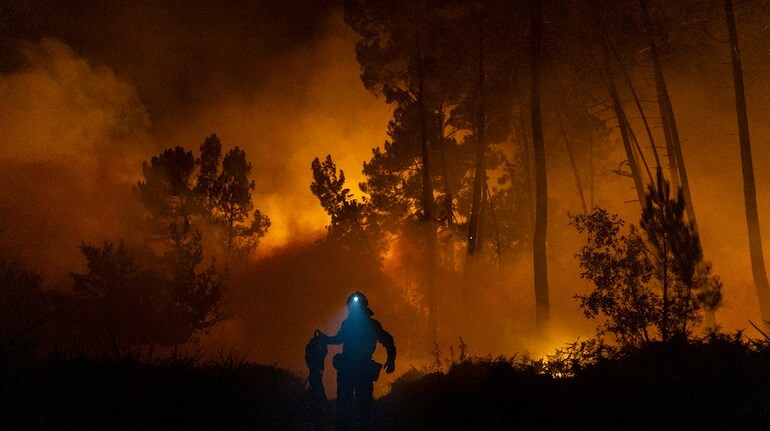

For generations, the forests of the Himalayas adhered to a predictable, seasonal rhythm. Late spring and early summer were the times for fires, fuelled by accumulated leaf litter, dry winds and rising temperatures. Winter was a period of snow, moisture and quiet. That long-established natural calendar is now being torn up.
This winter, an unseasonal and alarming pattern of forest fires has swept across the Himalayan states. From Uttarakhand to Himachal Pradesh and into Jammu & Kashmir, blazes of significant intensity and frequency have become a worrying norm, signalling what officials and scientists describe as a fundamental shift in the region’s ecological patterns.
Senior scientist Amit Kumar Verma of Dehradun’s Forest Research Institute was cited as saying by TOI that while forest fires are a natural phenomenon, climate variability is now compressing and intensifying that cycle,
Why is winter no longer a fire-free season in the Himalayas?
The primary driver is an unprecedented dry spell. As reported by TOI, a senior Uttarakhand forest official stated that the state experienced a completely rainless December, leaving forest floor moisture levels perilously low.
The pattern is replicated across the region. Himachal Pradesh has not seen rainfall since the first week of October and crucial snowfall has been absent from major apple-growing belts like Kullu and Shimla.
Kashmir’s forests are enduring a similar harsh and snow-deficient winter. Mudasir Mehmood, the Divisional Forest Officer of Awantipora, noted a nearly 40% snowfall deficit after three consecutive dry winters, explaining that with no soil moisture, grass becomes highly flammable.
This extreme aridity has turned typically damp winter forests into tinderboxes. Data from the Dehradun-based Forest Survey of India (FSI) underscores the scale of the change.
Since the winter wildfire season began on November 1, Uttarakhand has recorded the highest number of fire alerts in the country — 1,756 — surpassing traditionally more fire-prone states like Maharashtra and Madhya Pradesh. December, historically a low-fire month, emerged as the most active in the state in nearly three years.
What role do human actions play in igniting blazes in the Himalayas?
While climate-induced dryness creates the perfect conditions, human activity often provides the spark. Officials point to multiple proximate causes: stubble burning on farms near forest fringes, the burning of biomass and solid waste and in some cases, villagers deliberately setting fires to encourage fresh grass growth for cattle.
There are more nefarious reasons as well. According to Jairaj, former head of forest force in Uttarakhand, in high-altitude areas with valuable wildlife like musk deer, poachers sometimes light fires to corner vulnerable animals during winter. He emphasised that climate change adds a dangerous layer to these activities, as everything is so dry that even a small, intentional spark can escalate into a major blaze.
Has changing village life in Himalayas made forests more vulnerable?
A critical, compounding factor is the erosion of traditional forest management practices. The gradual decline of regulated grazing and community-led clearing of undergrowth has allowed a thick layer of dry grass and leaf litter to accumulate on forest floors.As one official was cited by TOI as saying that villagers previously regularly cleared jungle grass, but with widespread migration and alternative livelihoods, that practice is fading. This accumulated biomass creates a potent fuel load, ready to erupt from a carelessly discarded cigarette or an unextinguished campfire.
The consequences are severe and multifaceted. In December, a forest guard died while fighting a blaze in south Kashmir’s Anantnag district. In a stark illustration of the unexpected domino effects, a forest fire in Poonch on January 12 triggered a series of landmine explosions along the Line of Control after flames spread into mined areas.
For residents, the changing environment is a source of deep anxiety. In Jyotirmath (formerly Joshimath), 61-year-old Sarvani Devi has been watching smoke spiral from nearby forests for days. She expressed a fear shared by many: that if the fires spread, everything could turn to ash. She observed that the mountains where her community has lived for lifetimes no longer feel as pleasant or secure.
Why Himalayan winter no longer guarantrees respite from forest fire?
The evidence points to a disturbing convergence: climate change is producing longer, drier winters that desiccate Himalayan forests, while socio-economic changes have left them more laden with fuel.
Meanwhile, a variety of human activities, from agricultural burning to poaching, continue to provide ignition sources. The result is a broken seasonal cycle, where winter no longer guarantees respite.
The Himalayan forests are burning out of season not due to a single cause, but a perfect storm of ecological shift and human impact — a volatile new normal that challenges both the environment and those tasked with its protection.
Discover the latest Business News, Sensex, and Nifty updates. Obtain Personal Finance insights, tax queries, and expert opinions on Moneycontrol or download the Moneycontrol App to stay updated!
Find the best of Al News in one place, specially curated for you every weekend.
Stay on top of the latest tech trends and biggest startup news.





