






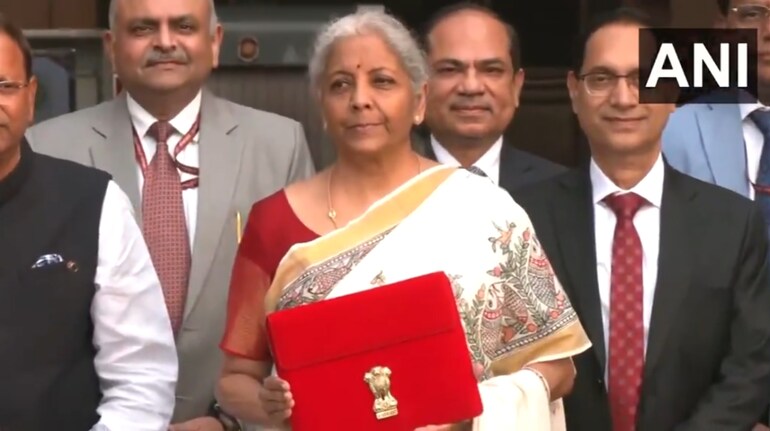

As Finance Minister Nirmala Sitharaman puts the final touches to her record ninth consecutive Union Budget, a seasoned team of senior bureaucrats at the Finance Ministry is working behind the scenes to shape Budget 2026-27.
Sitharaman is scheduled to present the Budget in the Lok Sabha on February 1, against the backdrop of a 7.4 per cent economic growth rate and an uncertain global geopolitical environment. This will be the third full Budget of the Modi 3.0 government.
Here are the key officials playing a central role in the preparation of Budget 2026-27:
Anuradha Thakur, Economic Affairs Secretary
She is the principal architect of the Budget and heads the department responsible for resource allocation and framing the macroeconomic roadmap for 2026-27. Thakur oversees the Budget Division, which prepares all Budget documents. This will be her first Budget in the role after the 1994-batch IAS officer of the Himachal Pradesh cadre took charge on July 1, 2025. She is also the first woman IAS officer to lead the Department of Economic Affairs.
Arvind Shrivastava, Revenue Secretary
Shrivastava is in charge of tax proposals that form Part B of the Budget speech, covering both direct taxes such as income tax and corporate tax, and indirect taxes including GST and customs. While this is his first Budget as Revenue Secretary, he brings prior experience from his earlier stint as Joint Secretary in the Budget Division, followed by a tenure in the Prime Minister’s Office. With expectations of customs duty and TDS rationalisation, his role is crucial for revenue mobilisation.
Vumlunmang Vualnam, Expenditure Secretary
Often referred to as the “guardian of the purse”, Vualnam oversees government spending, subsidy rationalisation and implementation of central schemes. His department plays a key role in maintaining fiscal discipline, managing the fiscal deficit and setting spending priorities for the next financial year.
M Nagaraju, Financial Services Secretary
The Department of Financial Services, under Nagaraju, focuses on financial inclusion and social security initiatives. It monitors the health of public sector banks, insurance companies and pension systems, while also driving credit growth, digital adoption and broader financial sector reforms.
Arunish Chawla, DIPAM Secretary
As head of the Department of Investment and Public Asset Management, Chawla is responsible for the government’s disinvestment and privatisation strategy. His department manages non-tax revenue targets through stake sales in central public sector enterprises.
K Moses Chalai, Public Enterprises Secretary
Chalai oversees capital expenditure plans of select CPSEs and ensures effective utilisation of budgetary allocations. His department also monitors asset monetisation efforts and the overall financial health of state-owned enterprises.
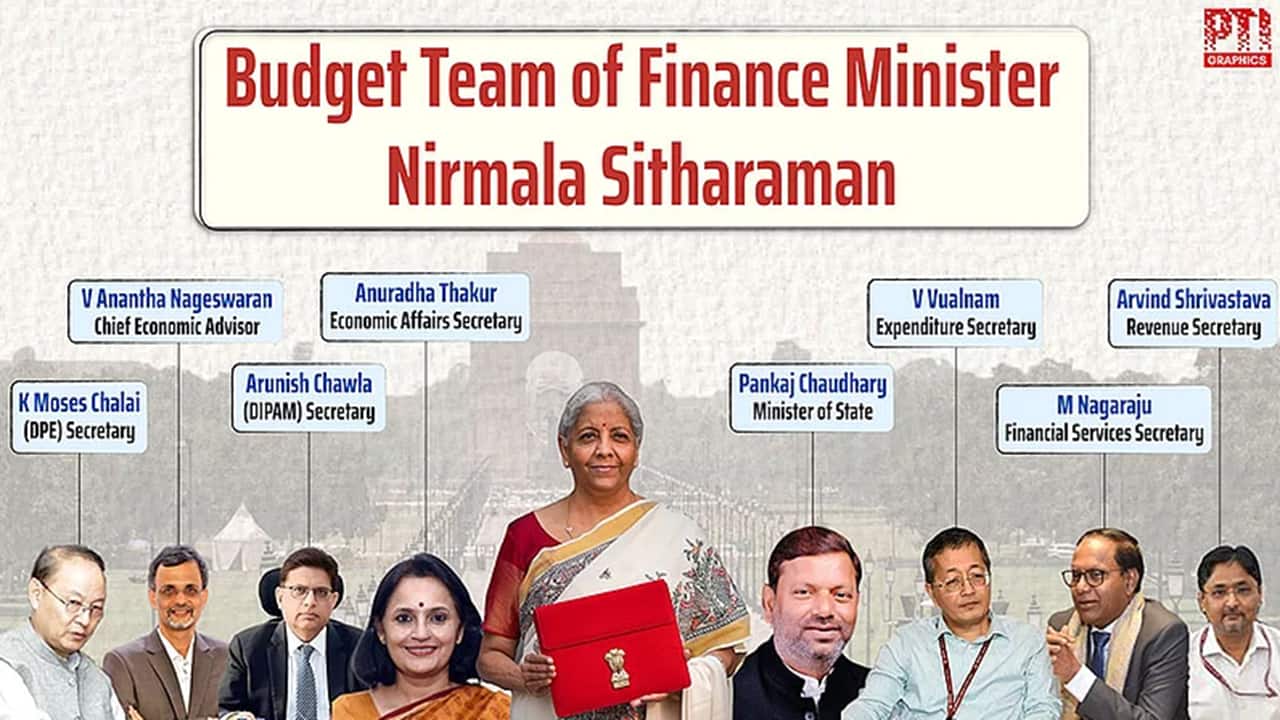
V Anantha Nageswaran, Chief Economic Adviser
The Chief Economic Adviser’s office provides critical macroeconomic inputs for the Budget, including growth forecasts, sectoral analysis across agriculture, industry and services, and assessments of global risks. The office also advises the finance minister on key economic reforms, fiscal policy and financial strategy.
Together, this team forms the backbone of Budget 2026-27, shaping policy choices as the government balances growth ambitions with fiscal discipline in a challenging global environment.
*With Agency InputsDiscover the latest Business News, Sensex, and Nifty updates. Obtain Personal Finance insights, tax queries, and expert opinions on Moneycontrol or download the Moneycontrol App to stay updated!
Find the best of Al News in one place, specially curated for you every weekend.
Stay on top of the latest tech trends and biggest startup news.





