
It was towards the end of December when most investment bankers were already well into their vacation that a bunch of numbers set the tongues wagging.
Positions in the investment banking league tables reversed – Kotak which had held the top spot in terms of fees earned for three out of four years from 2020 – 2024 slipped to the third slot in calendar year (CY) 2025. The year saw the unexpected return of JP Morgan in the pole position.
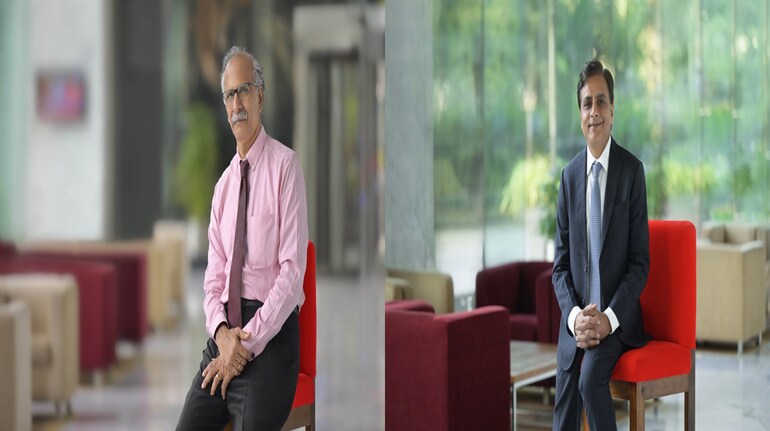
This prompted many to question whether Kotak was undercutting fees to play the volume game. Speaking exclusively to Moneycontrol, V Jayasankar, MD, Kotak Investment Bank, was quick to refute both claims.
Numbers don’t reveal it all
“We did 20 IPOs last year out of the 103 that got completed. Many of the local banks did far excess”. According to Jayasankar, Kotak’s fees may have been under-recognized in many of the league tables for a variety of reasons.
“Typically, we get senior economics in each of our transactions. What might have happened with these league tables might be that there are Tier-two banks, they may have split the fees by dividing it by number of banks, resulting in the under-reporting in our case and over-reporting in a few other cases,” he explained. Jayasankar firmly believes that an overall ECM (equity capital market) level the IB outfit would clearly be in the No.1 position on fees. “Our fees last year at a gross level was about USD 77 million”. He is confident that even on the IPO front, the bank would be in the lead position. “It is a reflection that our fees is amongst the highest, both in terms of seniority of economics as well as the overall fee structure”.
The message Jayasankar wants to emphasis is that Kotak Investment Bank does not underprice its fees. “We probably would be in-line, if not better than the average market”.
Correcting the issue
Adding to Jayasankar’s explanation, S Ramesh, MD & CEO, Kotak Investment bank said not all bankers to a deal enjoy the same economics (fee structure). “Clients have their own way of distinguishing a core set of banks which are earmarked by them, and the economics are generally larger to those people”, he emphasized.
Therefore, in Ramesh’s view, if an analysis from the prospectus is done by an outsider without these details, overall fees is simply divided by number of banks in the deal, which is not be telling the true story.
Recently, data as per LSEG and Bloomberg on ECM deals in 2025 position Kotak in the third slot whereas based on overall equity deals both placed Kotak in the second spot next to JP Morgan in their league tables.
When asked if Kotak will remedy these anomalies with the platforms putting out the league tables, Ramesh acknowledged that the IB outfit hasn’t been proactive so far, but that’s changing. “We are going to do it now, because nobody has consulted us in reporting these numbers. If somebody has consulted us and they should have, then we would have given the correct numbers”.
Value over volume
Ramesh also pointed out delivering value precedes handling volumes for the bank. “If you look at the Indian investment banks, and the volume of the deals done in 2025, our volume would be amongst the lowest. We have been particularly focused on very large deals like Rs 3,000 crore and above”. Stating that these issuances have returned well to investors - a 19 percent return, versus the overall average which is about 10 percent, Ramesh is clear that he goes with the two aspects which his board has guided the company. “One is to be responsible as much as we can in terms of returns to investors. We have had a success with that. Secondly, we are not volume player”.
Irrespective of this issue, Ramesh takes pride in the fact that Kotak is the only domestic name high up in the list. “We are also really proud that we would be the only domestic investment bank in that list”. “There are large sizes of IPOs now, and therefore by force we are focused on fewer number of deals and doing the larger deals, which have good business models, excellent sponsors or excellent promoters,” he explained adding that such mandates is what Kotak wants to focus on.
The zero-fee issue
Kotak was also the lead banker in managing India’s largest bank’s market issuance.When State Bank of India rolled out its qualified institutional placement in mid-2025, it topped the list of banks appointed for the process. But here’s what grabbed the news – it was deal done for zero fee and capital market sources attributed Kotak as the main reason for a plunge in fee cards.
There is a strong case for doing it, Ramesh said.
“When we see a very outstanding business model who is a global leader, over the last many years, we have consciously taken a call that we would like to be involved. Like we have been involved with Coal India. We have done deals where the fees is not commensurate with what they should be, but our investors like the story and we have been marketing those stories to investors. When there is a supply of paper coming, we would definitely like to be part of that orchestration,” he stated.
Adding that with such issuances where there is an urge to participate, someone or the other end up quoting a zero fee. “We have to be mindful of that when we participate in one or two of these stories in any 12 - 18 month cycle,” he said, reiterating that Kotak does at best one in 40 – 50 transactions like this. “We should not overdo this. But if you take a QIP of a very illustrious bank, which we did, I think we have not seen that kind of response for an issuer in many decades”.
He also terms participation in one of these large, once in 5 – 7 years occasion as planning for the future. “Five years from today some client may ask us for the banking deals done in the past years. We have to have the experience. It's planning for the future and there is some thought and method in this madness,” Ramesh justified. Further defending the criticism around undercutting of fees, often cited by foreign banks, Ramesh was clear that Kotak ends up being in the receiving end, “because we are the only local bank in that environment”. Clear that he doesn’t mind walking away from a deal where the bank don’t see adding value to the client, a thing he has done in several occasions, Ramesh clarified, “we are very mindful and don’t undercut fees”.
In fact, Jayasankar, in support of Ramesh’s stand concluded with a pertinent question for foreign banks. “Assuming we have undercut fees, there is at least one foreign bank in all the large Rs 3,000 crore plus deals. Foreign banks have taken a junior economics to us. So why are they undercutting? It (your question) is true for most local banks, but that brush cannot be used for Kotak”.

Discover the latest Business News, Sensex, and Nifty updates. Obtain Personal Finance insights, tax queries, and expert opinions on Moneycontrol or download the Moneycontrol App to stay updated!
Find the best of Al News in one place, specially curated for you every weekend.
Stay on top of the latest tech trends and biggest startup news.