






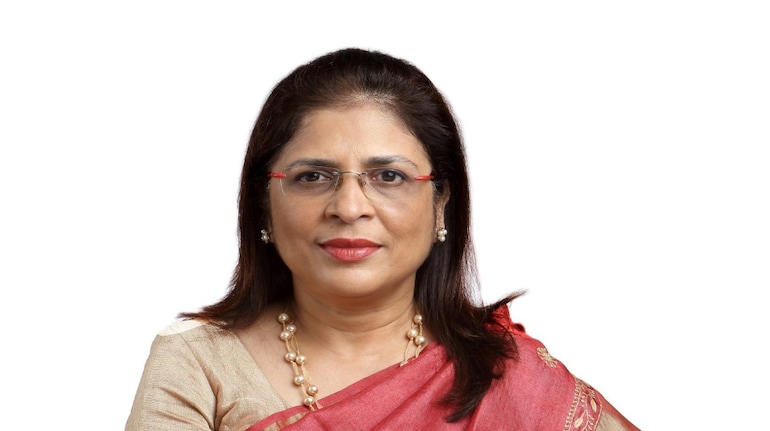
HDFC Life Insurance expects its value of new business (VNB) margins to normalise by FY27, with the impact of recent pricing and cost adjustments likely to be absorbed over the next two to three quarters, as the life insurer recalibrates its strategy in response to post-GST changes and evolving market dynamics, MD and CEO Vibha Padalkar said.
During an exclusive email interaction with Moneycontrol, she said the company is taking a calibrated approach alongside industry-wide discussions with distributors, while focusing beyond cost optimisation to improve profitability.
“We are strengthening our product mix by prioritising protection, offering ULIPs with enhanced mortality cover, riders and long-term savings solutions. These levers provide margin improvement opportunities without disrupting distribution dynamics,” she said.
The insurer has seen a sharp pick-up in retail term business following the GST changes, a trend it expects to translate into stronger demand across segments. Even as it optimises costs, HDFC Life plans to continue investing in technology and accelerate the expansion of its proprietary channels, including branch network growth, to build long-term capabilities.
In the first half of FY26, HDFC Life’s product mix remained balanced, with ULIPs accounting for 42 percent of total business, followed by participating products at 29 percent, non-par savings at 18 percent, term at 7 percent and annuities at 4 percent.
How do you assess the year that has gone by for HDFC Life, both in terms of growth and challenges?
The sector is powered by various macro factors including India’s strong economic fundamentals, a GDP growth of 8.2 percent in FY24, combined with a demographic advantage, one that is expected to last for decades. We are witnessing an increase in the number of middle-income households, and projections suggest that India’s per capita income will grow by nearly 70 percent by 2030. These factors further strengthen the case for life insurance as a core financial need. Despite external uncertainties, our strategy of maintaining a balanced product mix, diversified distribution, and technology-led execution has enabled us to deliver steady performance in H1FY26. Our topline grew by 9 percent. There has been an increase of 90 bps in our overall market share which is now 11.9 percent, and a 30 bps increase in our private market share which now stands at 16.6 percent. We have maintained discipline and resilience in a dynamic environment and this is reflected in our New Business Margin which has remained stable at 24.5 percent.
Post GST cut, has it made a compelling case to revise premium growth, VNB, and margins upwards?
At HDFC Life, we have passed on the full benefits of the GST exemption to our customers. Also, we expect to see traction in demand of life insurance products across segments, over the medium to long-term, as the product pricing is now more attractive to customers. There may be short-term margin pressure due to the withdrawal of input tax credit. However, I am confident that we will manage this effectively over the next 2-3 quarters through operational adjustments and close distributor engagement. Just the way we successfully managed the surrender value related regulatory changes. Our diversified product suite, strong distribution network, and tech-driven agility give us confidence that margins will get restored to normalised levels next year, while the GST reform drives long-term demand and deeper penetration.
How do you expect profitability to play out given retail participation, especially in protection, may improve in coming quarters?
At HDFC Life, we have maintained a well-balanced product mix in H1 FY26. This is aligned with evolving customer preferences and market dynamics. There has been a 27 percent year-on-year growth in Retail protection. This growth has in fact has outpaced overall company growth. There are also early signs of demand improvement following the GST changes and we are rolling out multiple initiatives to drive awareness and adoption of affordable protection solutions. In terms of credit protection, there has been a revival in trends witnessed across the MFI segment where growth has resumed from September onwards. Other segments continue to demonstrate steady momentum, supported by improved attachment rates, broader coverage across lending partners, and new partner additions. This is reflected in strong sum assured growth for both the company and the industry, with our retail sum assured growing a healthy 32 percent up to November this year. We continue to maintain leadership in overall sum assured, underscoring the strength of our protection-led propositions. Thus you can see that the overall trends are positive from a profitability standpoint. I am confident that this should enable us to mitigate the impact of GST over the coming quarters.
Several private players have cited commission rationalization as a lever to offset GST impact. Is that the case for HDFC Life?
We are taking a calibrated approach and the impact should be offset over the next 2-3 quarters. The VNB margins can be expected to normalise by FY27. Discussions with distributors and implementation of changes are taking place across the industry. We are extending our focus beyond cost adjustments. We are strengthening our product mix by prioritising protection, offering ULIPs with enhanced mortality cover, riders, and long-term savings solutions. These levers provide margin improvement opportunities without disrupting distribution dynamics. There has been a sharp growth in our Retail term business, post-GST. We expect this positive sentiment to translate into stronger demand across segments.
Industry data shows most insurers have shifted away from ULIPs post-GST and leaned more heavily into non-par products. This did not quite reflect in the Q2 performance. How do you anticipate realigning your mix in the near future?
Our product mix in H1 FY26 remained well balanced and aligned with evolving customer preferences and market dynamics, with ULIPs contributing 42 percent, participating products 29 percent, non-par savings 18 percent, term 7 percent, and annuity 4 percent of total business. Protection and annuity business which are the most profitable segments continue to see faster than company level growth. ULIPs continued to see strong inflows, supported by positive equity market sentiment and sustained customer appetite for market-linked returns. Our ULIP offerings are structured to capture this demand while also delivering enhanced protection through higher sum assured multiples and flexible rider options. Participating products saw steady demand, aided by recent launches and a customer preference for lower-risk instruments amid macroeconomic uncertainty. I would like to add that we are beginning to see an improvement in demand for non-par savings products. This is largely supported by a steepening yield curve. Also, customers have started showing increasing interest towards long-term guaranteed solutions. The recent months have witnessed varied pricing approaches across the industry. Going forward, we expect a more balanced environment, particularly as stakeholders absorb the full implications of the GST changes.
Insurers are coming up with life-health combo products and Bima Vistaar is also set to launch. What’s your take on this? Are you coming up with such a product of your own?
Our portfolio currently comprises various market-leading products across various categories - protection, savings, and pensions. Some of our recent launches include products such as Click 2 Protect Supreme and Sanchay Aajeevan Guaranteed Advantage (SAGA). Integrated life-health solutions are a natural progression, and our focus remains on delivering propositions that simplify financial planning and gain sustainable customer traction. Bima Vistaar promises to be an affordable and mass-market product. It would enable improving insurance penetration in rural areas and financially securing the economically weaker section of our society. By offering a simple, all-in-one solution covering life, health, accident, and property risks, it reduces the need for multiple standalone policies.
Foreign participation in the sector picked up significantly in 2025. Your stance has been that local expertise matters for distribution and products. Do you still hold that view?
We welcome the decision to allow up to 100 percent FDI. This is a positive development for the industry. It reflects the intent of the government to boost insurance penetration. While this enables greater capital inflows, actual foreign participation currently remains around 30-35 percent, leaving ample headroom for growth. The penetration of life insurance in India is below 3 percent of GDP. This move, we believe, would enable increased participation and investment that are essential to bridge the gap. Global participants would bring capital and expertise. Local players would contribute through knowledge critical to developing relevant products and an understanding of demographics to build effective distribution channels.
What impact do you foresee on agency and banca partners once Bima Sugam goes live? Do you see this platform as a complement to your existing distributor network, or could it gradually replace parts of it?
Bima Sugam is a progressive initiative. It aims to increase accessibility, transparency, and further simplify life insurance for customers. Today, technology is necessary for improving reach and experience. We see this platform as complementary to our existing distribution network rather than a replacement. It will streamline processes and offer greater convenience to customers. The importance of the advisory role of agents and the trust built through personal engagement will remain. This is necessary, especially for long-term products. Our efforts to strengthen our proprietary and partner-led channels would continue while focusing on seamless integration with Bima Sugam.
What are your expectations from Ajay Seth’s leadership at IRDAI as we move into 2026?
We have a customer and industry centric regulator. And we believe this approach will continue under the new leadership. The regulator’s vision of enhancing insurance penetration, simplification of processes, and customer-centric reforms will remain key priorities. We look forward to balance growth with governance and sustainability through continuous collaboration.
You've been vocal that the sector needs a stable regulatory and tax regime. With a plethora of changes in the last five years, do you see the underlying environment stabilising? Do you see the environment stabilizing? What’s your wish list for 2026?
Life insurance is a dynamic industry. Over the last few years we have witnessed several regulatory and structural changes. There have been changes across product design, distribution norms, and expense frameworks. These have only strengthened customer protection along with improving transparency. Greater stability and predictability in the regulatory and tax environment would enable insurers to confidently plan for long-term investments. A composite licence could be a meaningful enabler by allowing insurers to offer multiple classes of insurance under a single framework. This would encourage product innovation enabling insurers to offer more holistic solutions covering mortality, morbidity, longevity, and savings. This would play a role in enhancing both claims and the overall customer experience. While its absence does not materially impact our current operations, such a framework would be beneficial from a customer standpoint. Looking ahead, initiatives such as capital management and reporting frameworks, including RBC and IFRS, should improve capital efficiency and disclosure standards across the sector. Our wish list for 2026 includes regulatory stability, enhanced disclosure norms for large unlisted players, continued support for technology-led initiatives like Bima Sugam, and measures that encourage innovation while maintaining prudence.
Exide acquisition has yielded positive results. There are talks of one more round of consolidation in the sector. Would HDFC Life lead it once again?
HDFC Life successfully executed the industry’s first M&A transaction with the acquisition of Exide Life. This was completed in less than 14 months. The acquisition has been value-accretive. The share of the Agency channel went up from 14% to 18%. Additionally, it also played a role in further enhancing our presence in Tier 2 and Tier 3 markets. We believe the life insurance sector holds the potential for significant organic growth. Factors such as relaxation of minimum capital requirements for new players and relaxed FDI limits would give an impetus to enablement of different business models and also foster innovation. At HDFC Life, we continue to be open to inorganic growth opportunities as long as they complement our strengths and add meaningful value.

Discover the latest Business News, Sensex, and Nifty updates. Obtain Personal Finance insights, tax queries, and expert opinions on Moneycontrol or download the Moneycontrol App to stay updated!
Find the best of Al News in one place, specially curated for you every weekend.
Stay on top of the latest tech trends and biggest startup news.




