






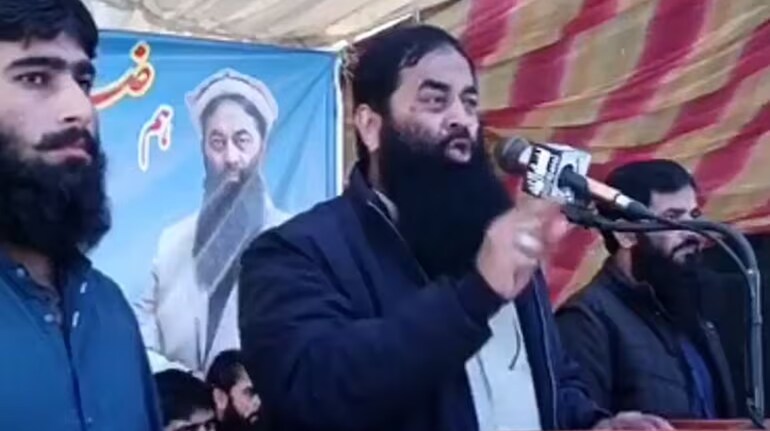
In a development heightening security concerns for India, senior figures linked to banned terror outfits Jamaat-ud-Dawa (JuD) and Lashkar-e-Taiba (LeT) have openly threatened India from public platforms in Pakistan, declaring intentions to pursue “Kashmir jihad” and even alter India’s map. Exclusive videos accessed by CNN-News18 show the leaders speaking freely, indicating a troubling resurgence of jihadi groups under Pakistan’s current military-led administration.
At a public gathering in Rahim Yar Khan, Saifullah Kasuri, a senior Lashkar commander, and Professor Ataullah Ghilzai, a close aide of Hafiz Saeed and JuD leader, addressed supporters with incendiary rhetoric. According to CNN-News18, the leaders not only issued direct threats against India but also called for cooperation with the Pakistan Army, highlighting what Indian intelligence officials describe as a persistent overlap between Pakistan’s state institutions and proscribed terror entities.
“We are ready to change the Indian map. We can reach deep inside India,” Ghilzai declared, inviting Pakistan’s military and establishment to “sit with us” to defend what he called the ideology of Pakistan. He added that despite “conspiracies of infidels and enemies,” Pakistan was progressing and would eventually reshape the region.
Kasuri, for his part, announced the political rebranding of jihadist networks. “We are entering politics and the world is afraid of us,” he said, adding that madrasa students were prepared to fulfil their “duties” in the jihad. He rejected the need for professionals like doctors or engineers, asserting that society instead required madrasa-trained Taliban-style fighters to enforce Shariah, CNN-News18 reported.
Indian intelligence sources told CNN-News18 that the resurfacing of JuD-LeT leaders in public is a calculated move to maintain jihadi relevance amid Pakistan’s deepening political and economic crisis. Top officials also noted that the renewed Kashmir-focused rhetoric appears aimed at diverting domestic anger within Pakistan toward India.
Security agencies further assess that the statements follow Operation Sindoor, suggesting Pakistan’s military leadership under General Asim Munir has once again allowed extremist groups to regroup and issue threats as part of a familiar pressure tactic against India.
Officials in New Delhi have expressed alarm at the open speeches, the call for army cooperation, and the lack of restraint from Pakistani authorities. Indian agencies view the developments as evidence that banned terror outfits continue to operate with impunity in Pakistan, cloaking their core jihadist agenda in political language.
Indian intelligence is closely monitoring the situation, seeing the renewed threats as part of a broader effort to revive Kashmir-centric militancy and internationalise tensions while Pakistan faces internal instability and regional pressures.
Discover the latest Business News, Sensex, and Nifty updates. Obtain Personal Finance insights, tax queries, and expert opinions on Moneycontrol or download the Moneycontrol App to stay updated!
Find the best of Al News in one place, specially curated for you every weekend.
Stay on top of the latest tech trends and biggest startup news.




