






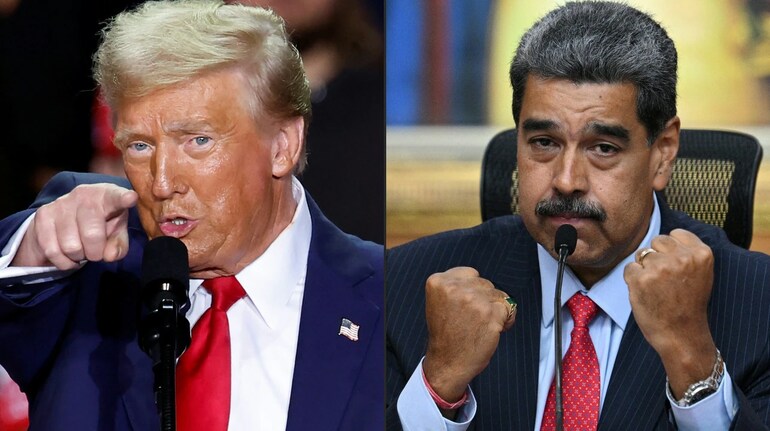

After ordering the US operation that captured Venezuelan leader Nicolás Maduro, Donald Trump framed the move as a reassertion of American dominance in its own hemisphere. He accused Venezuela of “hosting foreign adversaries” and signalled that Washington would no longer tolerate challenges close to home.
The remarks were widely interpreted as a warning to Vladimir Putin and Xi Jinping, both of whom had cultivated close ties with Maduro. But analysts say the broader signal may cut in the opposite direction: that great powers are free to use force in their perceived spheres of influence, the New York Times reported.
From deterrence to justification
For Moscow and Beijing, Trump’s actions introduce not just risk but opportunity. The United States, long a critic of Russian and Chinese military assertiveness, has now demonstrated its own willingness to seize a foreign head of state and reshape another country’s political future without international authorization.
“If the US claims the right to act aggressively in its backyard,” said Fiona Hill, a former White House adviser on Russia, “why can’t they?”
Hill recalled that in 2019, Russian officials quietly floated the idea of a geopolitical trade, offering to loosen support for Maduro if Washington reduced its involvement in Ukraine. At the time, the idea was rejected. Now, she said, Trump’s rhetoric suggests “everything can be traded,” giving Russia and China an opening to revive similar arguments.
Condemnation without confrontation
Publicly, both Russia and China have condemned the US attack. At an emergency meeting of the United Nations Security Council, they demanded Maduro’s release and called for an end to further American military action. China’s foreign minister said no country should act as “the world’s police,” while Russia’s UN ambassador accused Washington of reviving its role as a global gendarme.
Yet neither country has threatened to defend Venezuela militarily. The restraint is striking given their past investments. Russia signed a strategic partnership with Caracas and once deployed nuclear-capable bombers there. China lent Venezuela more than $100 billion over two decades, largely to secure access to oil.
The muted response reflects a shifting calculation. Both Beijing and Moscow appear wary of antagonizing Trump, whose reactions they see as unpredictable but potentially costly.
Strategic upside for Beijing
For China, Maduro’s fall comes with unexpected benefits. Analysts note that a heavier US military focus on Latin America diverts attention and resources from the Indo-Pacific. Increased Venezuelan oil production, promised by Trump, also suits Beijing, the world’s largest energy importer.
More consequential is the precedent. By acting outside established international norms, the United States weakens its moral authority to criticize similar behaviour, including potential Chinese moves against Taiwan or expanded Russian action in Eastern Europe.
“America has made itself look indistinguishable from Russia and China when it comes to breaking rules for narrow interests,” said Ryan Hass, a former US official now at Brookings. “That reduces pressure on Beijing.”
Putin’s silence and Ukraine’s shadow
Putin has remained conspicuously quiet, despite previously denouncing Western interventions such as NATO’s 2011 strikes in Libya. Analysts say his restraint reflects a larger priority: securing favourable US terms in Ukraine.
Since reengaging Trump diplomatically last year, the Russian leader has broken out of isolation. While Washington has not fully embraced Moscow’s demands, Kremlin strategists may view silence on Venezuela as an acceptable price if it improves Russia’s position in Europe.
As one analyst put it, Russia may be calculating that it can live with US actions in Latin America if it gains leverage closer to home.
A precedent with global consequences
The Trump administration has portrayed the Venezuela operation as decisive and contained. But beyond Caracas, the implications are broader. By openly embracing a might-makes-right approach, the United States risks legitimising similar claims by its rivals.
What was intended as a demonstration of strength may instead become a case study cited by Russia and China the next time they seek to justify the use of force beyond their borders.
Discover the latest Business News, Sensex, and Nifty updates. Obtain Personal Finance insights, tax queries, and expert opinions on Moneycontrol or download the Moneycontrol App to stay updated!
Find the best of Al News in one place, specially curated for you every weekend.
Stay on top of the latest tech trends and biggest startup news.





