






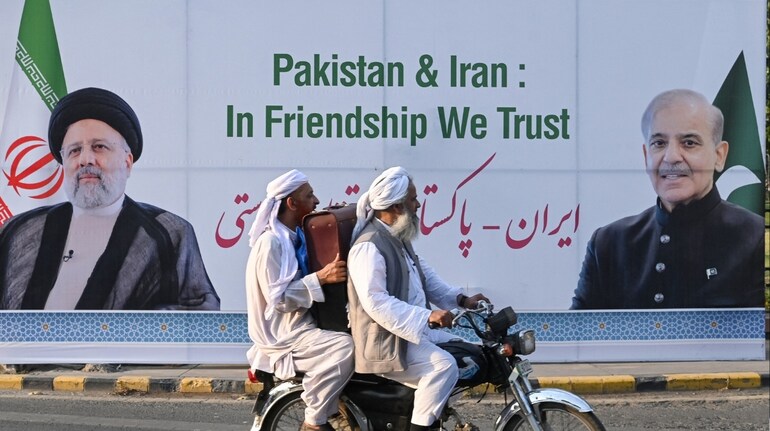

US President Donald Trump's announcement that any country doing business with Iran will face 25% tariffs has signalled worry for Pakistan with implications for energy supply.
An Op-Ed published by Pakistani newspaper Dawn said that Pakistan has "limited options" to skirt Trump's punitive tariffs and none of them are without consequences.
Under Trump's announcement, any country maintaining commercial ties with Iran — regardless of scale or sector — would face penalties on its exports to US.
Unlike traditional sanctions that target specific firms or financial channels, the measure functions as a blanket secondary action aimed at third countries.
The announcement comes at a time when bilateral trade between Pakistan and Iran is on the rise and is currently pegged at $3 billion annually. The bilateral trade is driven by Iran's exports of petroleum products, chemicals and machinery to Pakistan. Meanwhile, Pakistani rice, textiles, and fruits, plus informal trade, make up Islamabad's exports to Tehran.
In 2025, both nations had even aimed to expand the trade to $10 billion by 2028 through with focus on agriculture, energy and petrochemicals.
Thus, a 25 per cent tariff layered on top of existing US duties could directly hit Pakistan’s key exports at a time of economic fragility. Conversely, scaling back trade with Iran would carry domestic costs, including risks to energy supplies, border economies and regional connectivity.
The Dawn article said that Pakistan may try to circumvent the sanctions by using informal channels (including barter and local currencies) with Iran but the workaround may not work since Trump's tariff threat covers any trade relationship with Iran and not just dollar-denominated transactions.
Therefore, even minimal or symbolic trade with Iran could, in theory, trigger penalties on unrelated exports to US, turning sanctions into a form of collective economic pressure.
For Pakistan and other regional partners, the challenge lies in balancing exposure to US market against regional, energy and strategic considerations, the article said.
It added that Pakistan is carefully watching the situation with the Shehbaz Sharif government avoiding any official statements on the issue, giving the sensitivity and uncertainty surrounding its possible implementation.
It said that one official asked: “Why should we stick out our neck?” when questioned about the implications, signalling Islamabad's cautious approach.
Discover the latest Business News, Sensex, and Nifty updates. Obtain Personal Finance insights, tax queries, and expert opinions on Moneycontrol or download the Moneycontrol App to stay updated!
Find the best of Al News in one place, specially curated for you every weekend.
Stay on top of the latest tech trends and biggest startup news.





