






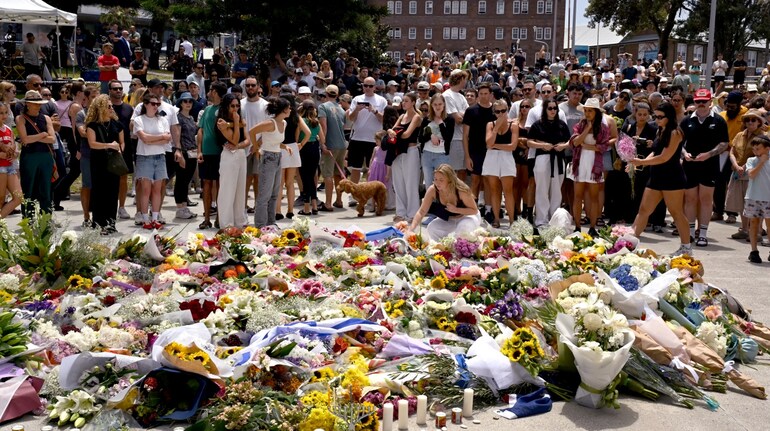
The mass shooting in Sydney has jolted counterterror officials for a familiar reason: it looks less like a complex, centrally directed plot and more like the kind of violence Islamic State has spent years encouraging. Investigators say the attackers were aligned with the group’s ideology, and the case sits alongside a run of other incidents and disrupted plots in Europe and beyond that authorities have linked to Islamic State support.
This is the core point many analysts keep returning to. Islamic State may be far weaker than it was at the height of its power, but it still knows how to make itself felt. It does that not by controlling territory, but by pushing an idea of violence that can be acted out quickly by individuals or small pairs with minimal preparation, the New York Times reported.
From “caliphate” to propaganda machine
A decade ago, Islamic State’s threat was tied to geography. It held ground in Iraq and Syria, ran institutions, and used that quasi-state status to recruit, train and fund operations. The fall of the caliphate dismantled much of that machinery.
What survived was the part that travels best: propaganda. The group’s messaging has long urged supporters to act where they live, using whatever is available. Guns, knives, vehicles, crowded places, public holidays, religious gatherings. The appeal is obvious to would-be attackers: low cost, low skill, and a strong chance of creating terror far beyond the immediate scene.
Why these attacks are difficult to stop
Lone-actor or small-cell attacks are a nightmare for prevention because they can leave very little intelligence trail. There may be no money moving, no overseas travel, no co-conspirators. Radicalisation can happen in private and at speed, with online material doing much of the work. By the time behaviour becomes visible, the window to intervene may be narrow.
That is why crowded, open settings are repeatedly mentioned by security agencies as vulnerable. They are accessible, hard to secure completely, and guarantee attention. For a group that wants psychological impact more than battlefield victory, that is enough.
Targets, timing and the pull of symbolism
The Sydney attack, coming amid heightened tensions around the Israel-Gaza war and a broader rise in antisemitic incidents in multiple countries, also highlights another feature of Islamic State’s current playbook: riding global flashpoints. Extremist narratives feed on grievance, identity and outrage. When conflict dominates headlines, propaganda has a ready-made frame for urging retaliation and selecting targets that carry symbolic weight.
In several recent cases cited by investigators, suspects have signalled allegiance during or around the time of an attack. That matters because it shows how Islamic State, even from a weakened position, can still provide a “brand” that turns personal violence into ideological violence.
A movement with branches, not borders
Even without large territory, Islamic State remains active through affiliates. The Khorasan branch in Afghanistan has claimed major attacks in recent years, and its activities help sustain the perception of momentum. For sympathisers in the West, that global footprint reinforces the idea that the movement is alive, even if it is fragmented.
This matters for copycat dynamics. High-profile attacks can work like advertising. They can make the group seem larger than it is, and they can give would-be attackers a script to follow.
What counterterrorism can and cannot do
Western security services have become much better at disrupting sophisticated, coordinated plots. That success, however, does not automatically solve the lone-actor problem. The challenge shifts towards online ecosystems, early-warning signals, community reporting and rapid response.
The Sydney shooting is a reminder of the uncomfortable reality at the heart of modern counterterrorism: you can degrade an organisation, but you cannot easily erase the ideas it has seeded. When the ideology is built to be acted on by individuals with simple tools, the threat does not disappear. It changes shape.
Discover the latest Business News, Sensex, and Nifty updates. Obtain Personal Finance insights, tax queries, and expert opinions on Moneycontrol or download the Moneycontrol App to stay updated!
Find the best of Al News in one place, specially curated for you every weekend.
Stay on top of the latest tech trends and biggest startup news.




