Fighting has flared again between Thailand and Cambodia along their disputed border, just months after a ceasefire temporarily halted hostilities. The latest violence underscores how fragile that truce was — and how deep-rooted the dispute remains.
On Monday, the heaviest clashes since the ceasefire erupted along the frontier. While it is unclear which side fired first, Thailand carried out airstrikes as ground fighting also broke out, signalling a serious escalation after weeks of simmering tension.
Here is what lies behind the renewed fighting, why the ceasefire collapsed, and what is at stake.
A conflict with deep historical roots
Thailand and Cambodia have long been at odds over competing territorial claims, with tensions periodically flaring along their more than 800-kilometre land border. The modern dispute largely traces back to a 1907 map drawn when Cambodia was under French colonial rule. Thailand has long argued that the map is inaccurate.
The issue was partly settled in 1962, when the International Court of Justice ruled in favour of Cambodia over disputed land — a decision reaffirmed in 2013. The rulings remain deeply unpopular in Thailand and helped fuel armed clashes between 2008 and 2011.
That unresolved history continues to shape relations, leaving both sides sensitive to any perceived encroachment or provocation.
What triggered the latest fighting?
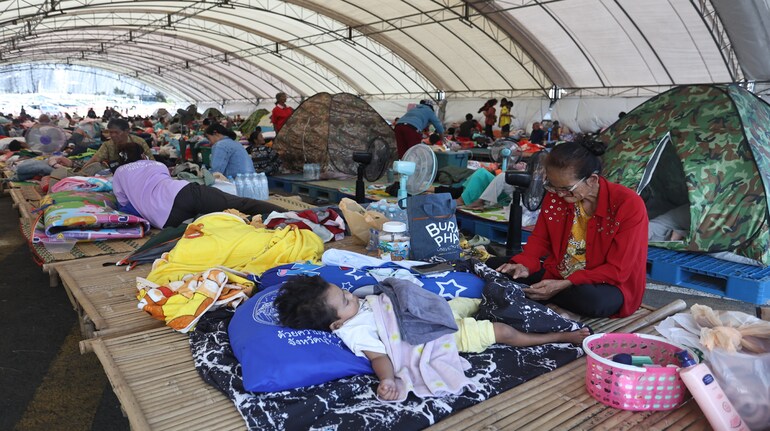
After five days of clashes in July that killed dozens of civilians and soldiers and forced tens of thousands to flee, an uneasy ceasefire took hold. The truce was promoted by U.S. President Donald Trump, who helped bring both sides to the negotiating table by highlighting the importance of access to the U.S. market for their exports and threatening to withhold key trade privileges.
Trump later cited the ceasefire as one of several examples of his role in brokering peace worldwide.
However, the agreement proved fragile from the outset.
On Monday, violence erupted again along the border. Thailand launched airstrikes — something it can do with little resistance given its overwhelming military advantage — while ground combat spread across disputed areas. Both sides have blamed each other for violating the ceasefire.
Why the ceasefire collapsed
The late-July truce was followed by a more detailed October agreement. It called for joint de-mining operations, withdrawal of heavy weapons, steps to rebuild trust, and an end to hostile rhetoric and the spread of false information.
Crucially, it also urged Thailand to release Cambodian soldiers it had taken prisoner “as a demonstration of Thailand’s desire to promote mutual confidence and trust”.
None of the agreement’s provisions were fully implemented.
Both sides continued a bitter propaganda war, punctuated by sporadic cross-border incidents. Cambodia has accused Thailand of holding 18 of its troops. Thailand has countered that Cambodia laid new landmines in disputed areas, maiming Thai soldiers. Cambodia says the mines date back to its long civil war, which ended in 1999.
Thailand has cited the failure to implement ceasefire terms as justification for delaying the prisoners’ release, further eroding trust.
Diplomatic, trade and tourism fallout
The conflict comes at a sensitive diplomatic moment. Thailand is one of Washington’s longest-standing allies in Southeast Asia, while Cambodia has been working to strengthen ties with the United States, partly to balance its close relationship with China.
Cambodia was among the first countries to strongly back Trump’s nomination for a Nobel Peace Prize and even organised public demonstrations in support. At the same time, Washington has made more progress on trade talks with Cambodia than with Thailand, whose economy is larger and more complex — a disparity that has caused resentment in Bangkok.
The economic risks extend beyond trade. The renewed violence coincides with the peak winter tourism season, threatening to deter visitors. Tourism is a key source of revenue for both countries, which are still recovering from the severe blow dealt to the industry during the coronavirus pandemic.
Cultural rivalry still matters
The tensions are not only about territory. Deep-seated cultural rivalry, dating back centuries to when both societies were competing empires, continues to inflame nationalist sentiment.
In modern times, resentment has been sharpened by Cambodia’s slower development — hindered by colonial rule and the devastation of the Khmer Rouge era — contrasted with Thailand’s relative prosperity.
Disputes have spilled into cultural territory, with both sides claiming ownership of traditions such as boxing, classical dance, clothing and cuisine.
Together, history, nationalism and unfulfilled agreements have ensured that even a U.S.-backed ceasefire was never more than a pause — leaving the border once again dangerously volatile.
(With inputs from AP)
Discover the latest Business News, Sensex, and Nifty updates. Obtain Personal Finance insights, tax queries, and expert opinions on Moneycontrol or download the Moneycontrol App to stay updated!
Find the best of Al News in one place, specially curated for you every weekend.
Stay on top of the latest tech trends and biggest startup news.