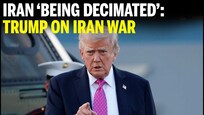
When Crown Prince Mohammed bin Salman arrived in Washington this week, the optics were familiar: the leader of an oil-rich monarchy meeting Donald Trump, promising unprecedented investment flows into the United States. From the Oval Office, the crown prince teased a $1 trillion Saudi commitment to the American economy — a signal meant to reinforce Saudi Arabia’s image as a financial juggernaut, the New York Times reported.
But inside Riyadh’s ministries and across Wall Street, a different conversation is unfolding. Saudi Arabia’s Public Investment Fund — the engine behind the kingdom’s global investments and its domestic transformation programme — is running low on deployable cash. After nearly a decade of hyper-ambitious spending, much of the fund’s capital is locked in projects that are delayed, distressed or not producing returns.
Current employees, board advisers and investors say the fund has begun quietly warning partners that it cannot make major new allocations. The public numbers remain impressive, with the fund claiming close to $1 trillion in assets. Yet a large portion of that figure consists of illiquid stakes, incomplete developments and valuations not disclosed to the public.
Mega-projects that consumed billions — and stalled
The most conspicuous drain on the fund is Neom, the crown prince’s flagship vision for a futuristic zone on the Red Sea. Conceived as a city of robots, mirrored skyscrapers, autonomous transport and artificial beaches, it has instead met engineering hurdles, planning failures and spiralling costs. Years into construction, much of Neom consists of incomplete foundations, suspended contracts and scaled-back ambitions. Sources say the crown prince has already dismissed one project chief amid mounting frustration.
The same pattern repeats across the portfolio. A PIF-backed cruise line has only one operating ship. A Saudi coffee venture imagined as an international brand has just a single store. An electric-vehicle start-up launched three years ago has yet to deliver a car. Luxury resorts dotting the Red Sea, once touted as economic catalysts, sit largely empty and have undergone multiple downward financial revisions.
Meanwhile, oil revenue — the backbone of Saudi finances — is under pressure from OPEC+ cuts and soft global prices. The government is running a rising deficit and borrowing heavily to finance domestic programmes, limiting its ability to replenish the fund.
A powerful institution forced into reinvention
Behind the scenes, the fund is undergoing a restructuring under the crown prince’s direct supervision. Internal forecasts are being slashed. The investment strategy is shifting toward more conventional assets such as public stocks and bonds. Executives are promising to double PIF to $2 trillion in five years, though insiders acknowledge that much of that will require new government transfers, not organic gains.
The governor of the fund, Yasir al-Rumayyan, remains a key player. Once a little-known banker, he became the face of Saudi Arabia’s global investing spree — securing stakes in Uber, Citigroup, golf tournaments and the English Premier League’s Newcastle United. His rise has mirrored PIF’s own reinvention, and he is fiercely protective of its image, even correcting people who pronounce the fund’s name as “Piff” instead of spelling out the letters.
Yet even al-Rumayyan cannot obscure the recent shift in tone. At this year’s Future Investment Initiative — long known as “Davos in the Desert” — foreign financiers noted a palpable change. PIF’s executives privately told attendees that new allocations would require helping bail out older Saudi investments. Some deals proposed routing more than double PIF’s investment back into domestic projects that need propping up. Even the conference’s own operating company, majority-owned by PIF, has quietly attempted to find a buyer.
A fund designed for transformation now faces limits
PIF has always been central to Mohammed bin Salman’s rise. Since 2015, the crown prince has poured oil revenue, seized assets and government loans into it, giving him direct control over the most powerful financial instrument in the kingdom. It bankrolls new cities, entertainment districts, tourism ventures and industries meant to diversify the Saudi economy — and supports the political narrative of a modernising nation.
But its rapid expansion has also produced financial strain. Few of its domestic projects generate meaningful revenue. Many of its overseas bets, particularly in early-stage tech, have had mixed or negative returns. And unlike Norway’s sovereign fund — the world’s largest — PIF publishes only a page and a half of financial disclosures.
A future shaped by ambition and constraint
The crown prince insists that PIF’s performance must be judged over generations and not by quarterly results. Yet the fund’s immediate challenges are testing Saudi Arabia’s ability to sustain its transformation at the pace originally promised. It remains a powerful institution, but its liquidity squeeze reveals the tension between visionary ambition and economic reality.
As Riyadh reassures global partners of its spending power, the real story lies in its quiet recalibration — a sovereign wealth fund adjusting to the limits of ambition, even as its ruler demands the appearance of limitless possibility.
Discover the latest Business News, Sensex, and Nifty updates. Obtain Personal Finance insights, tax queries, and expert opinions on Moneycontrol or download the Moneycontrol App to stay updated!
Find the best of Al News in one place, specially curated for you every weekend.
Stay on top of the latest tech trends and biggest startup news.