






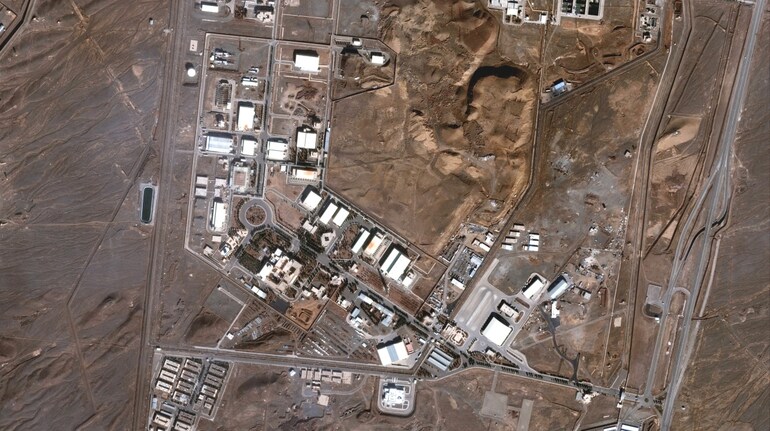
In a dramatic escalation of regional tensions, Israel launched a wave of airstrikes on Iran early Friday under Operation Rising Lion, targeting key military and nuclear sites across Tehran. Among the most significant targets was the Natanz nuclear facility – a site long seen as the core of Iran’s uranium enrichment programme.
"The underground area of the site was damaged. This area contains a multi-storey enrichment hall with centrifuges, electrical rooms and additional supporting infrastructure," the Israeli military said in a statement.
"In addition, critical infrastructure enabling the site's continuous operation and the Iranian regime's ongoing efforts to obtain nuclear weapons were targeted," it added.
The strike, confirmed by the International Atomic Energy Agency (IAEA), has drawn global attention for its strategic and symbolic implications.
“The IAEA is closely monitoring the deeply concerning situation in Iran. … The Agency is in contact with Iranian authorities regarding radiation levels. We are also in contact with our inspectors in the country,” IAEA’s head Rafael Mariano Grossi wrote on X.
Just days ago, the IAEA had passed a declaration that Iran was in non-compliance with its nuclear safeguard obligations.
What is the Natanz nuclear site and why it matters
The Natanz nuclear facility, located in central Iran's Isfahan province, is one of the most critical and closely guarded elements of Iran's nuclear program. Known officially as the Fuel Enrichment Plant (FEP), it is underground, heavily fortified, and central to Iran's uranium enrichment efforts – the very process that can be used for both civilian energy and, potentially, nuclear weapons.
Natanz houses thousands of advanced centrifuges used to enrich uranium, a material that can be used for nuclear power or – at higher purity levels – for nuclear weapons. It’s been at the heart of the international community’s concerns over Iran’s nuclear ambitions for over two decades.
Natanz has previously been the focus of multiple sabotage efforts:
Why Israel targeted Natanz
Israel has long vowed to prevent Iran from acquiring a nuclear weapon. With Iran enriching uranium beyond 60% purity in recent years — just short of weapons-grade — Natanz became a prime target once again. The strikes were meant to cripple Iran’s ability to quickly “break out” and build a bomb, especially as diplomacy over Iran’s nuclear program has collapsed.
Discover the latest Business News, Sensex, and Nifty updates. Obtain Personal Finance insights, tax queries, and expert opinions on Moneycontrol or download the Moneycontrol App to stay updated!
Find the best of Al News in one place, specially curated for you every weekend.
Stay on top of the latest tech trends and biggest startup news.









