






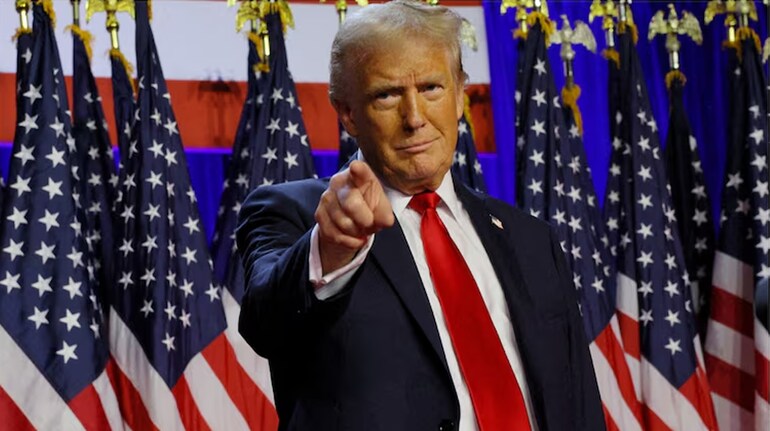
As Donald Trump continues his second term in the White House, seeking a presidential pardon has become less a legal process and more a political exercise. Convicted white-collar criminals, crypto executives and foreign political figures are increasingly turning to Trump-aligned lobbyists and intermediaries who promise access, influence and sympathy from a president who has framed himself as a victim of a weaponised justice system, the Financial Times reported.
For many seeking clemency, the calculation is straightforward. Trump has issued dozens of pardons this year, often to individuals who echo his claims that prosecutions during the Biden years were politically motivated. The result is what defence lawyers describe as a rational, if expensive, alternative route to escaping prison sentences, fines and restitution orders.
The rise of intermediaries and influence brokers
Unlike previous administrations, where pardon petitions were largely handled through the Department of Justice, Trump’s approach has elevated informal networks and personal connections. Lobbyists with campaign ties or family proximity to Trump’s inner circle have emerged as key players, some charging fees that run into seven figures.
In several cases, those seeking pardons have offered intermediaries a share of the financial benefit if clemency wipes out penalties or compensation obligations. Lawyers familiar with the process describe this as an “industrial-scale” business that operates alongside, but largely outside, the formal justice system.
Trump has reinforced this shift by appointing loyalists to oversee clemency decisions. The traditionally low-profile pardon attorney role is now held by Ed Martin, a political ally, while Alice Marie Johnson, a former inmate whose sentence Trump commuted in his first term, has been named the administration’s first pardon “tsar”.
Crypto cases and high-profile beneficiaries
Cryptocurrency executives have featured prominently among those seeking and receiving clemency. Binance co-founder Changpeng Zhao was pardoned after pleading guilty to failures related to money laundering controls. Lobbying disclosures show his company hired a Trump-connected lobbyist for what was described as “executive relief”.
Sam Bankman-Fried, the former FTX chief serving a 25-year sentence for fraud, has also pursued this path. From prison, he has adopted Trump’s rhetoric, publicly arguing that the Department of Justice was politicised under Biden. His representatives reportedly approached lobbyists with past Trump campaign ties, though no pardon has been granted so far.
Other cases illustrate how political messaging can matter as much as legal merit. Ross Ulbricht, the founder of the Silk Road marketplace, was pardoned early in Trump’s second term after sustained backing from libertarian and conservative groups that form part of Trump’s electoral base.
Allies, donors and foreign figures
Financial and political proximity to Trump’s world has also proved influential. Trevor Milton, the founder of Nikola, received a pardon after donating close to $1 million to a Trump-supporting group. While Milton denies any connection between the donation and the clemency decision, the overlap has drawn scrutiny, particularly given family links between his legal team and the attorney-general.
Foreign figures have also benefited. Former Honduran president Juan Orlando Hernández, convicted on US drug trafficking charges, was pardoned after intermediaries close to Trump advocated on his behalf. Trump later claimed he knew little about the case, framing it instead as an example of government overreach.
Who remains outside the net
Not everyone who aligns themselves politically has succeeded. Elizabeth Holmes, the Theranos founder serving an 11-year sentence, has publicly endorsed health initiatives associated with Trump and his allies but remains incarcerated. Former senator Bob Menendez, convicted on bribery charges, has similarly sought to portray himself as a victim of a rigged system, without success.
These cases highlight the uncertainty of a process that is opaque by design. White House officials insist that qualified lawyers review each petition and deny that lobbyists influence decisions. Critics, however, argue that access, loyalty and narrative alignment now matter more than legal consistency.
A system reshaped by politics
Trump’s expansive use of pardon powers has transformed clemency into a political instrument. By rewarding allies and reinforcing his claims of institutional persecution, the pardon process has become part of a broader effort to recast the justice system as partisan terrain. For those seeking relief, the message is clear: legal arguments may matter, but political resonance matters more.
Discover the latest Business News, Sensex, and Nifty updates. Obtain Personal Finance insights, tax queries, and expert opinions on Moneycontrol or download the Moneycontrol App to stay updated!
Find the best of Al News in one place, specially curated for you every weekend.
Stay on top of the latest tech trends and biggest startup news.




